Blog
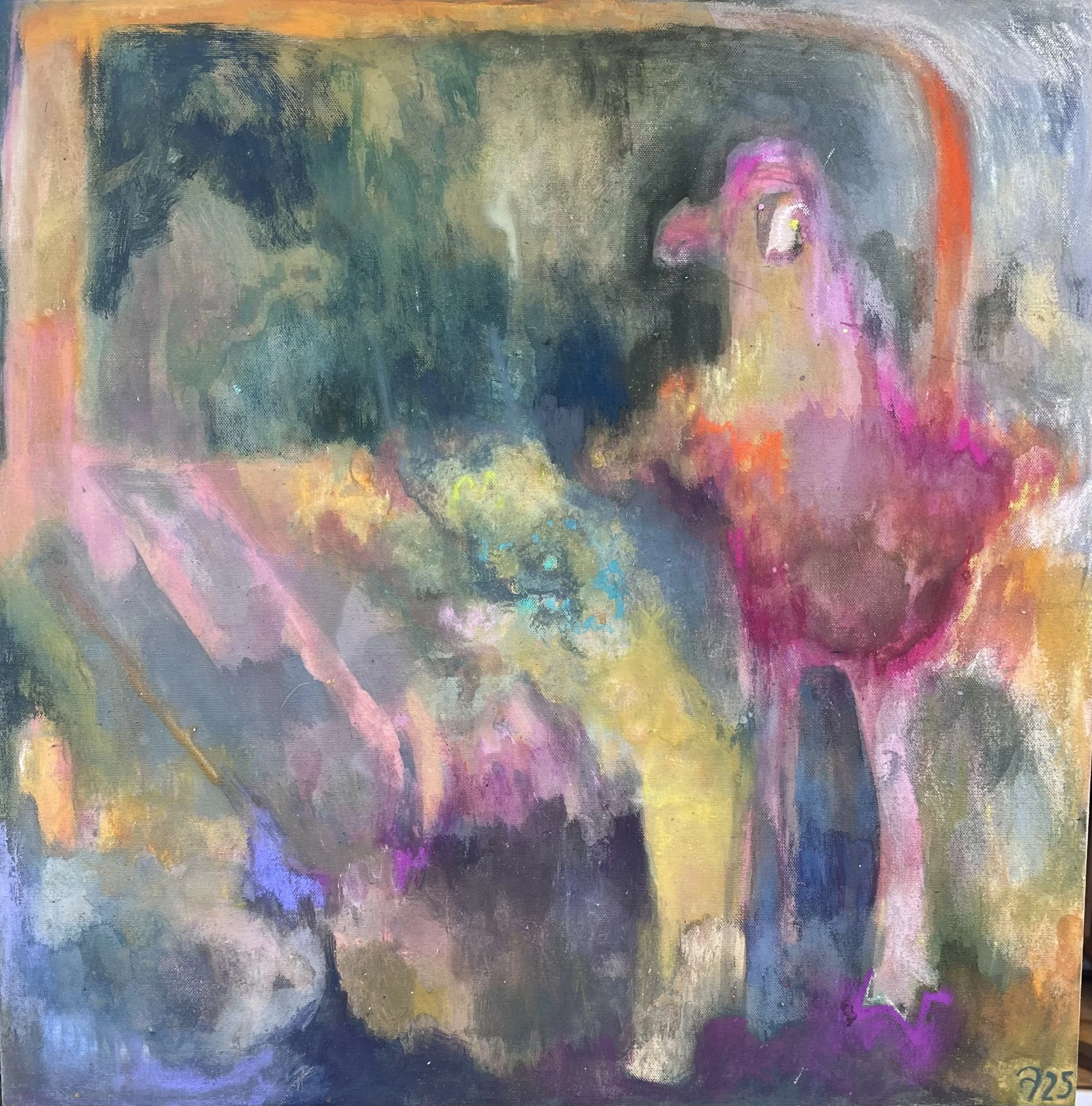
A Bestiary of the Burgh
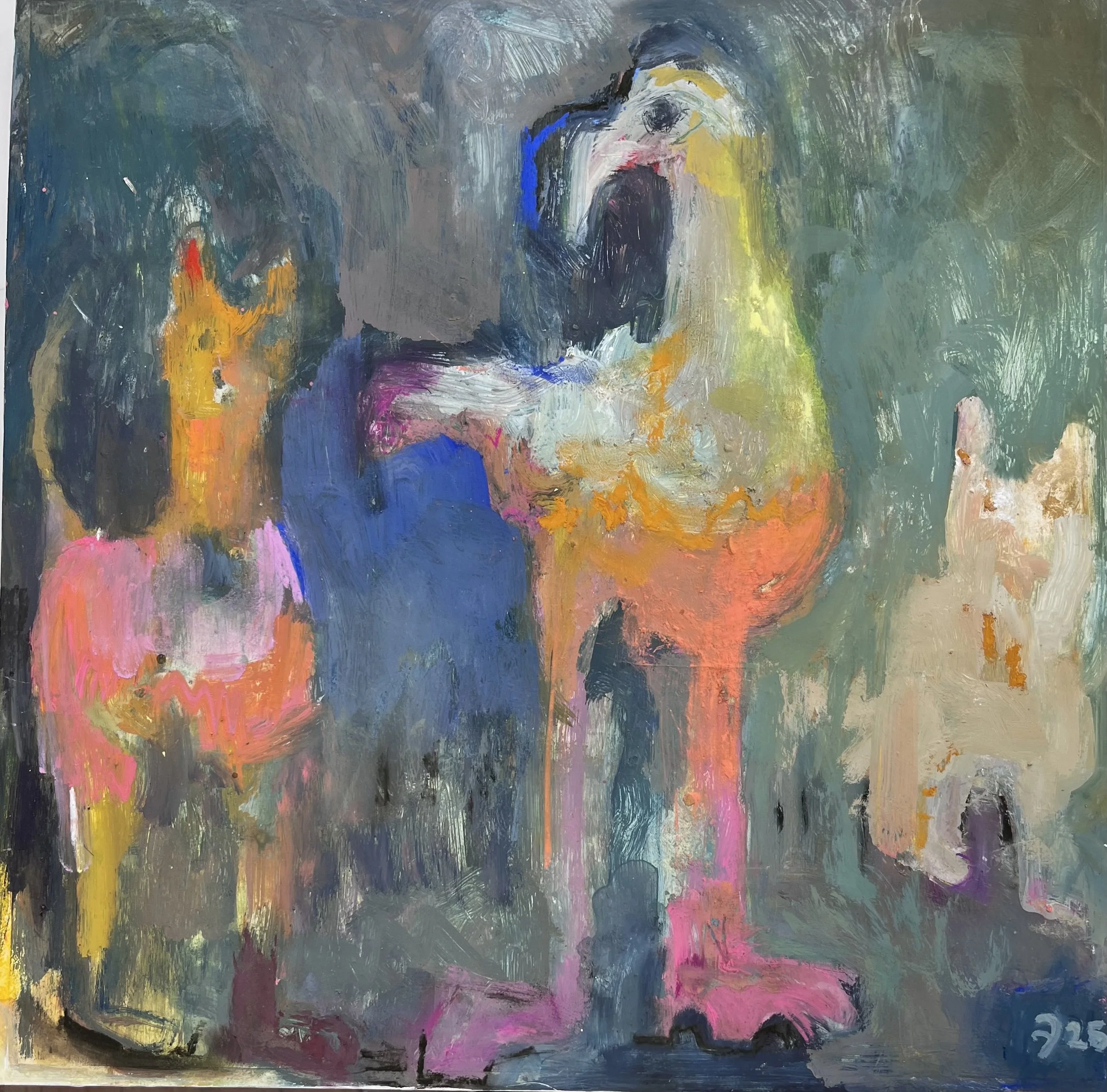
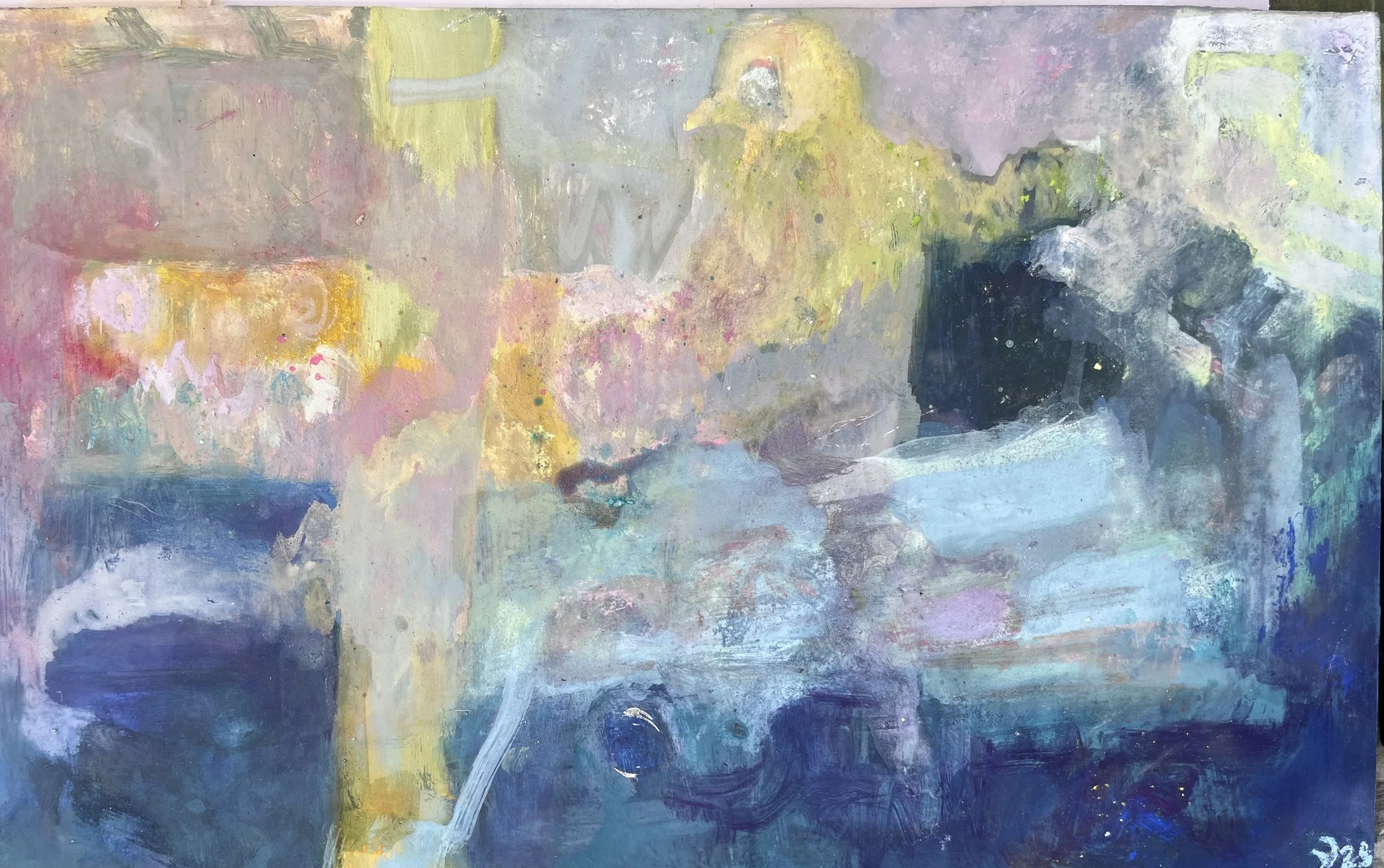
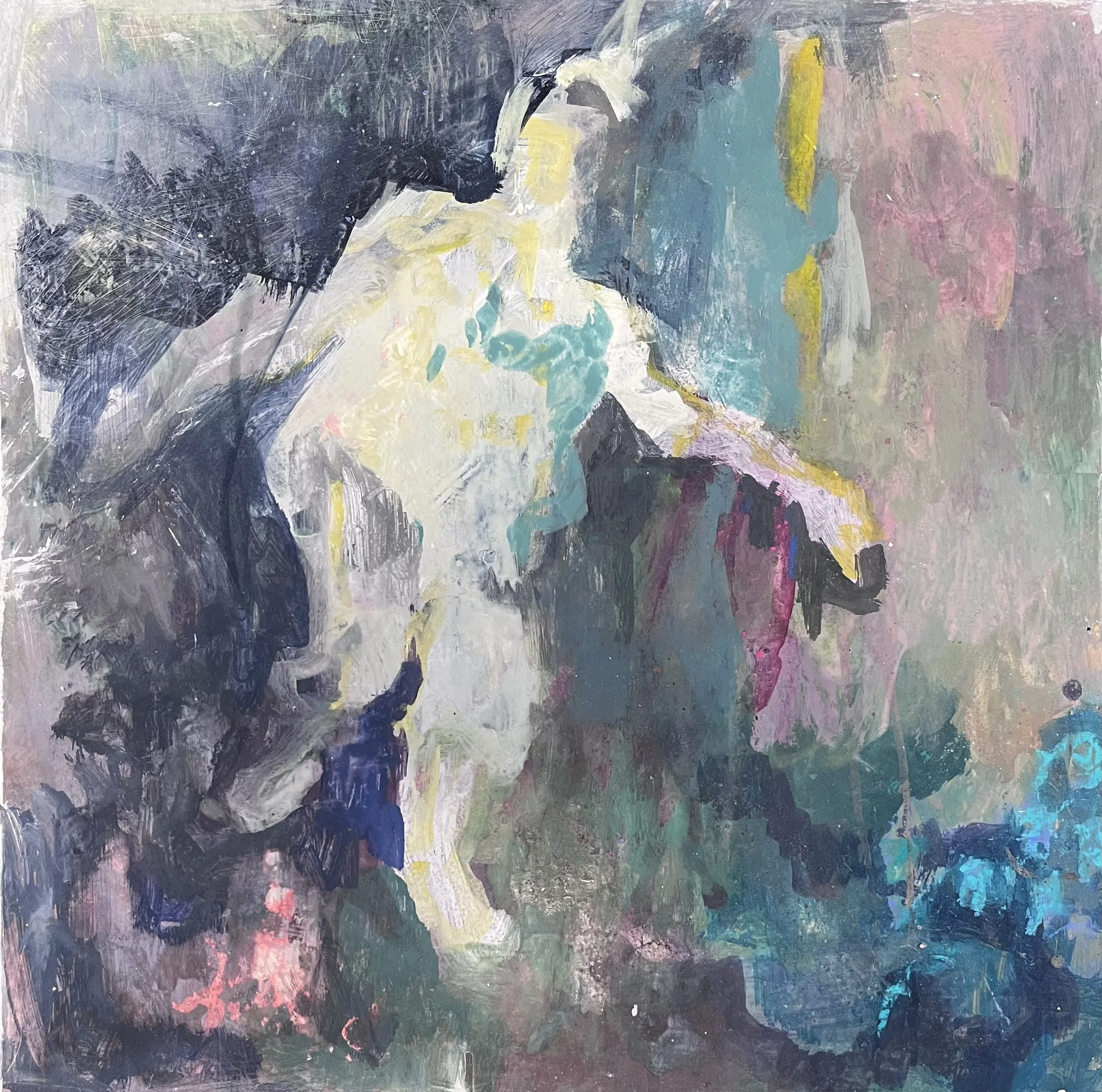
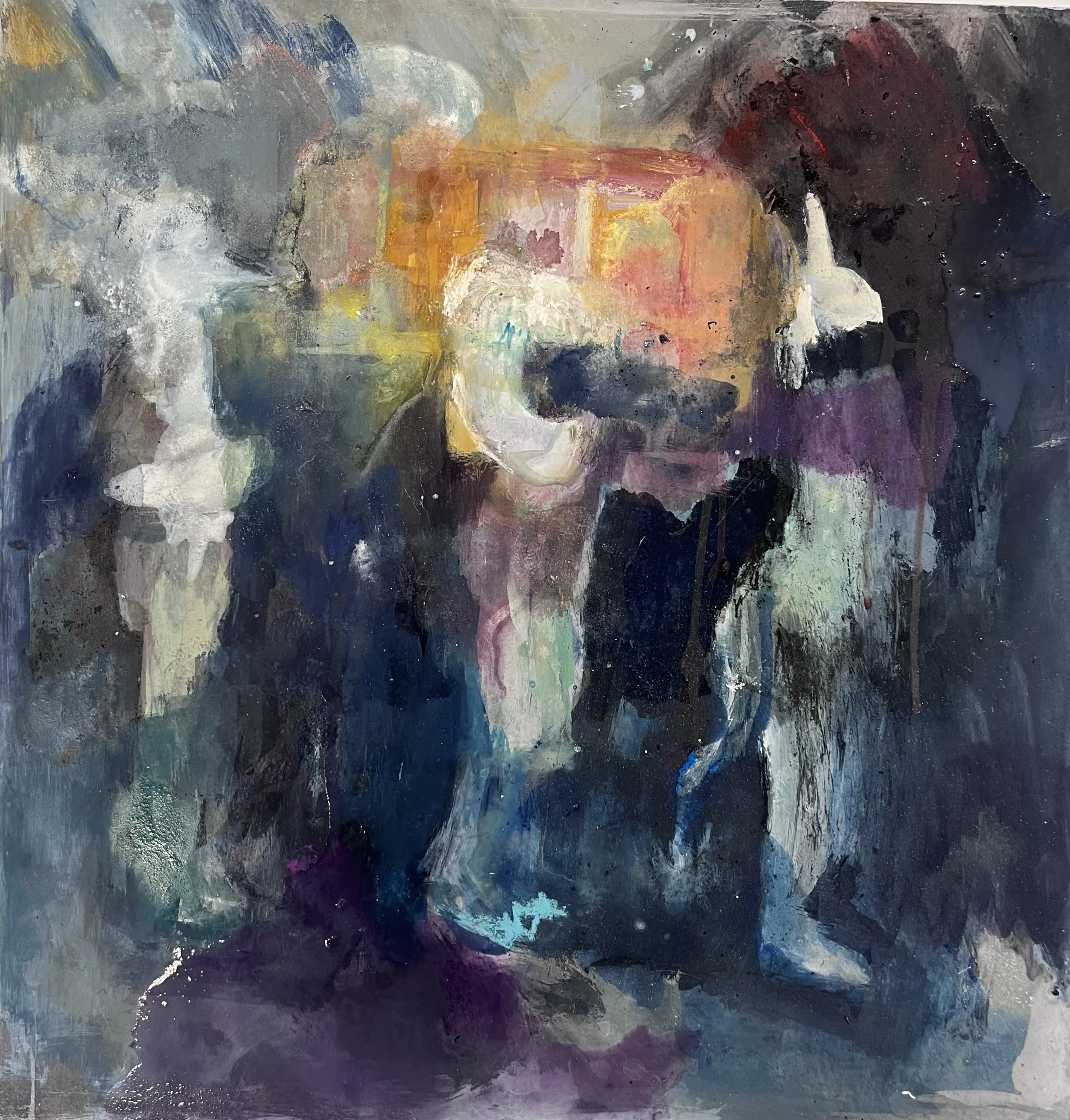
Bestiary of the Burgh is an ongoing body of work that keeps shifting shape. What began with fragments of animal folklore in the city has moved into stranger territory — imagined creatures, half-real presences, and industrial myths re-imagined in paint and porcelain.
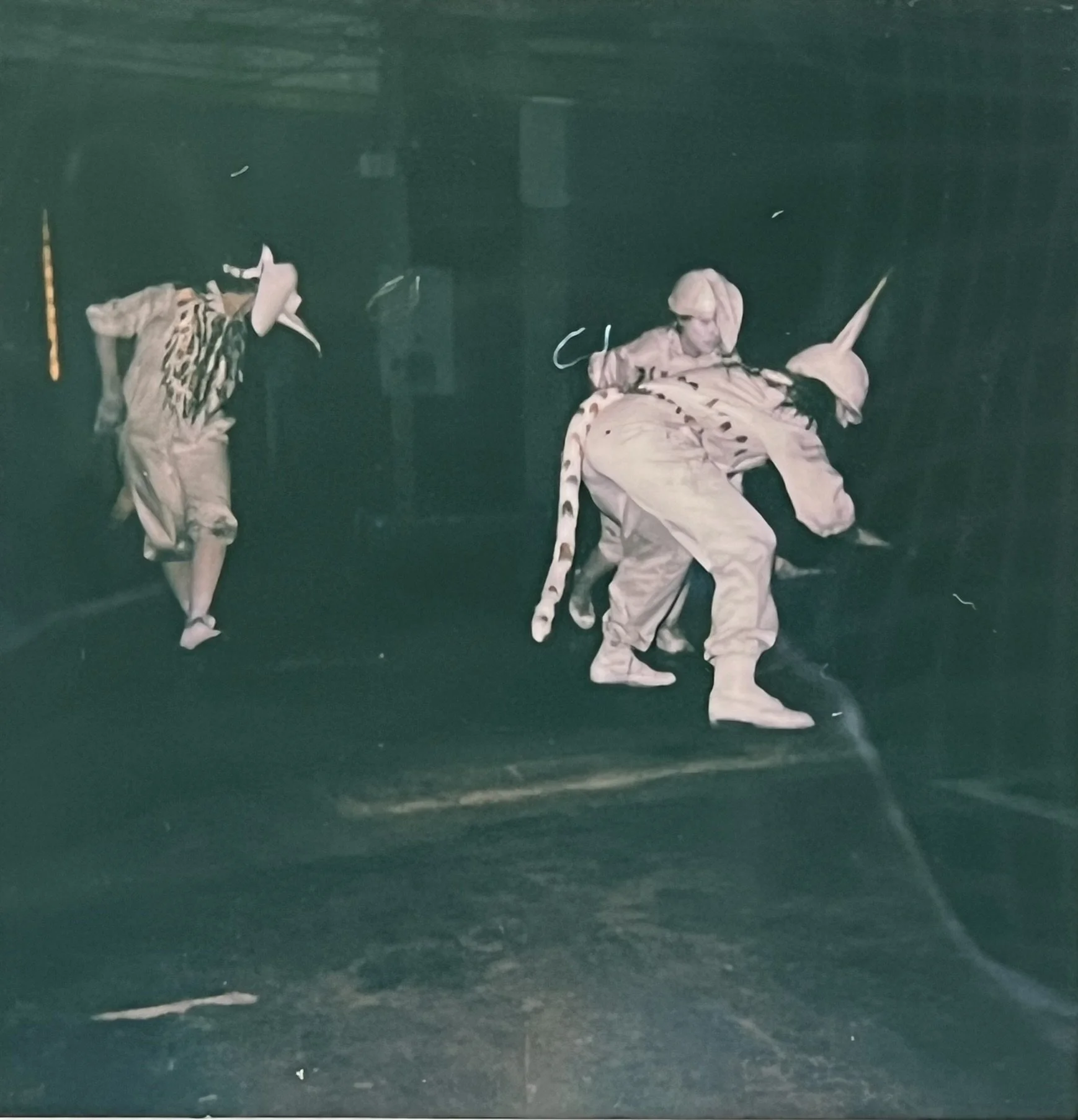
Over the summer, the work has begun to connect more closely with Ghost in the Machine, a collaborative sculptural installation and performance commissioned for Hidden Door 2025. In that project, performers took on animal roles within the machinery of a disused factory, reimagined as a kind of temple.
In the studio, I’ve been working with my developmental monoprinted sketches alongside polaroids taken during the performance of the ritual actions.

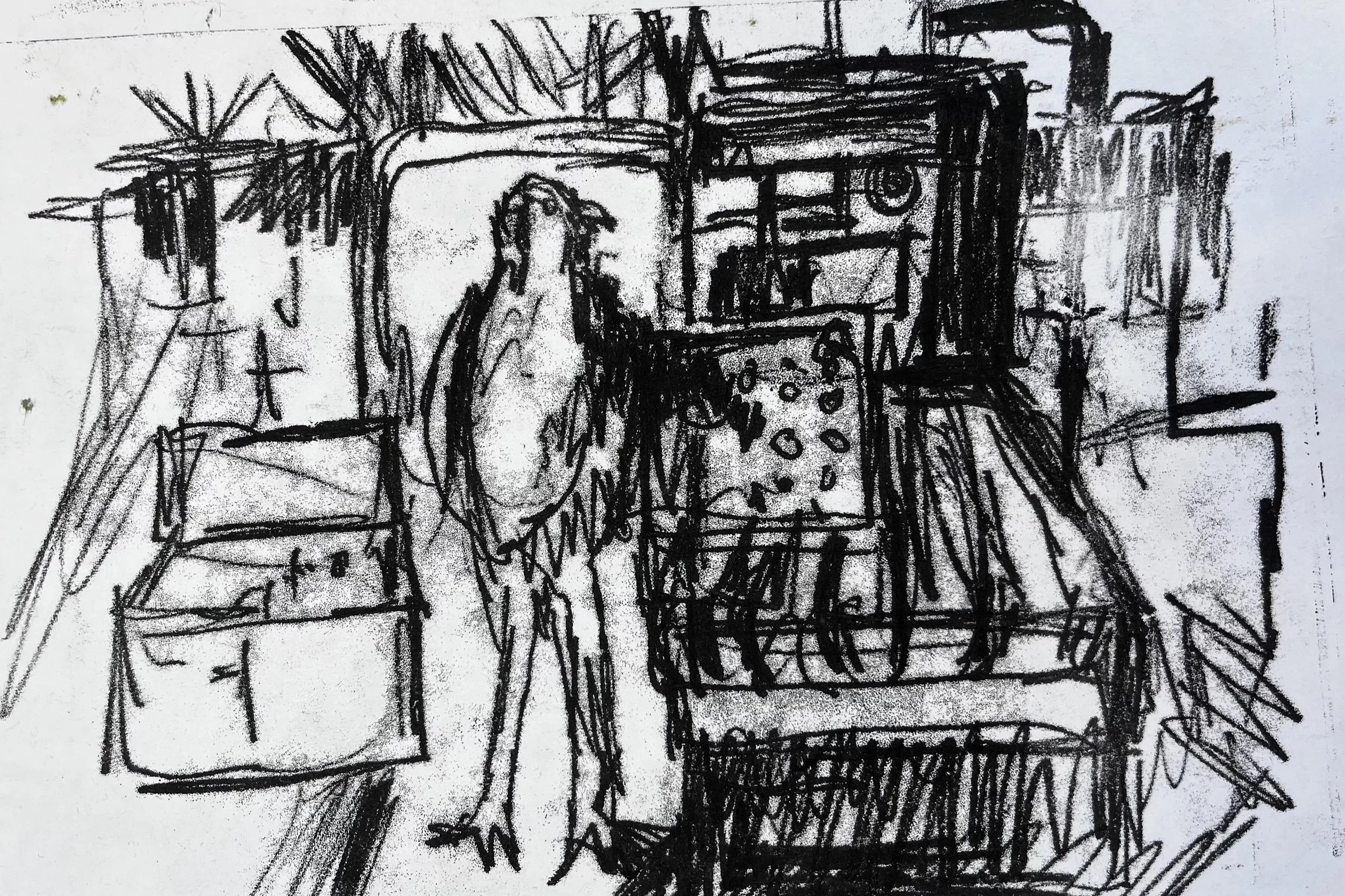
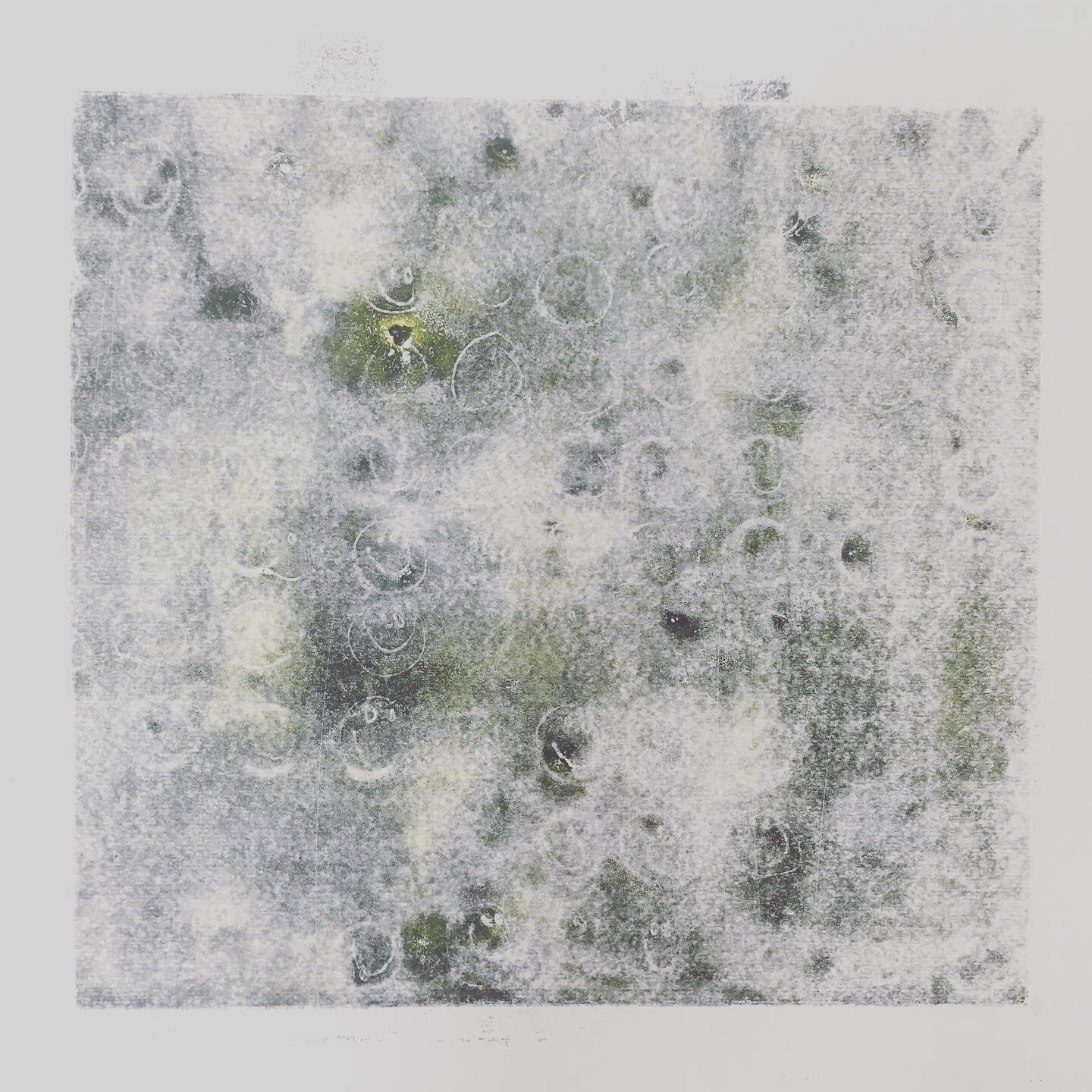
Imaginary Bird, mono-print 2025
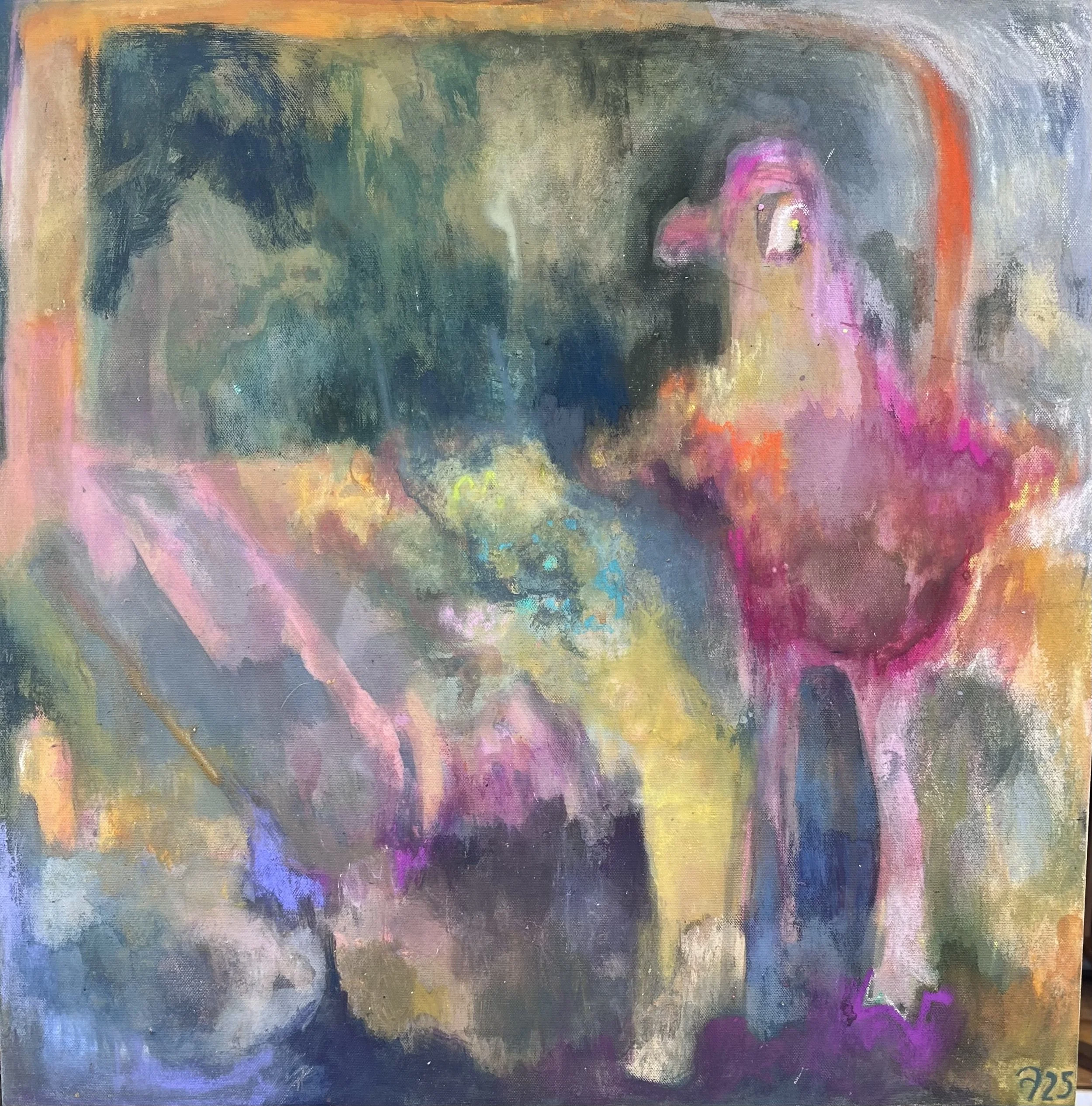
Some of the canvases reimagine animal workers operating colour-spilling machines, while others use performance stills to find images that evoke a ritual presence within the factory. The paintings are at different stages — a few finished, others still in progress — but all carry a sense of movement and transformation. They sit between memory and invention, documentation and myth-making, continuing to shape shift and draw connections between costume, and industrial sites can be reimagined as part of a contemporary bestiary
Drawing as a Way In
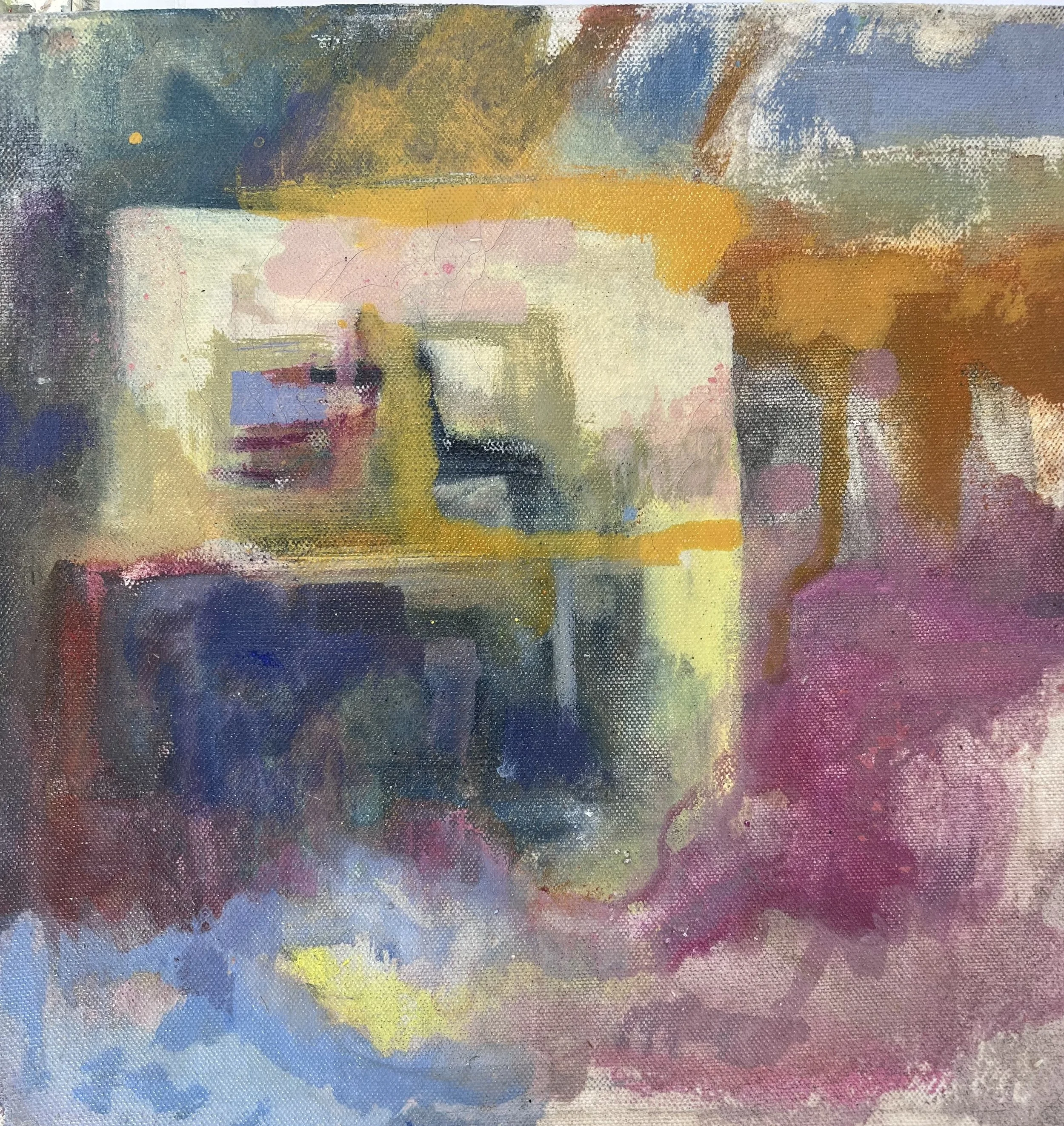
Drawing, for me, is always a way back in. When I feel scattered or stretched thin, it’s drawing that steadies me — not as preparation for something else, but as the work itself. Gesture on paper, gesture in space. A way of tuning in.
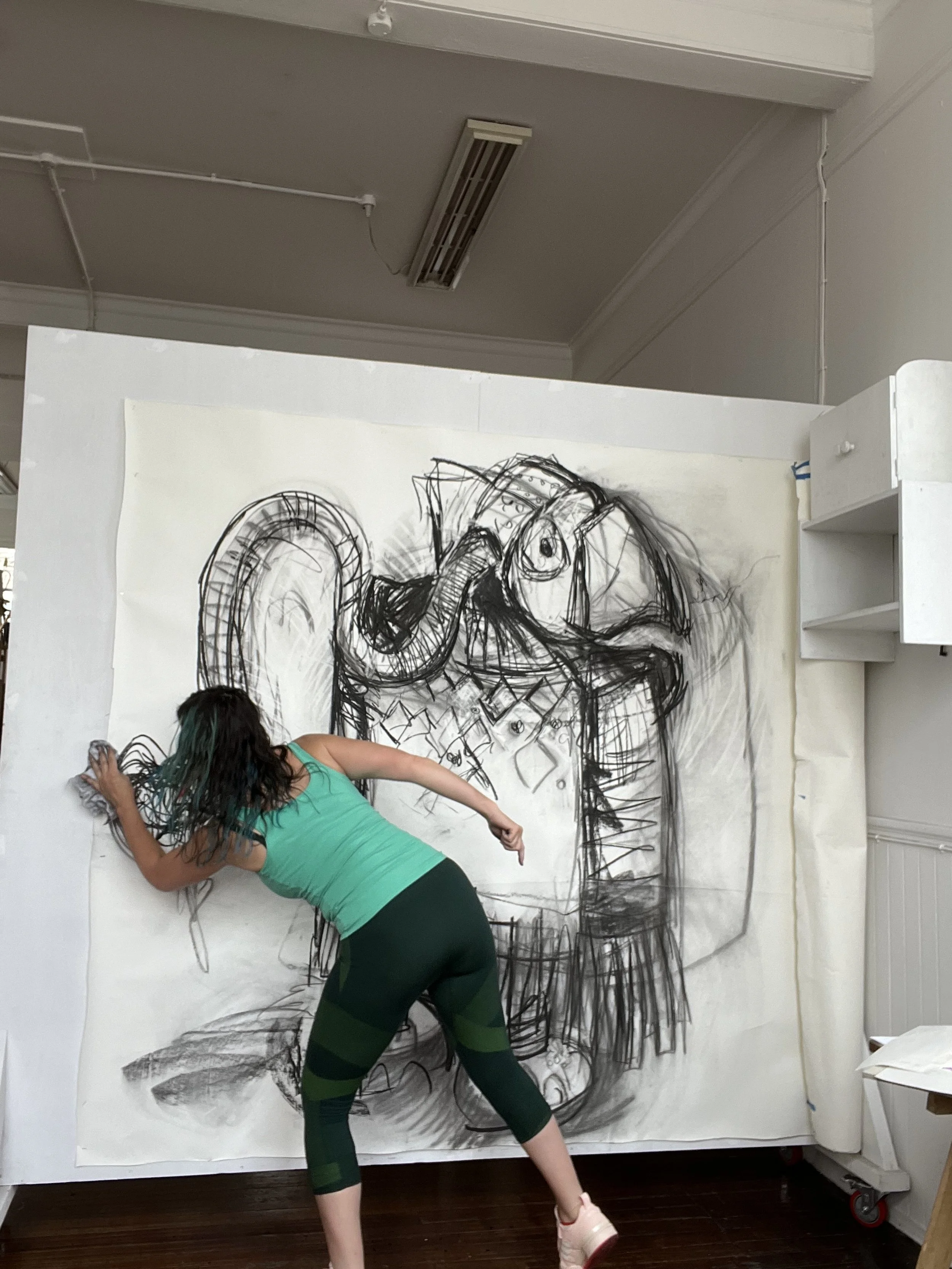
Gesture as drawing — large-scale work in the studio.
During my Masters, and through research into gesture and drawing, I became increasingly interested in how a line doesn’t need to be confined to paper. A gesture can be durational, spatial, embodied. It might be a sweep of charcoal, but it can also be the step of a foot, the reach of an arm, or the drag of a material across a floor. Artists such as Joan Jonas and Rebecca Horn have long positioned performance itself as a form of drawing — the body as pencil, tracing time through space.
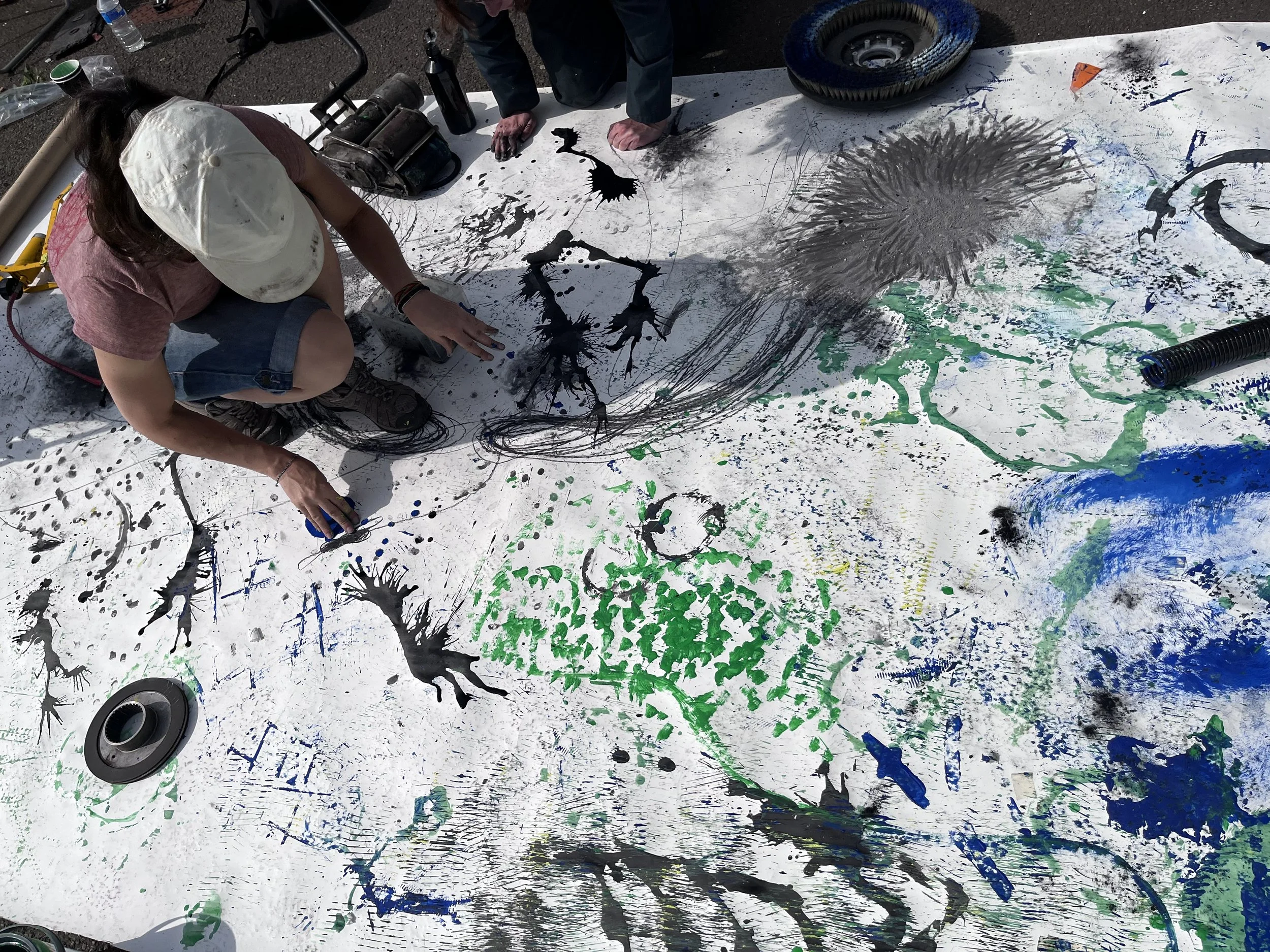
Collaborative drawing
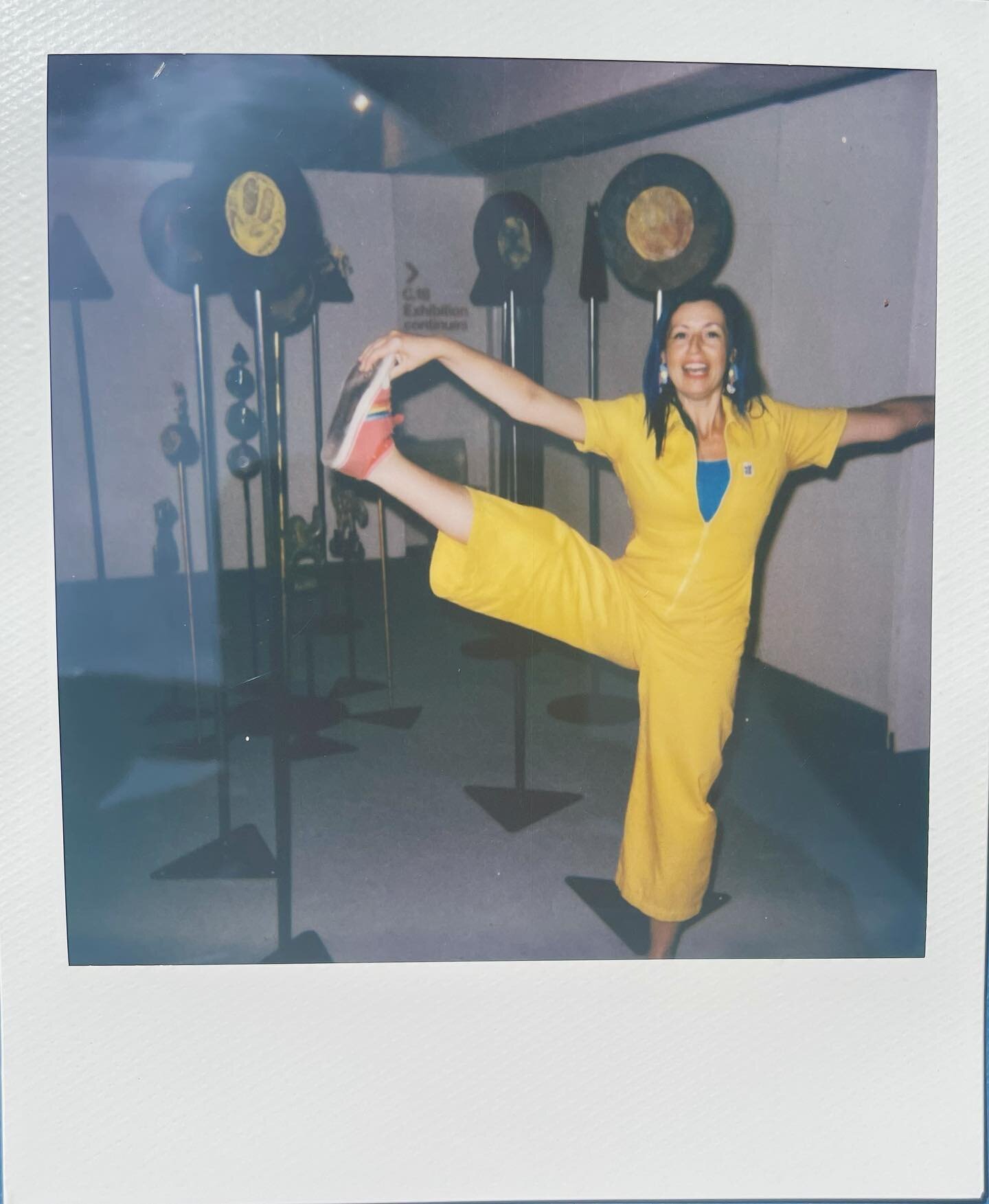
These ideas shaped my most recent project, Ghost in the Machine, for Hidden Door 2025. Developed with Alma Sua Lindenhovius, Fiona Oliver Larkin, and Elvey Anna Stedman, with a live soundscape shaped with the Sativa Drummers, the performance unfolded on the floor of a disused cardboard packaging factory. Set among dormant machines, we imagined the space re-inhabited by half-human, half-myth creatures — a pigeon, a kestrel, and a cat. Through movement, drawing, and sculptural installation, we explored memory, transformation, and industrial folklore.
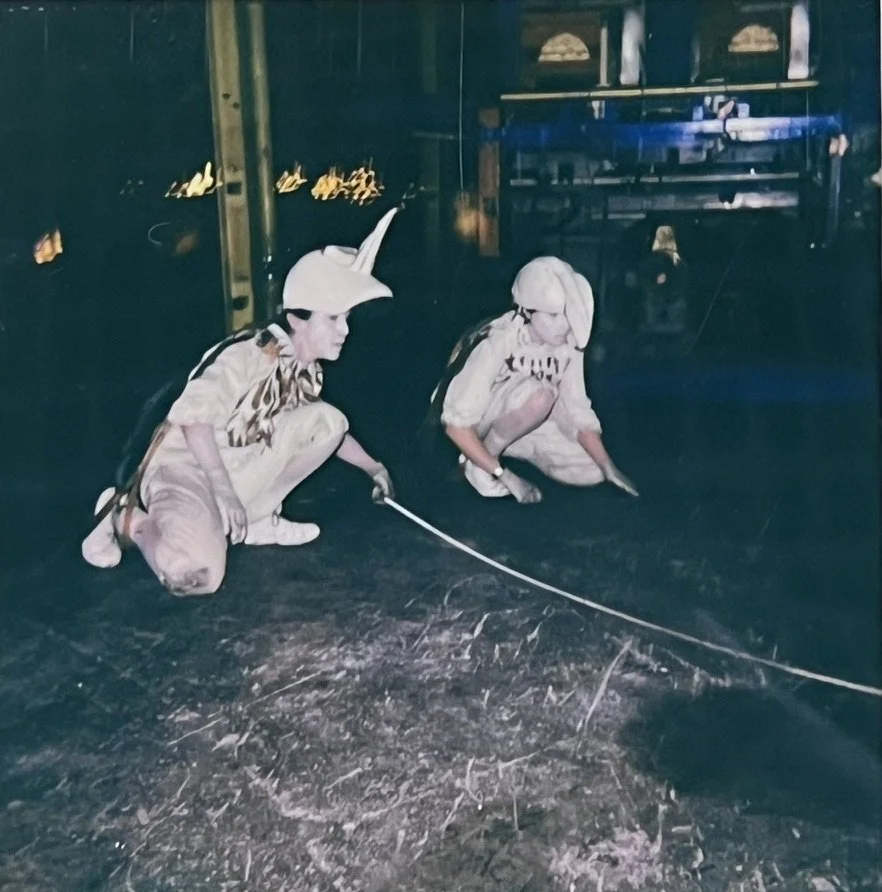
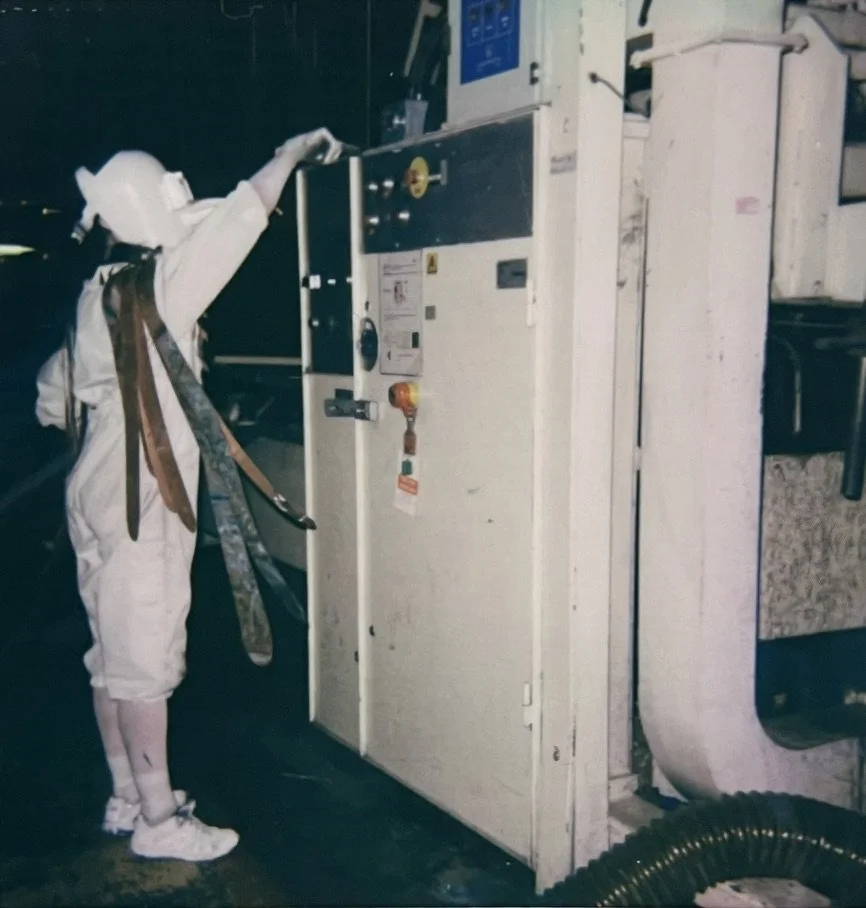
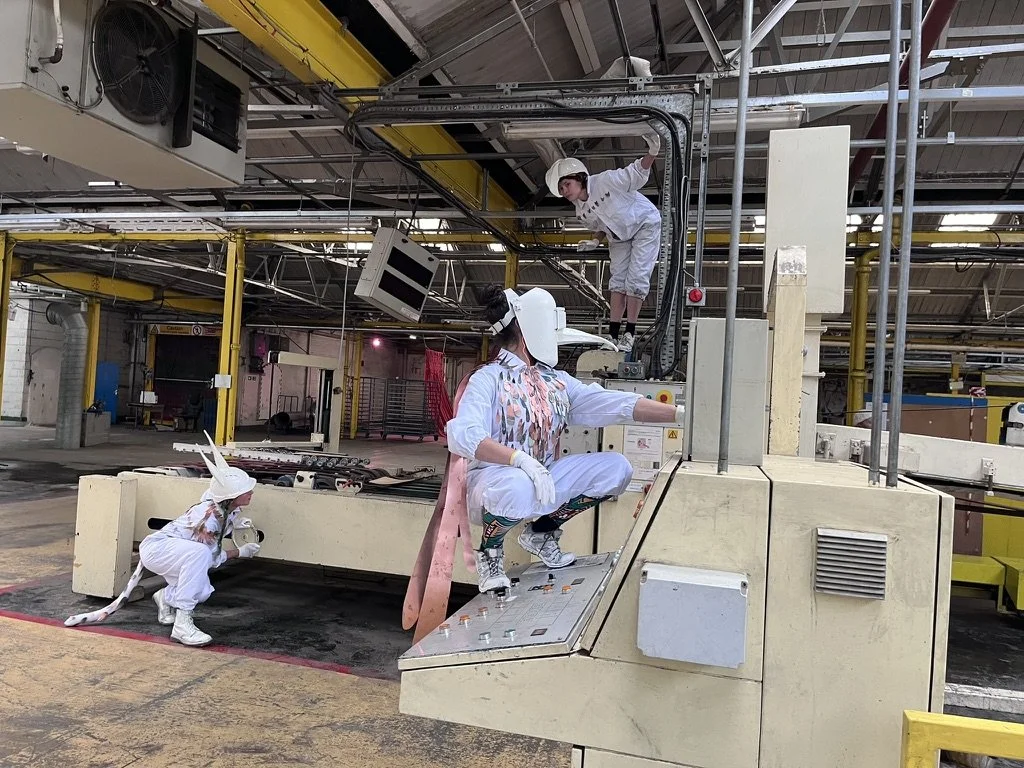
The performance unfolded among dormant machines in a disused factory, Hidden Door Festival 2025
In Ghost in the Machine, drawing was everywhere. It was in the gestural marks made in response to discarded objects and surfaces. Found objects became collaborators, shaping how lines were made and how gestures unfolded. Large canvases carried these marks before being cut and re-formed into banners, their surfaces holding both the memory of the objects and the animal gestures that directed them. Some objects were placed on ceramic tables as if relics, others sounded during the performance — always shifting between trace, tool, and performer.
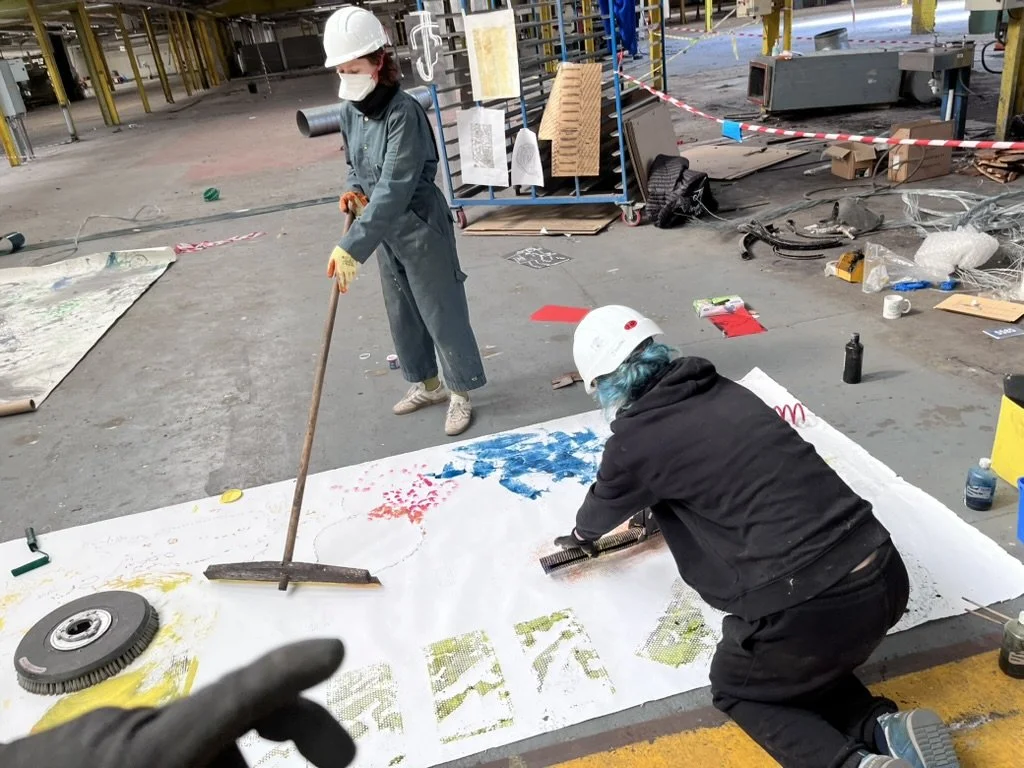
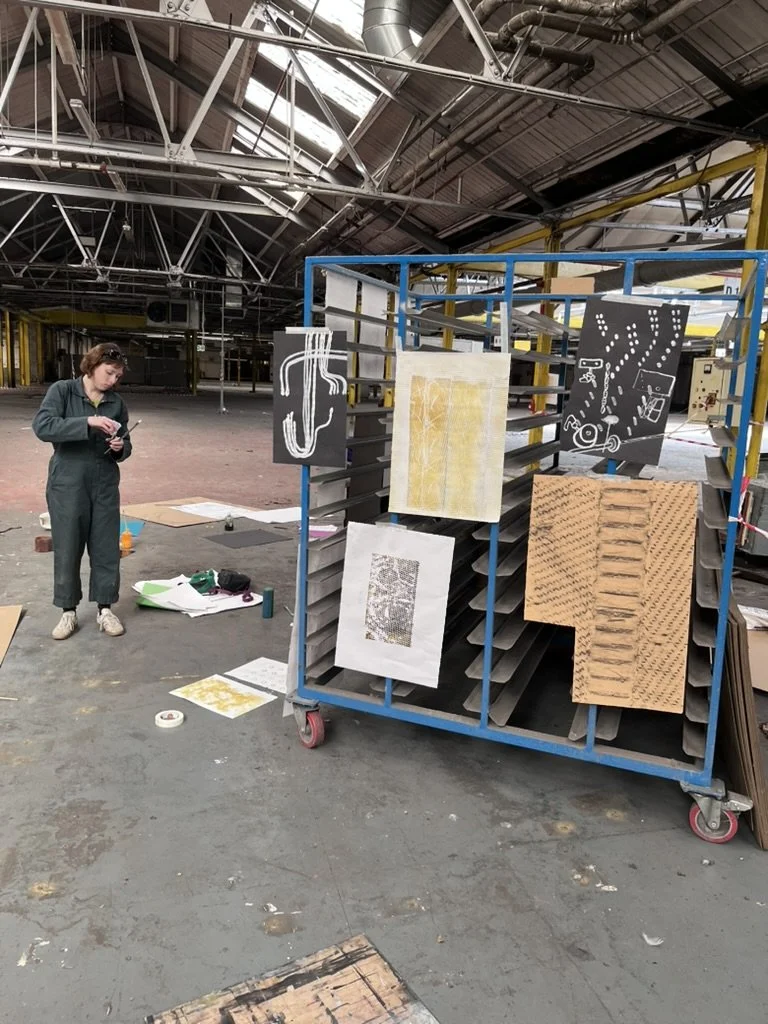
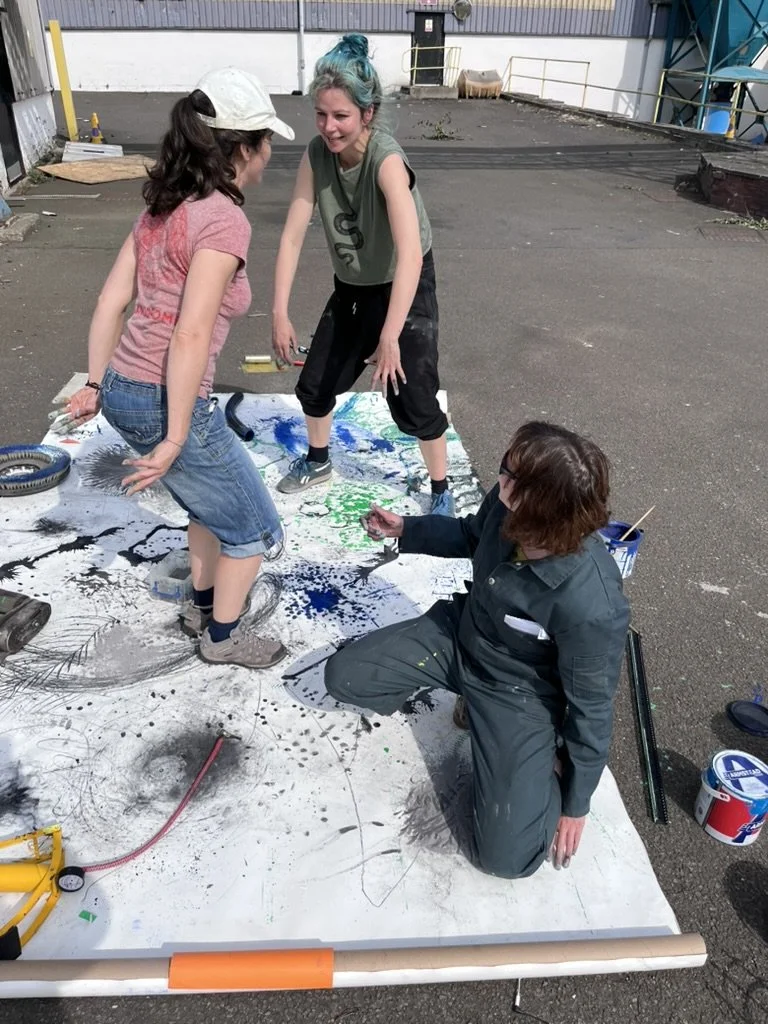
Devising Workshops - Found objects became collaborators in the drawing process.

Large canvases were cut and re-formed into banners, Hidden Door Festival 2025
The project emerged from my research into animal mythologies: how creatures gain symbolic roles through archives, folklore, and contemporary city stories, shifting between the real and the imagined. They appear as messengers, tricksters, guardians.
My sculptural works have also circled around these mythologies in contemporary form — from pigeons and cats to stranger hybrids, like a unicorn head cast in copper. Sitting between humour and ritual, these works treat everyday or playful forms as if they were relics or votive objects
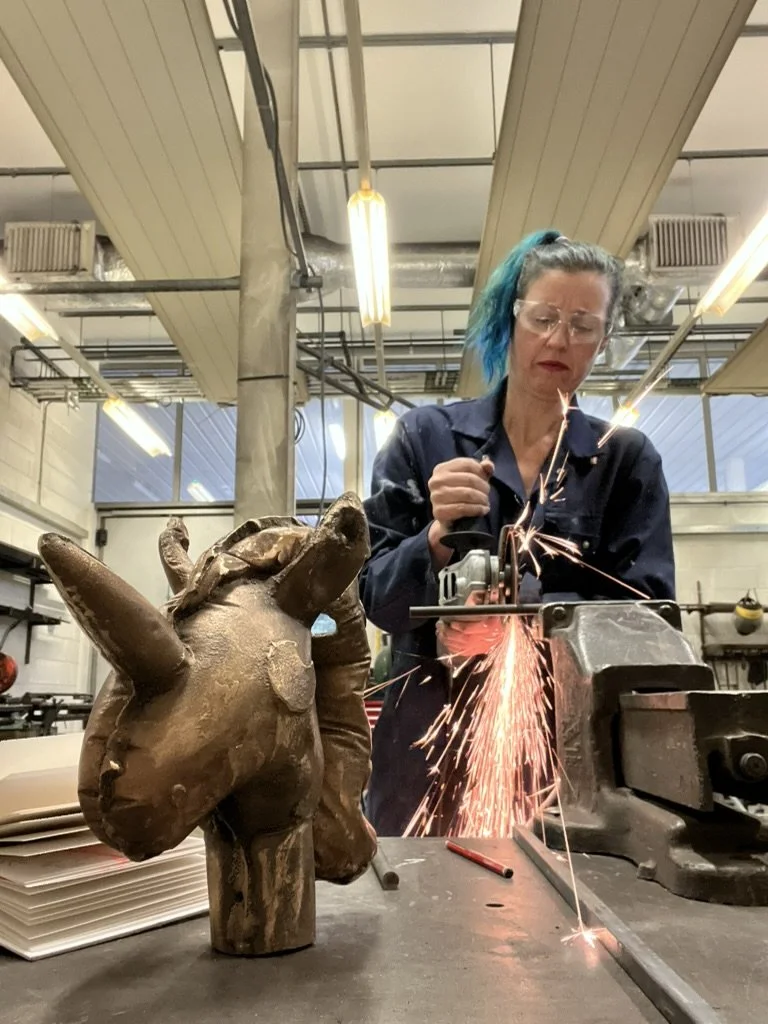
Above: Metal working on a unicorn head cast in bronze.
Below: Found Objects were arranged and placed on handmade ceramic tables, like votive relics, Hidden Door Installation 2025
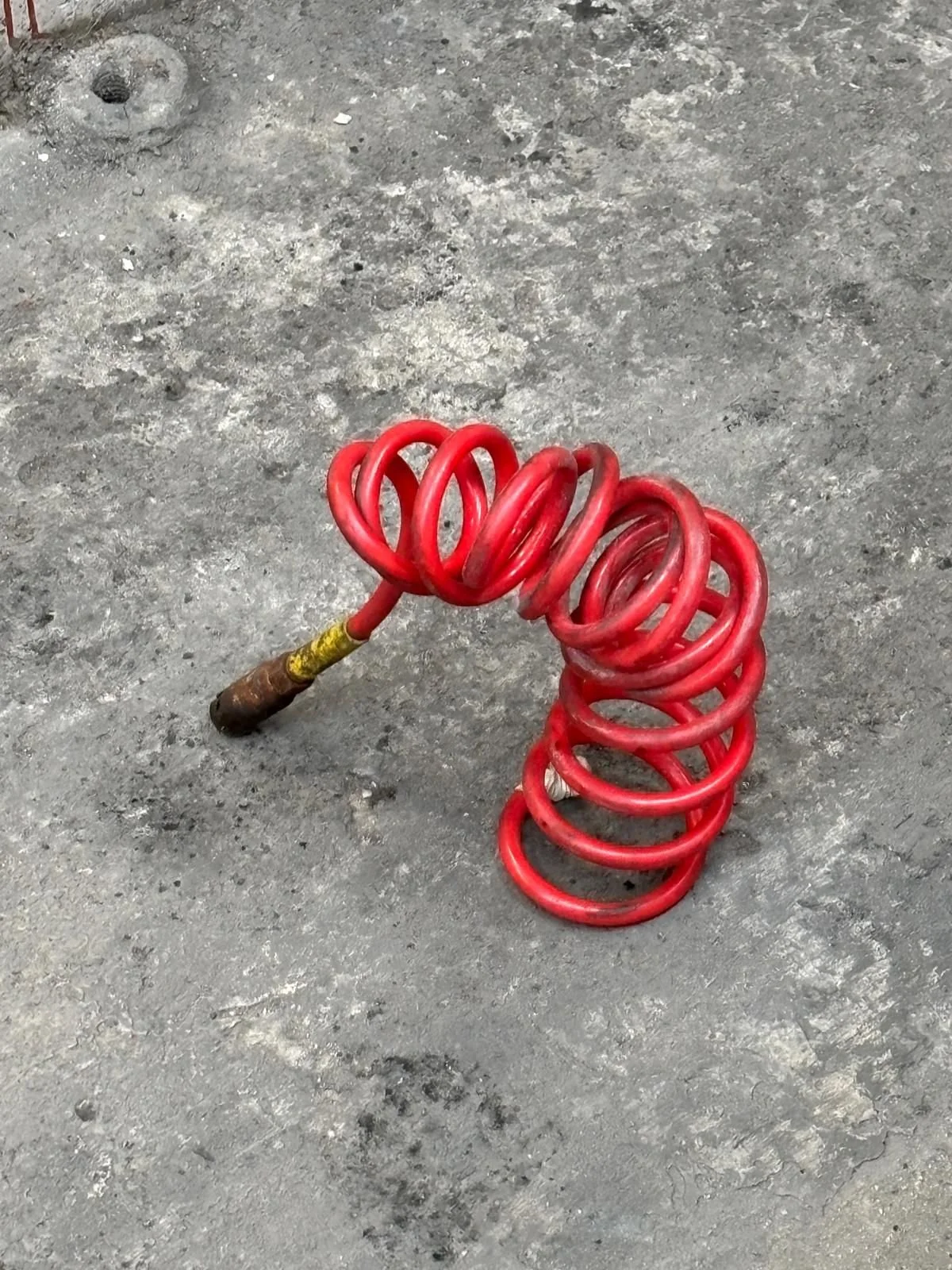
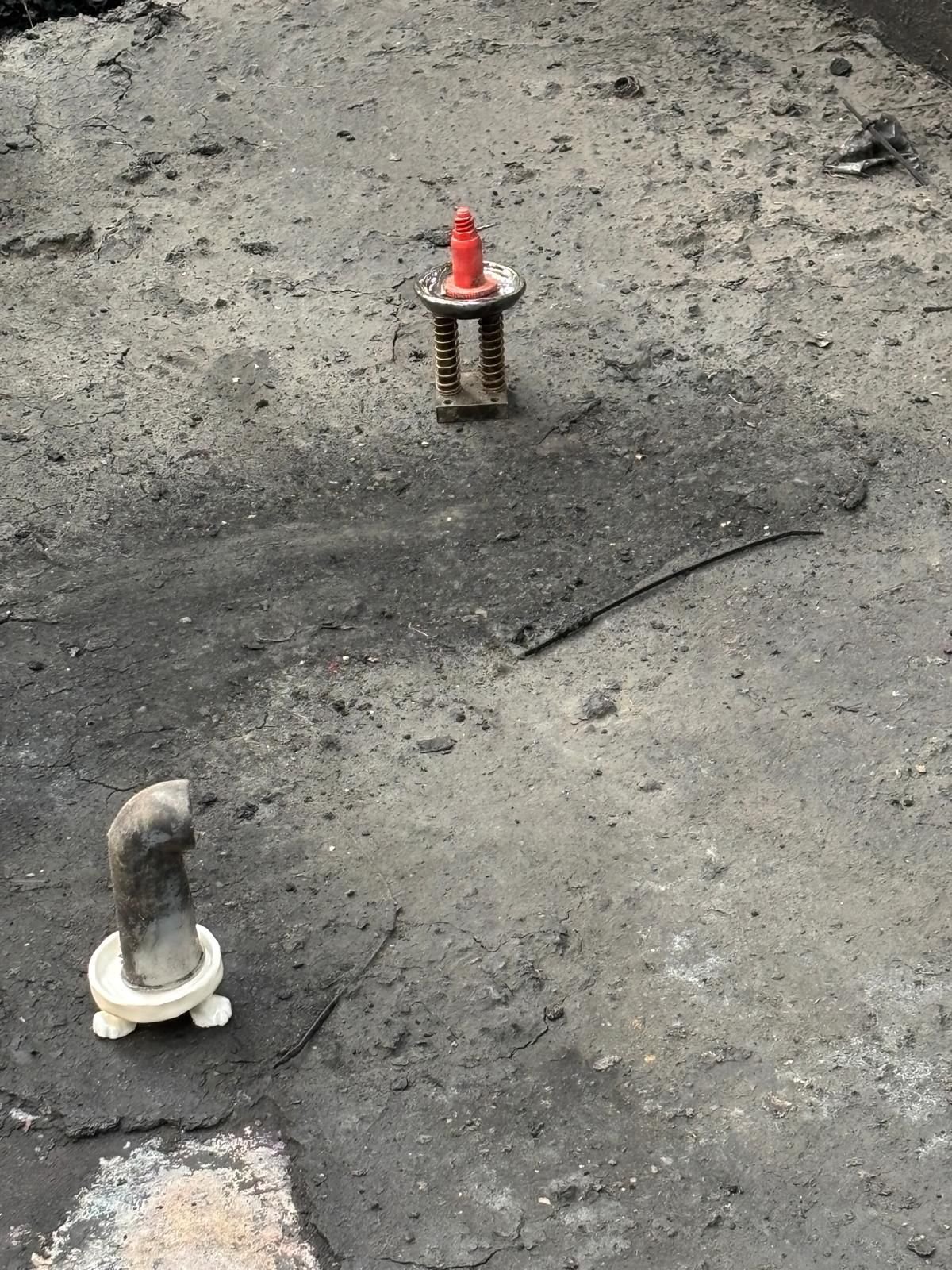
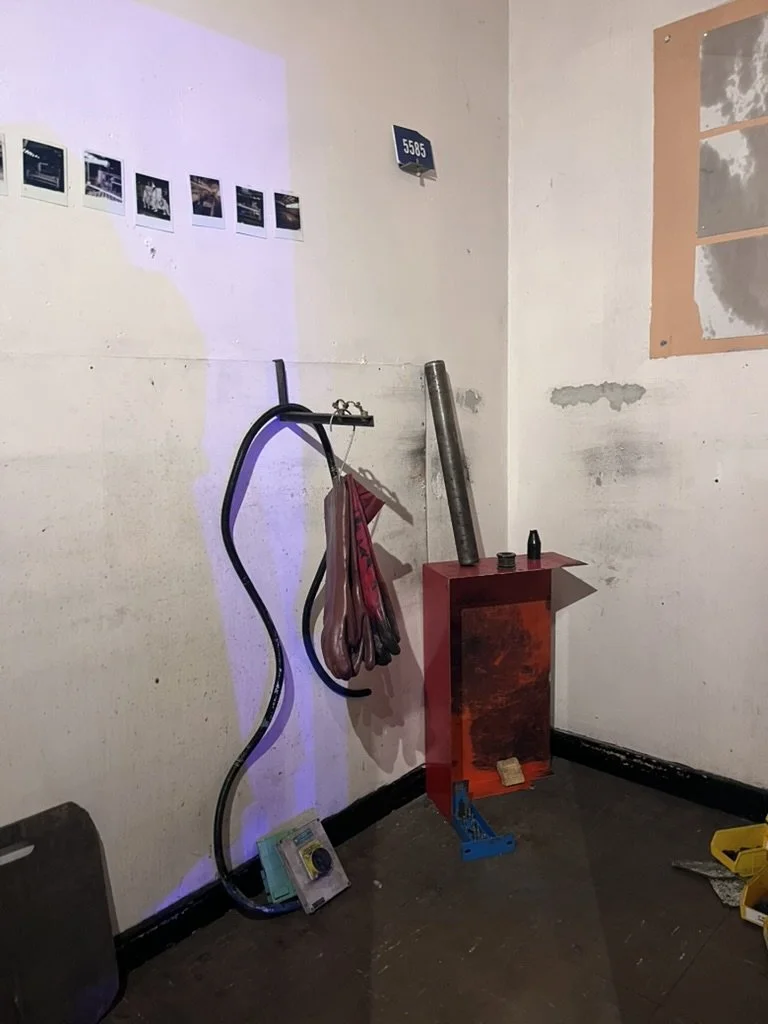
Over the next few weeks I intend to return to some of these same ideas in the studio, working with broken and discarded objects brought from the factory site. I’m not aiming for finished work, but for fragments, traces, and the act of drawing itself — as an action, a rhythm, and a way back into my practice.

In the studio — the space where new ideas begin to take shape.
Belle, my four-legged studio companion who recently passed, now folds into this ongoing mythology — a real presence carried into the imagined. Her old toys, like the factory scraps, still hold traces of touch, play, and presence. They may yet become catalysts for drawing or sculptural experiments — small fragments with the power to spark new myths.
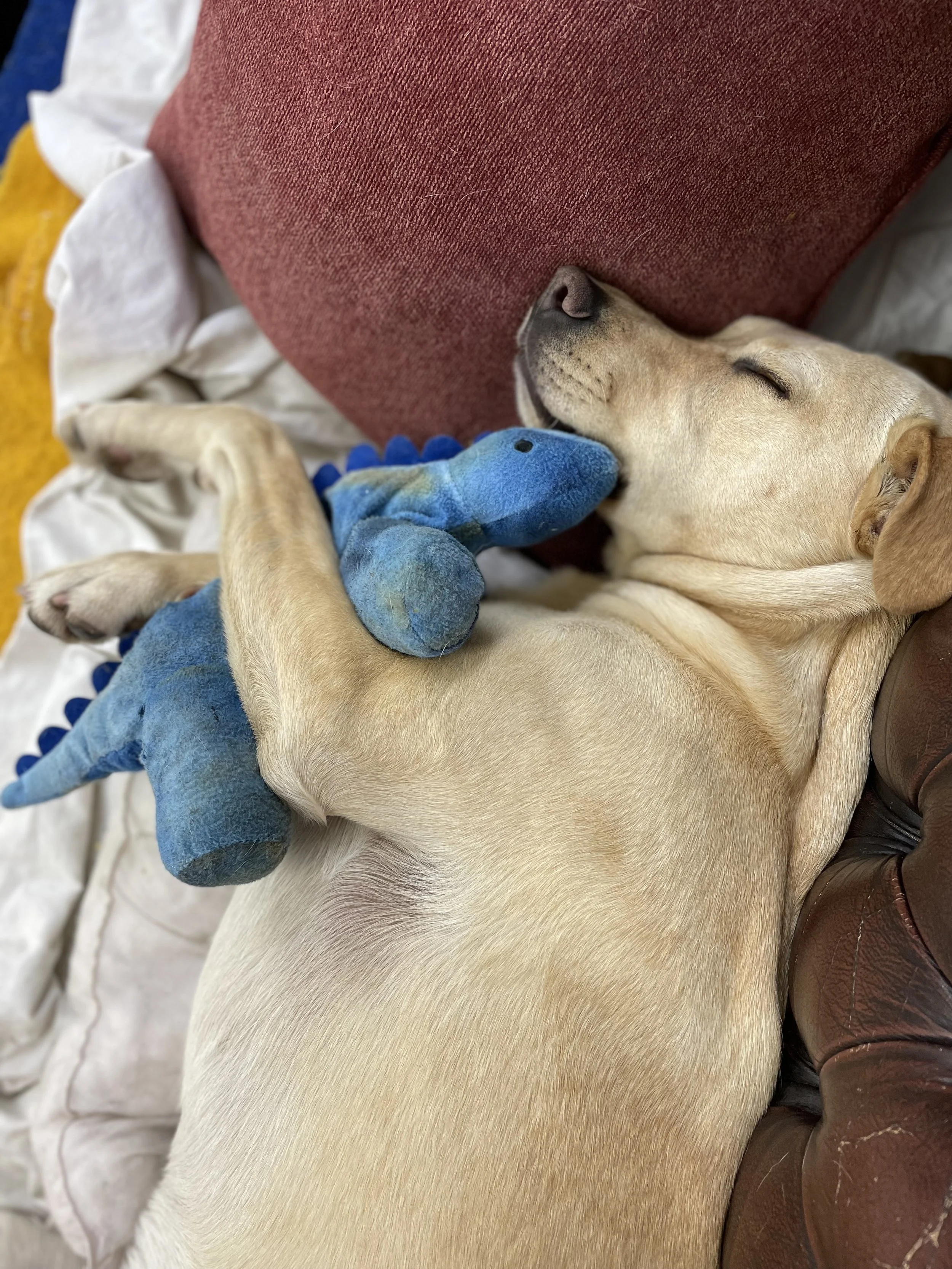
In memory of Belle: Asleep with her toy at West Park Place Studio.
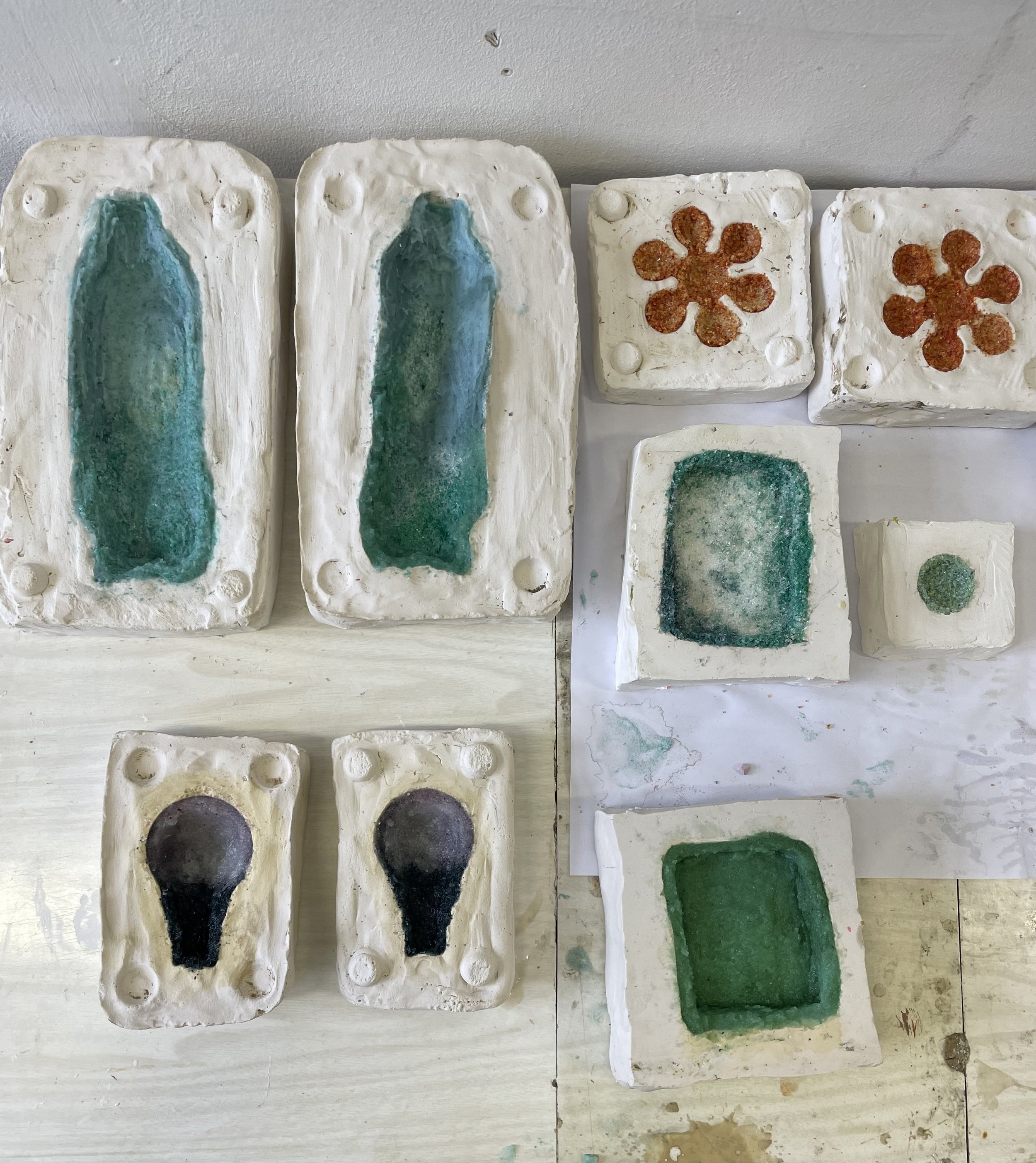
Pate Du Verre
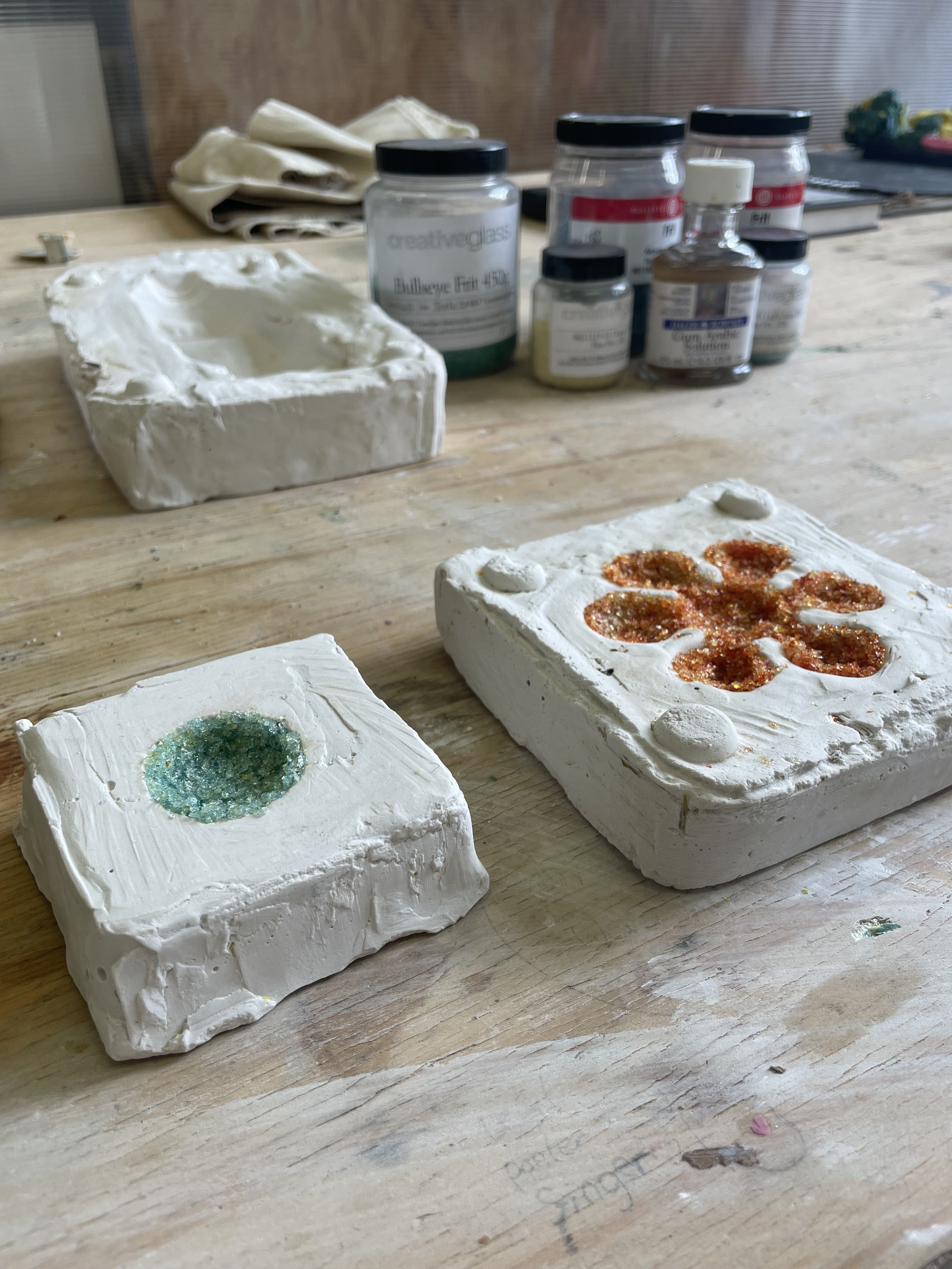
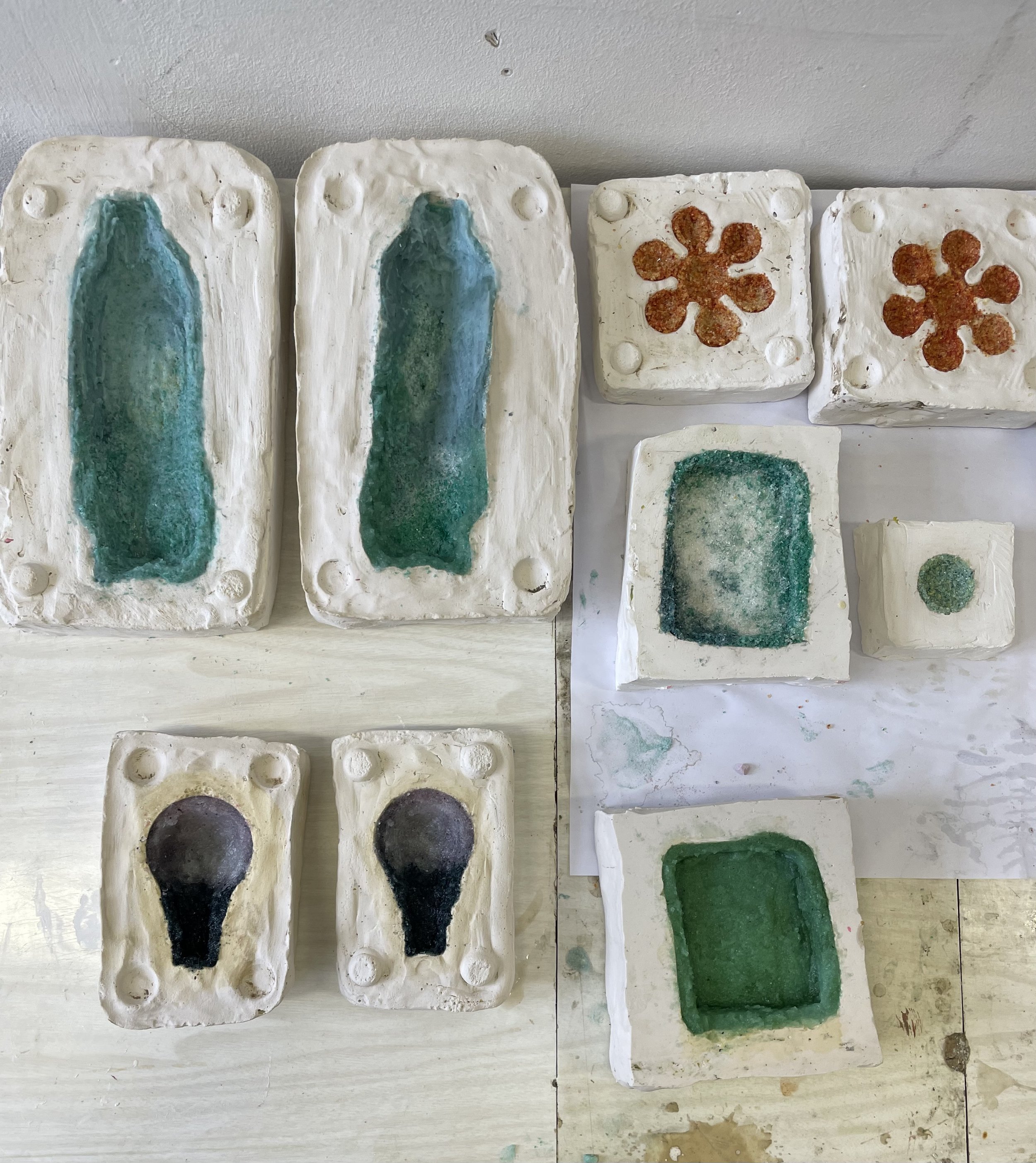
I have taken on a project space at the Edinburgh Sculpture workshop for a period of time dedicated to exploring ‘Pate Du Verre’ which is the earliest form of glass making. My hope is to create a series of hollow glass objects which can be lit from within.
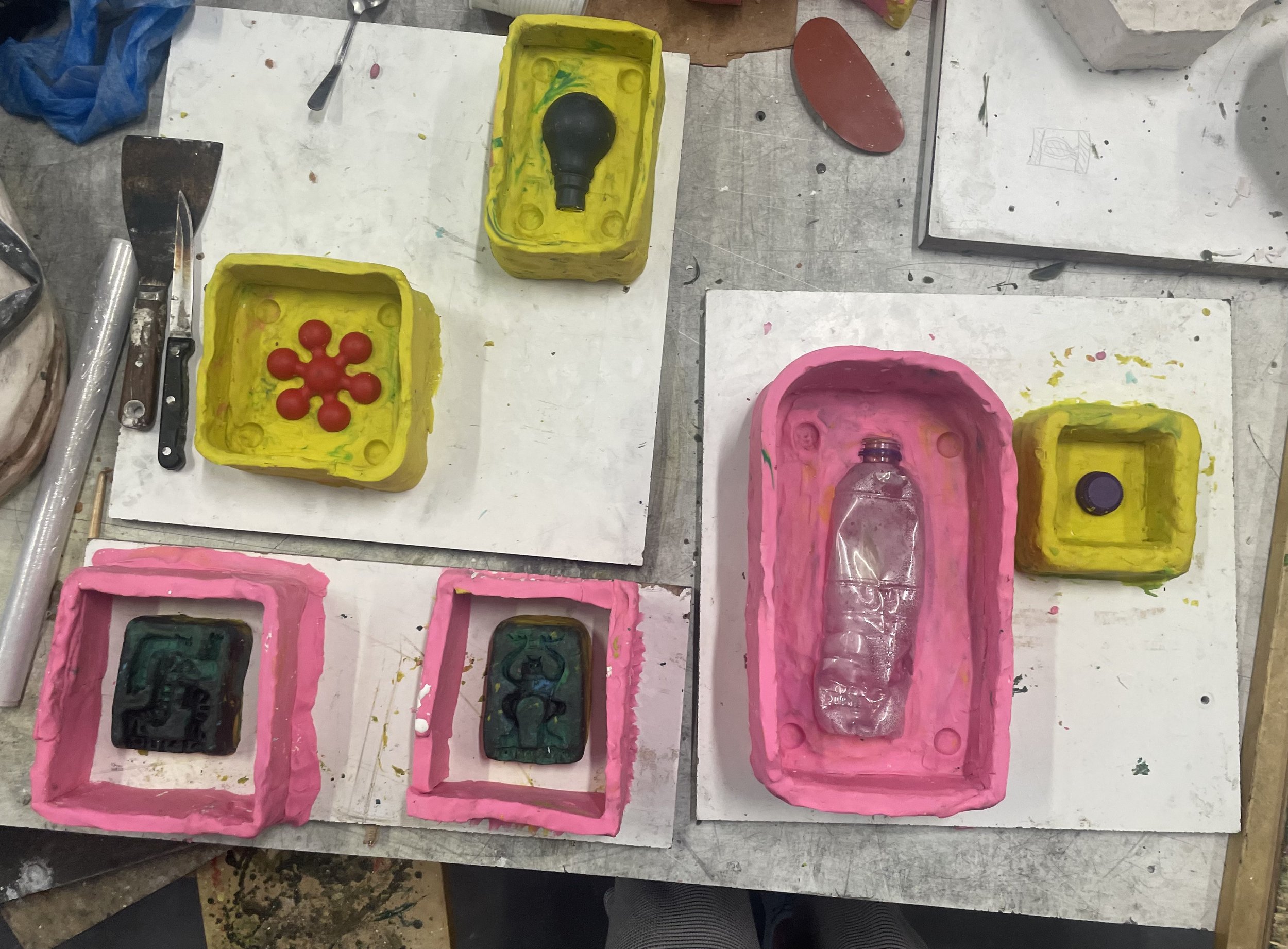
It’s a slow process involving creating refractory molds out of flint and plaster which are then packed with glass frit and a binding agent such as gum arabic. When fired to low temperatures the glass melts fuses together.

Hot Iron
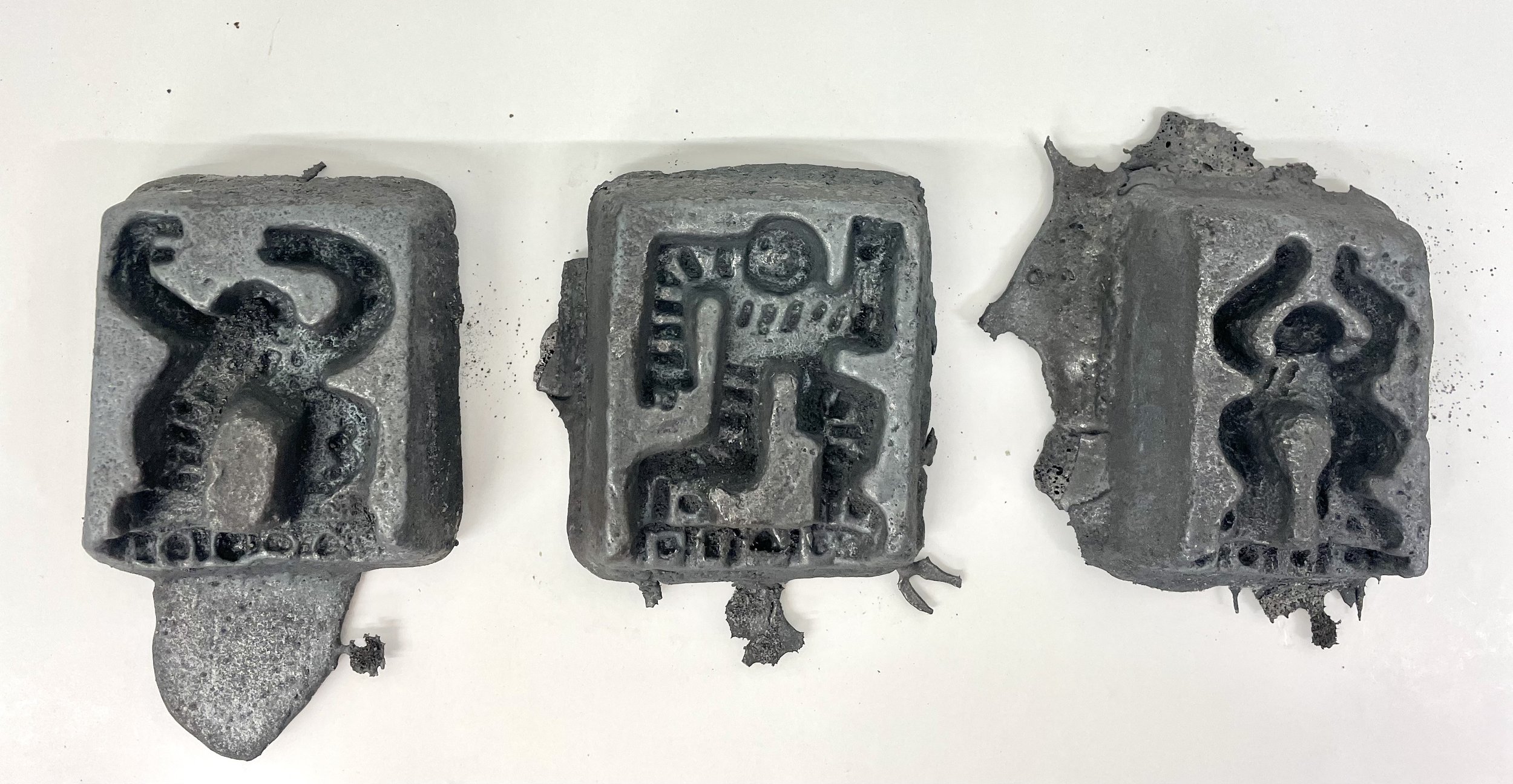
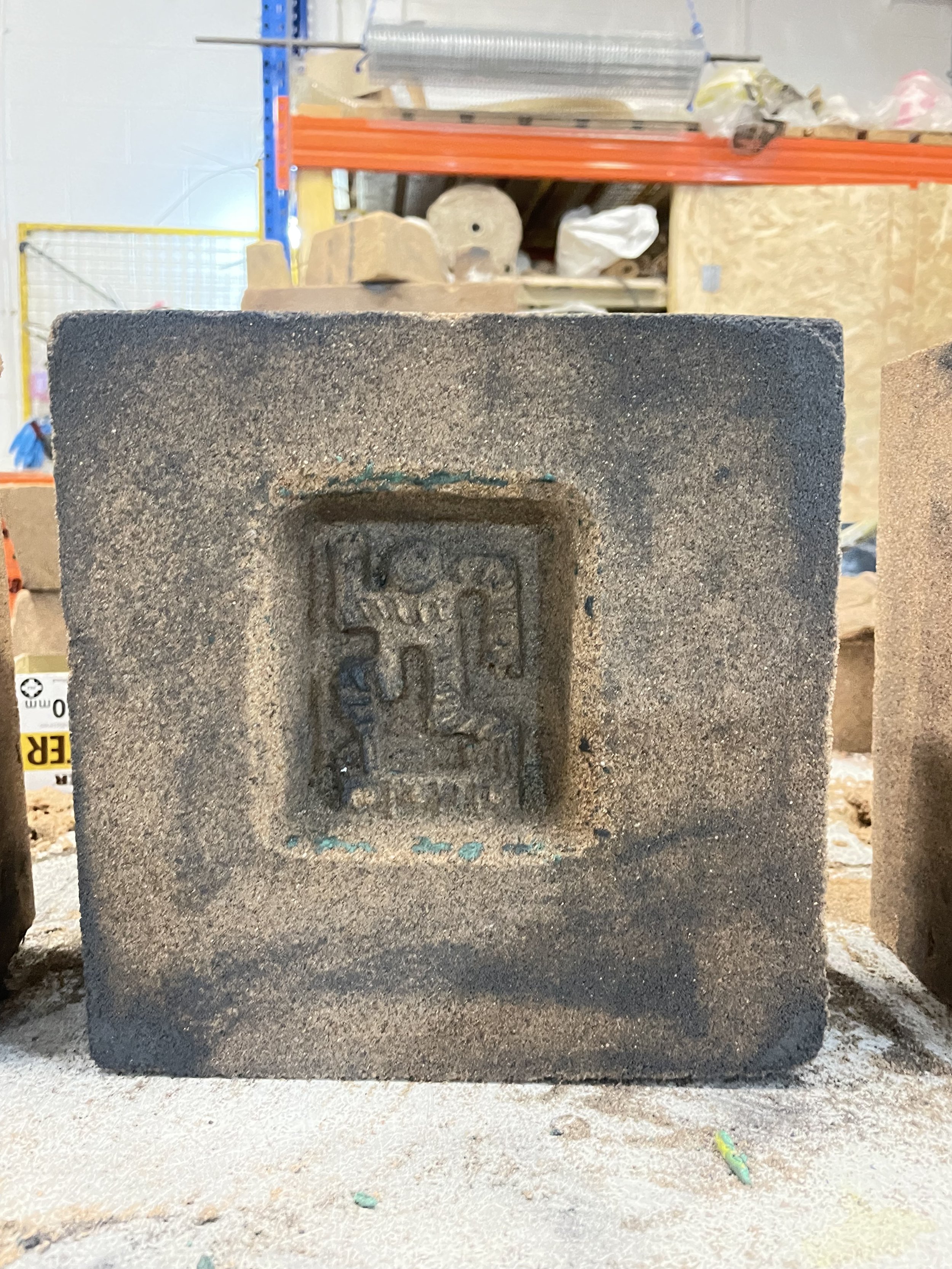
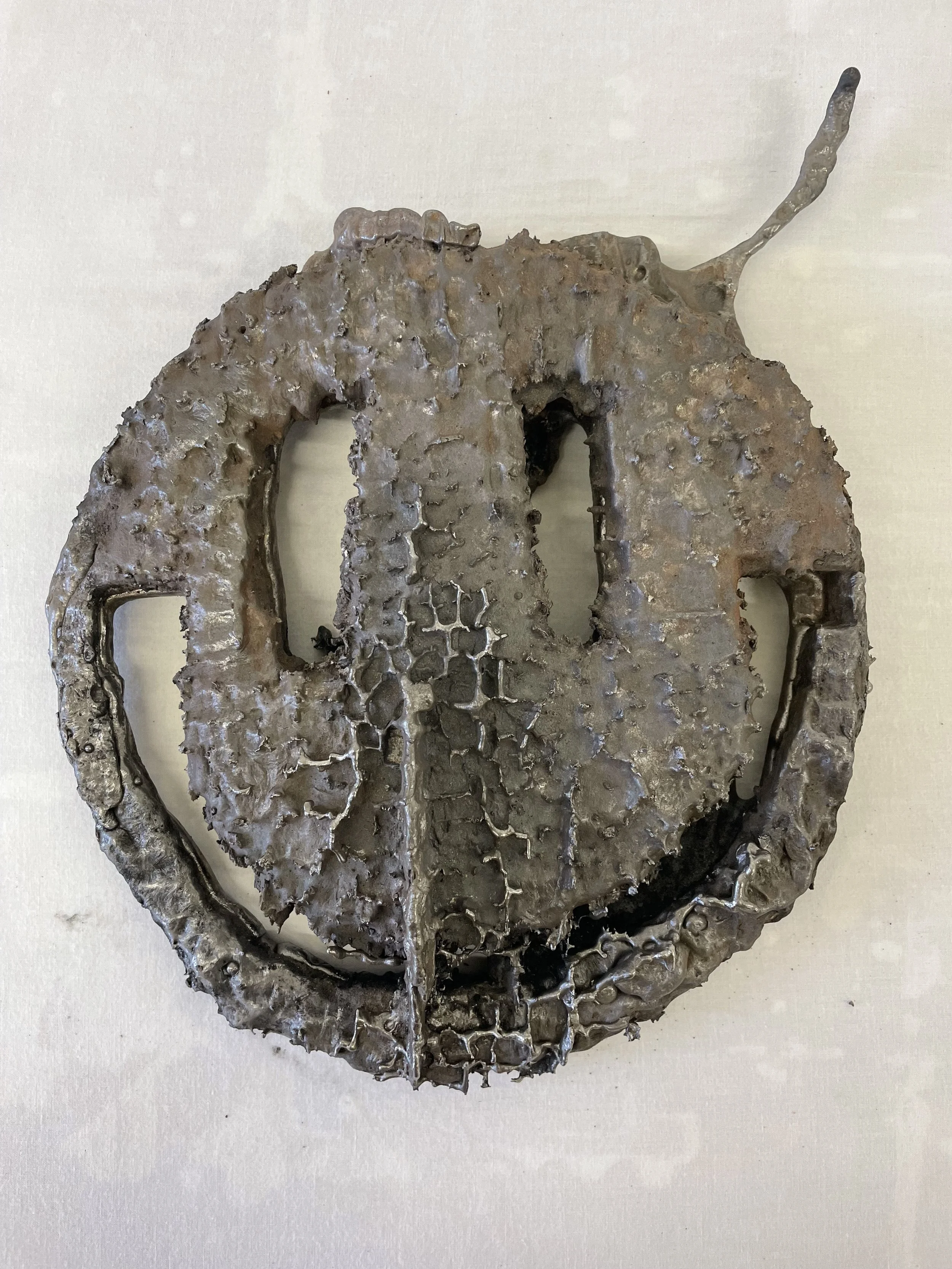
I was awarded a graduate residency at Edinburgh Sculpture Workshop where I have been based for the last few months. In December 2022 I was lucky to get involved with an iron pour in the foundry which was pretty spectacular.
I made 3 small iron molds as well as a carved wooden reactive mold.
Here are a few snaps of the process and outcome….




Creating a Myth
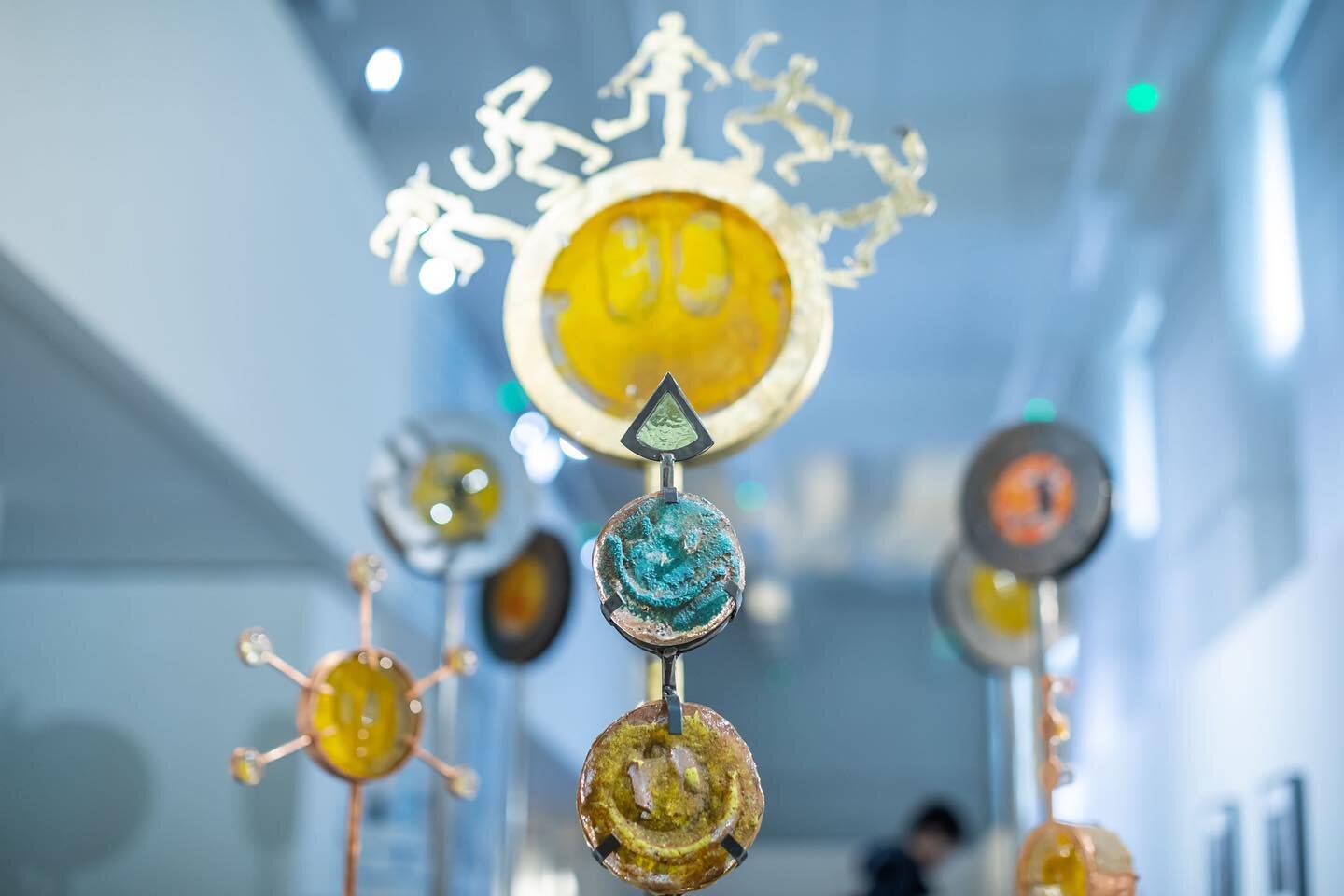
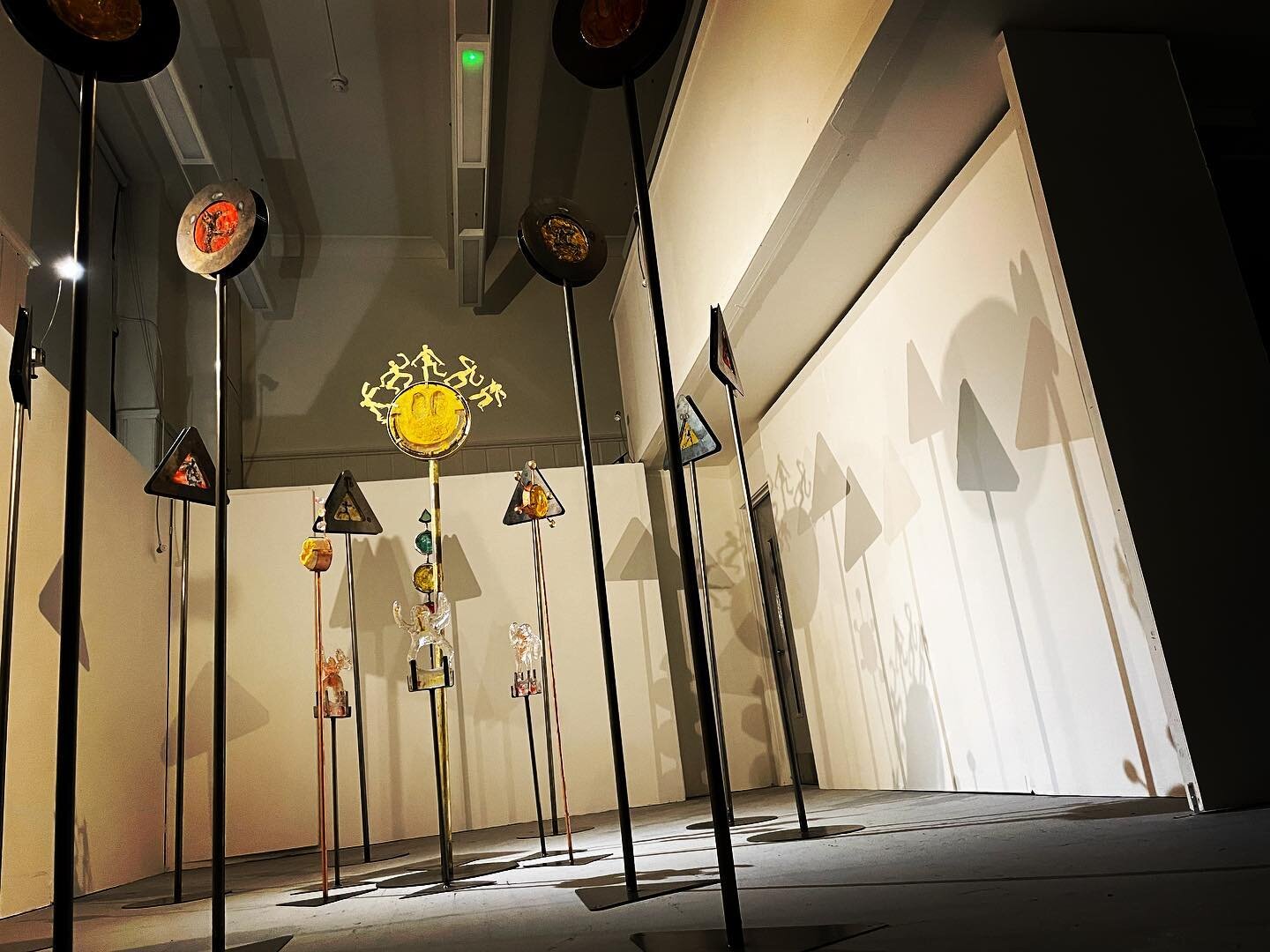
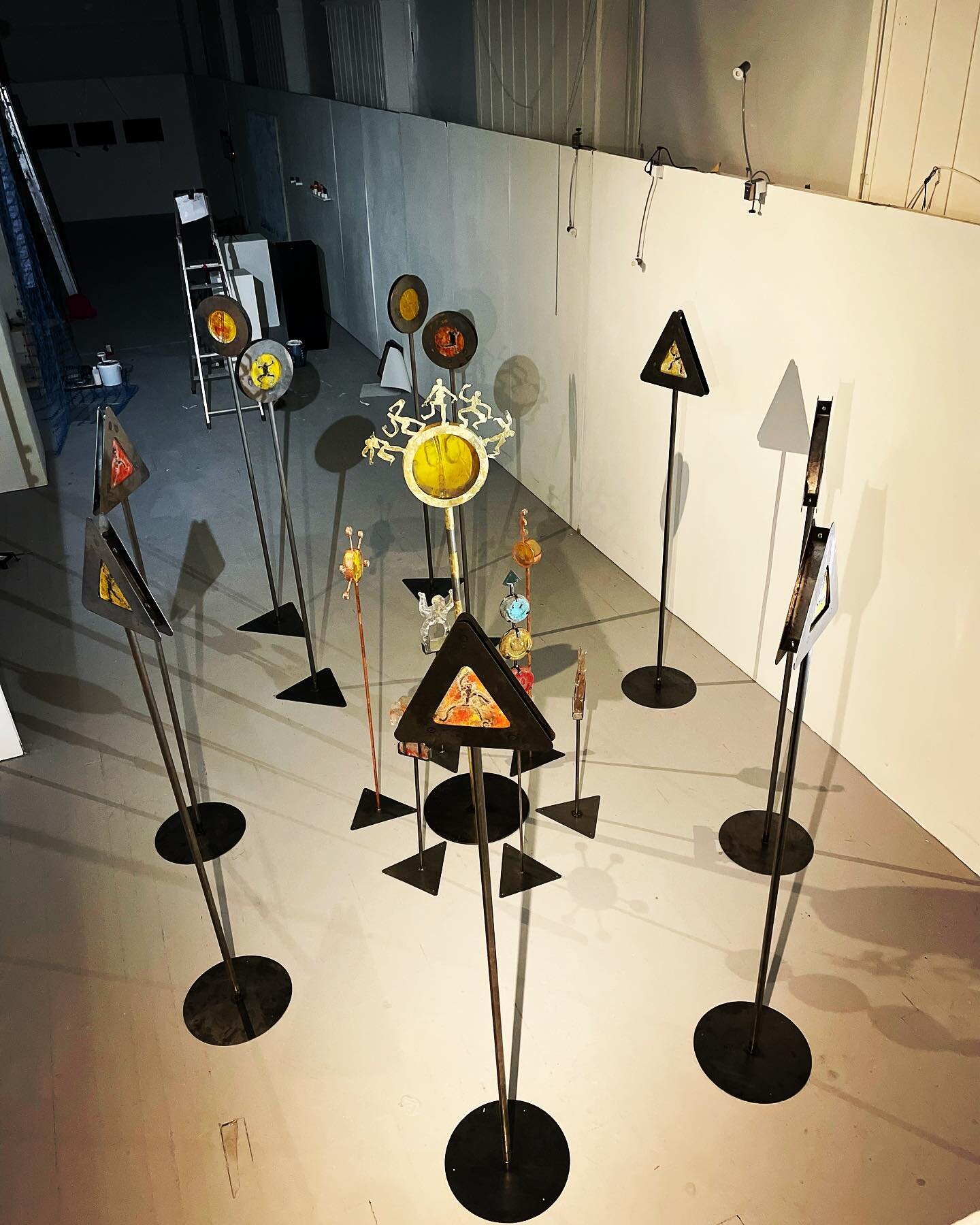
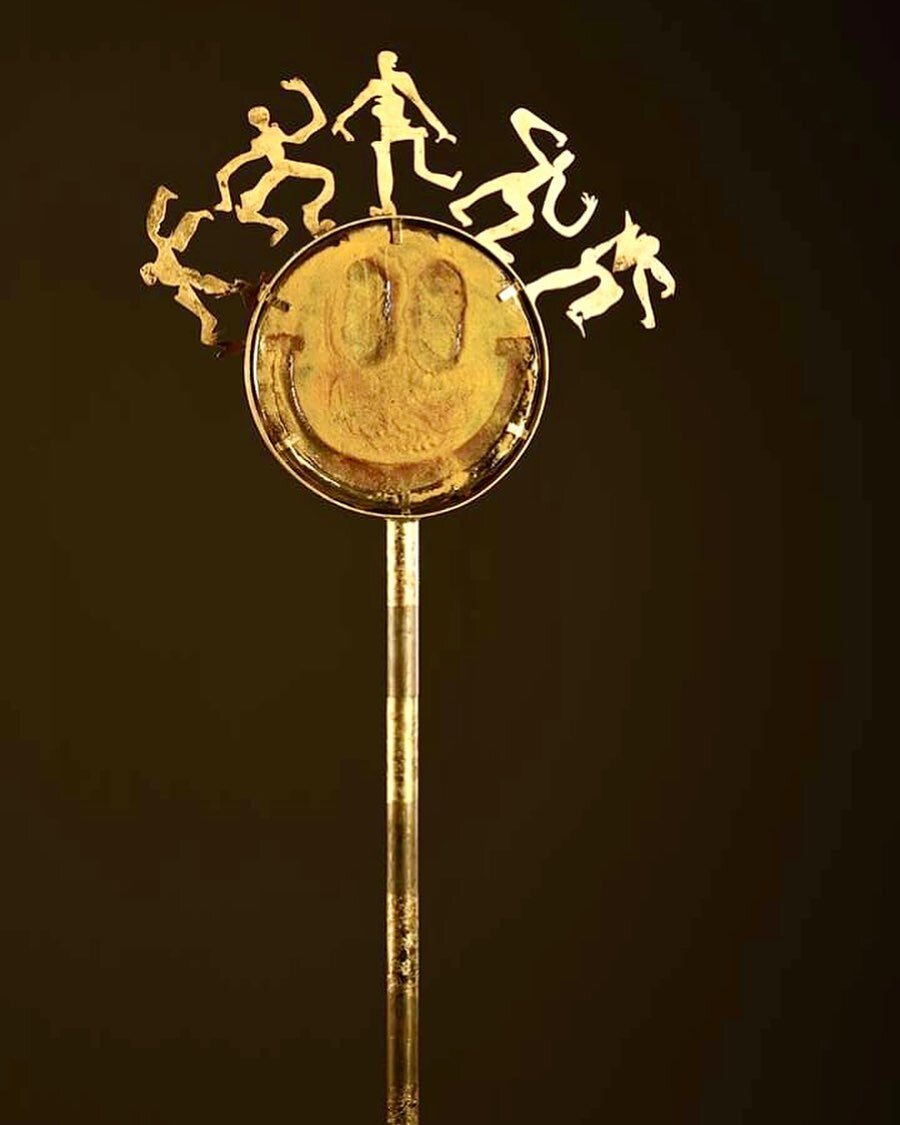
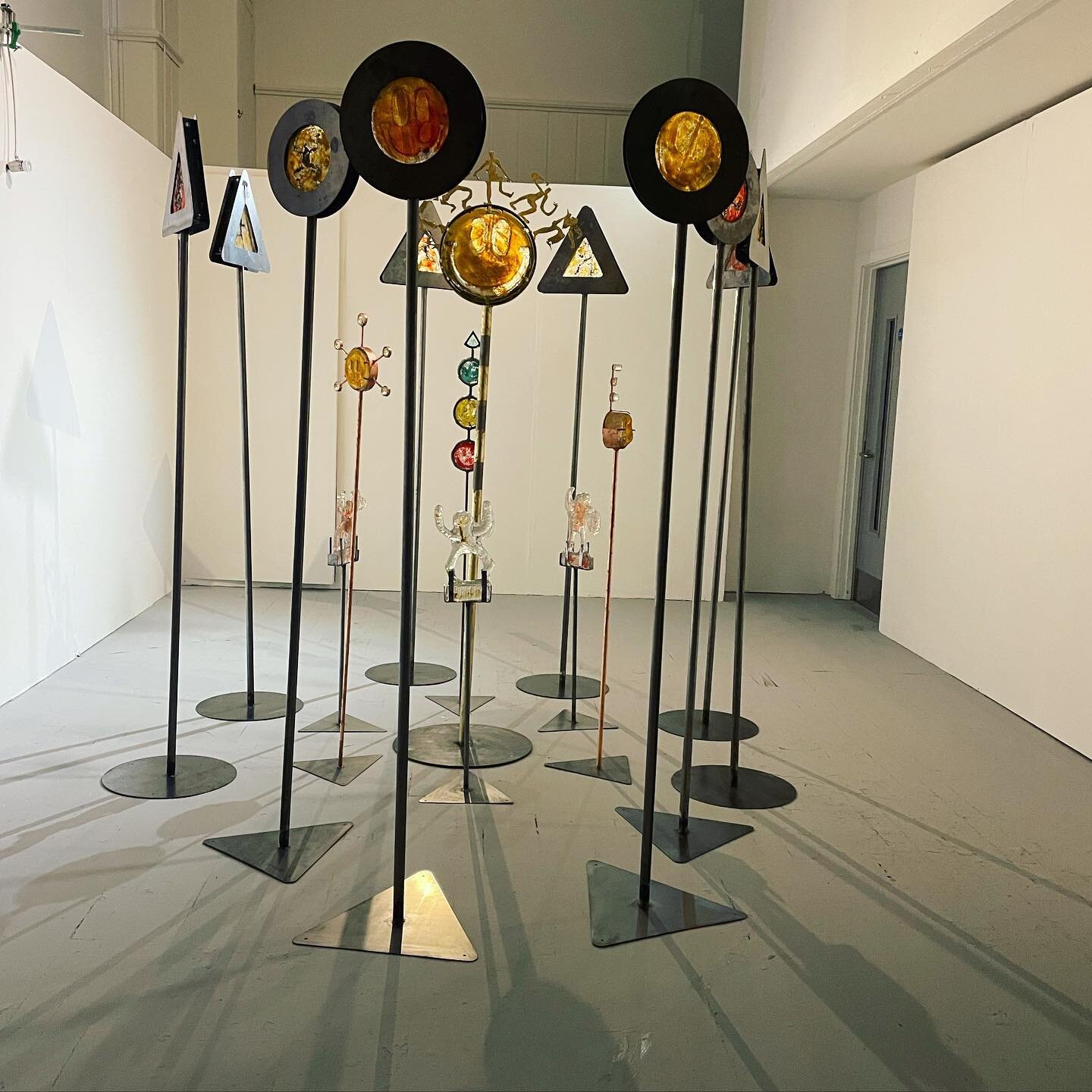
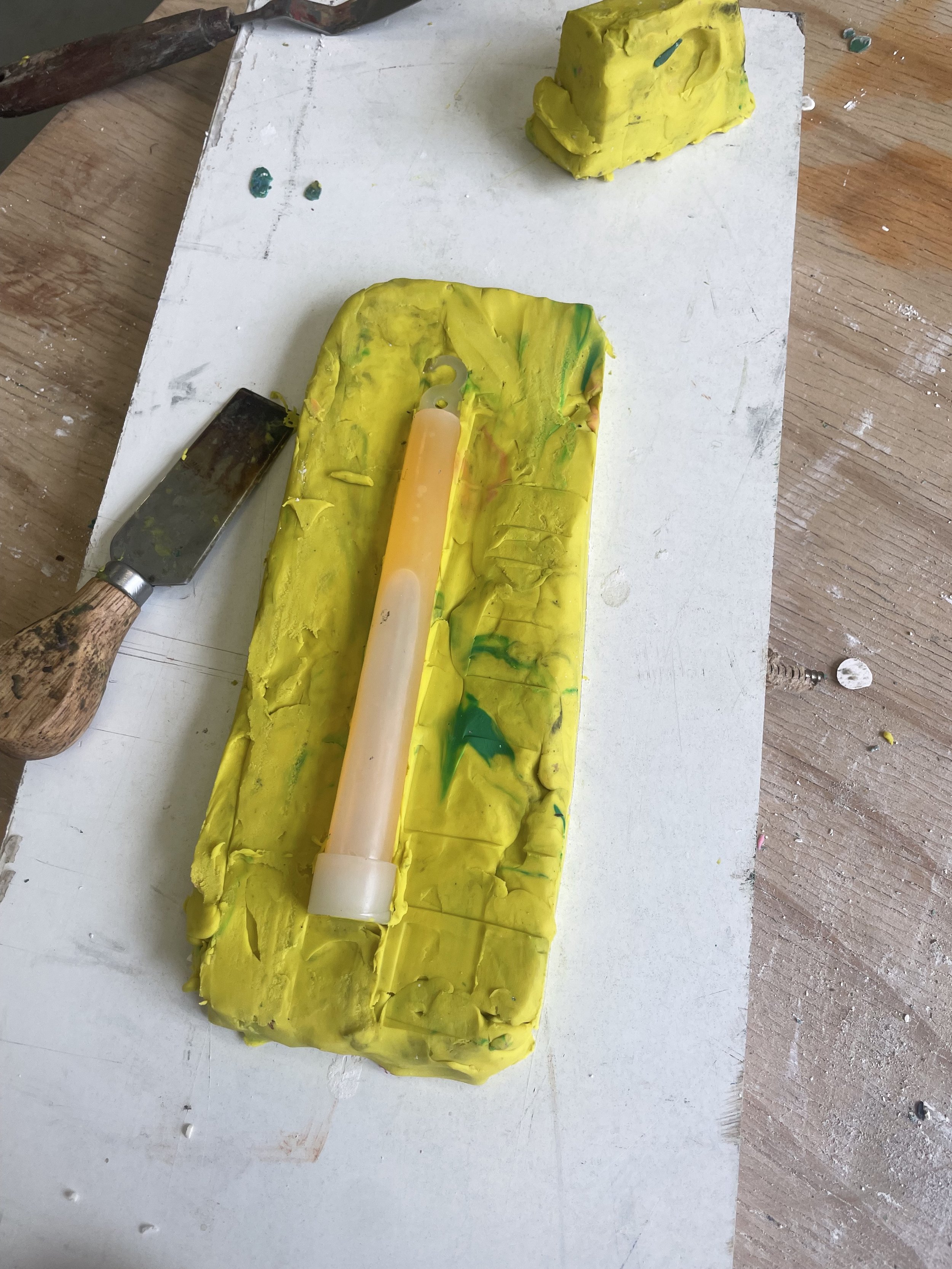
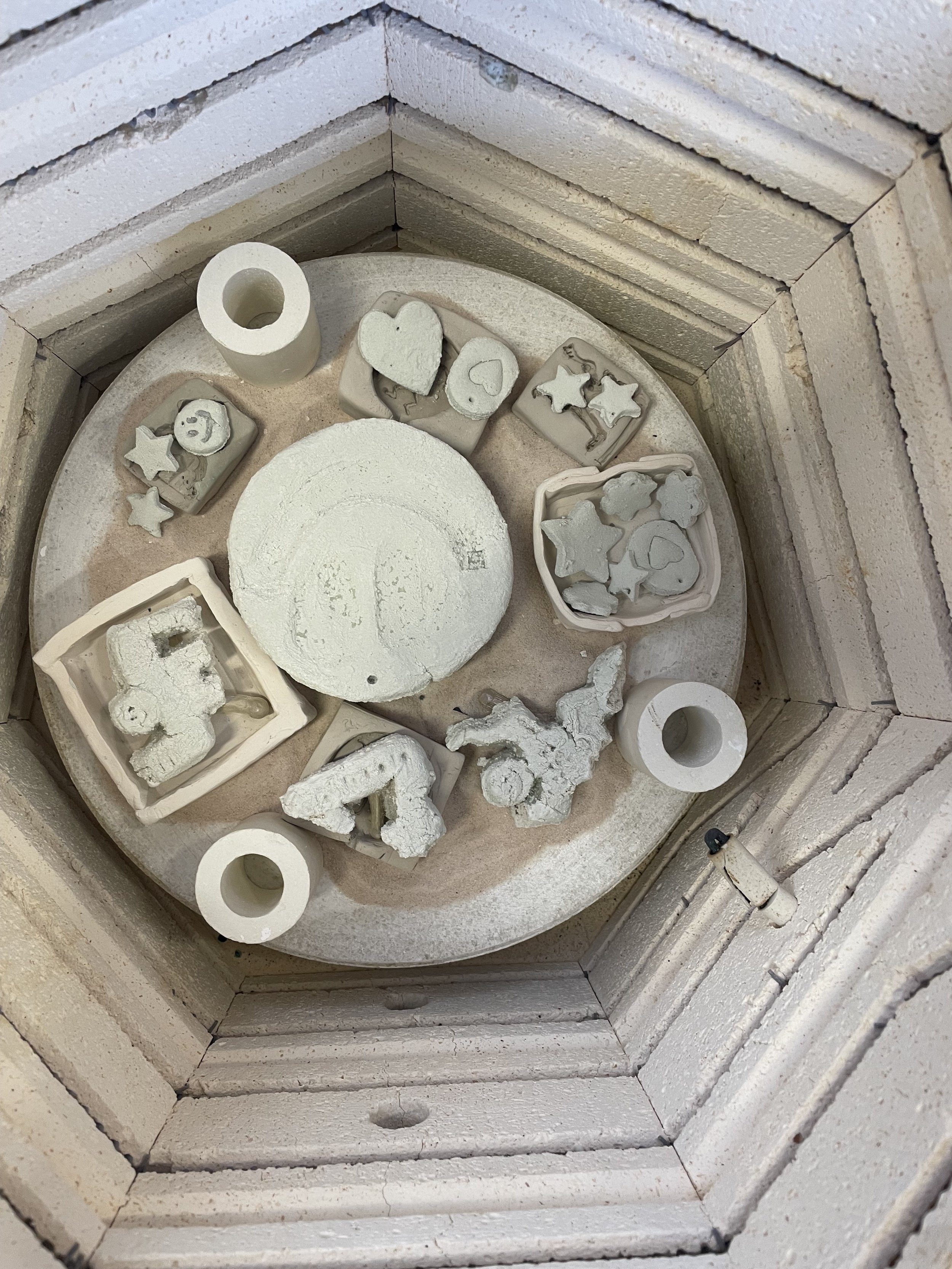
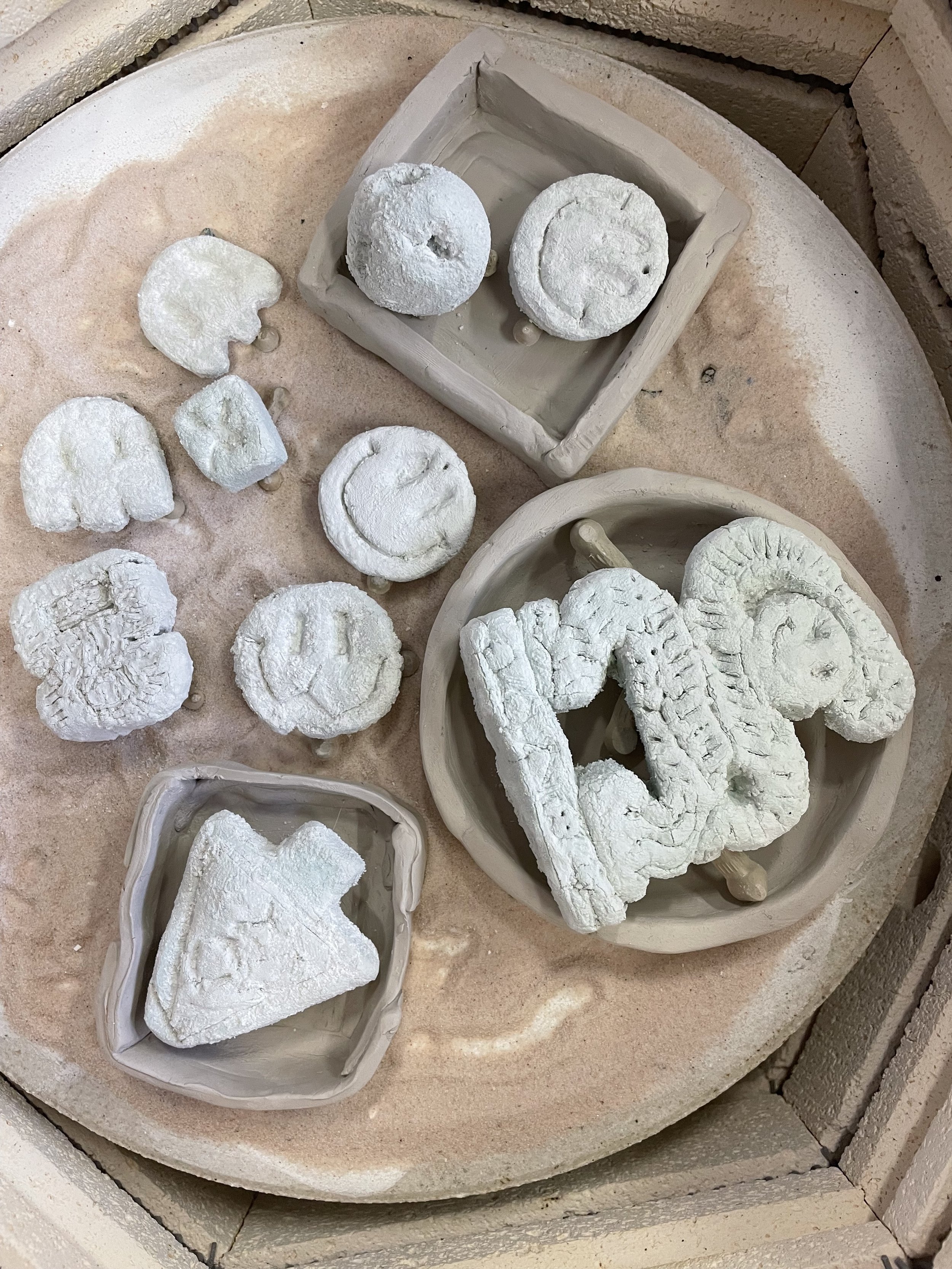
Here are a few working shots of some of recent work in progress associated with two early forms of glass-making; Pâte de Verre and Faience. I have began to experiment with these processes during my current residence at Edinburgh Sculpture Workshop. I am planning to create a series of objects which are non-functional ceremonial pieces; for example, a glass bucket hat, a large glass glow stick, as well as ornate costume jewellery and headdresses used to adorn practitioners in ritual. These items will be decorated with dancing figures, smiley motifs, and other symbols which hint at the mythology of a lost civilisation of Rave.
Faience is considered the earliest form of glass-making; this self-glazing ceramic dates back to the fifth millennium B.C. and is commonly found in many archaeological collections from Ancient Egypt. This material has been discovered on excavated Bronze Age sites, and has connections with ‘The Beaker Folk’, who were new settlers to Britain that brought a distinctive style of pottery, metalworking, luxury overseas goods, and whose religious rites are thought to have involved intoxication.
The process of Pâte de Verre allows for thinly walled objects to be constructed using a paste created from powdered glass; and the resulting pieces will be lit from within when exhibited, which resonates with the Egyptian belief that glass and faience were other-worldly creations, and that this distinctive, vibrant blue material was considered magical due to its inherent shimmer and glow.
In the constructing Rave’s artefact assemblage, I will draw from ideas of costuming within ritual practice, with reference to the various uniforms of music cultures. Items from 90s Rave fashion, festival attire, and ‘KANDI’ jewellery used in gift exchange rituals within the contemporary rave scene have been considered alongside the material remains of the sacred practices of The Beaker People.


Archaeology, Circles and Rituals
Thoughts….
Neolithic ceremonial sites such as stone circles, henges , avenue – the Avebury complex.
These sites have been speculated upon for decades. How can we separate our our perspective of the time we live in when interpreting the past. I don’t believe that we can as we can only understand from our contemporary experience. Returns to this idea of eavesdropping on the past. Advancement in scientific technology has fed into archaeological analysis in that we can confidently date a site using radio carbon dating etc but the analysis of how these people lived is more subjective and the intended use of an archaeological features is more subjective.
Consider also what elements from a time survive, what percentage is excavated, what is missed by the archaeologists during excavation. An excavation is generally around 10% of a known site, which is a very small cross section. What if a different 10 % of a site was dug – would it offer the same finds and interpretation. When working as an archaeologist it always struck me when considering these percentages how arbitrary the elaborate stories were that archaeologist constructed from the findings about the peoples who lived in these places.
Ethnocentrism: the evaluation of other cultures according to preconceptions originating in the standards and customs of one’s own culture.
Ritual and ceremony are popular and importance elements that are considered when looking at the past through an archaeological lens. Religion and ritual has evolved as a means for past people to connect to land and help explain their place in the world. Elaborate rituals are constructed which promote a sense of collectivism.
In taking something iconic such as rave and creating a ‘religion’ and iconography around this scene it highlights the difficulties in interpreting the ancient past. Or in fact the ease with which we misinterpret our past based on our present day experiences.
Vinca Peterson documenting the 90s tekknovals through Europe which saw tribal movements in convoys following the music from place to place. I keep returning to this notion that the is something transcendental when humans are lost in music and this taps into ritualistic practice and tribalistic movement. Within ritual space the chant , the repetition and drum beat, the dance, Within this space a sense of collectivism is achieved. It returns us to our a primitive existence and our relationship with land, life and mortality.
Kiln casting glass

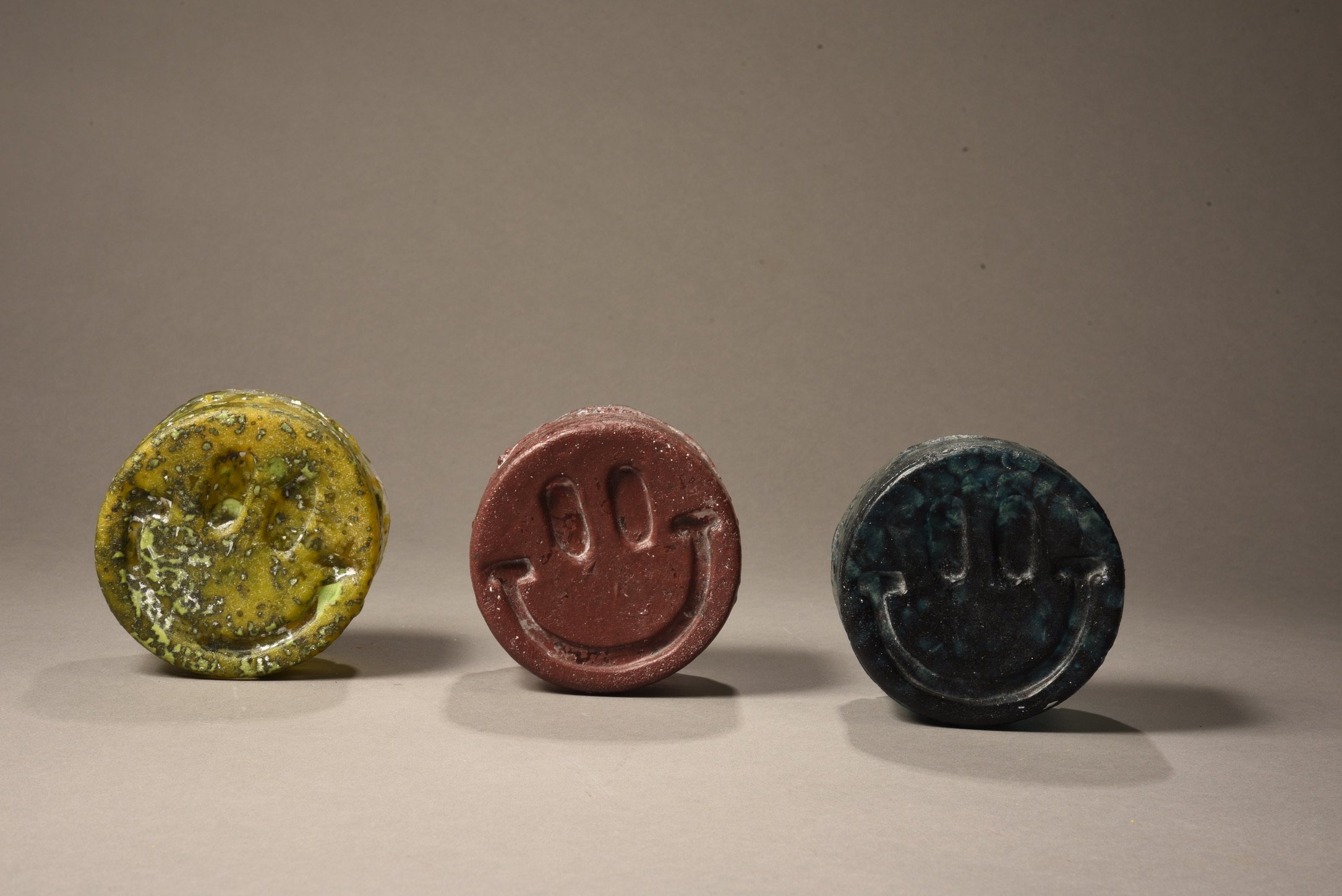
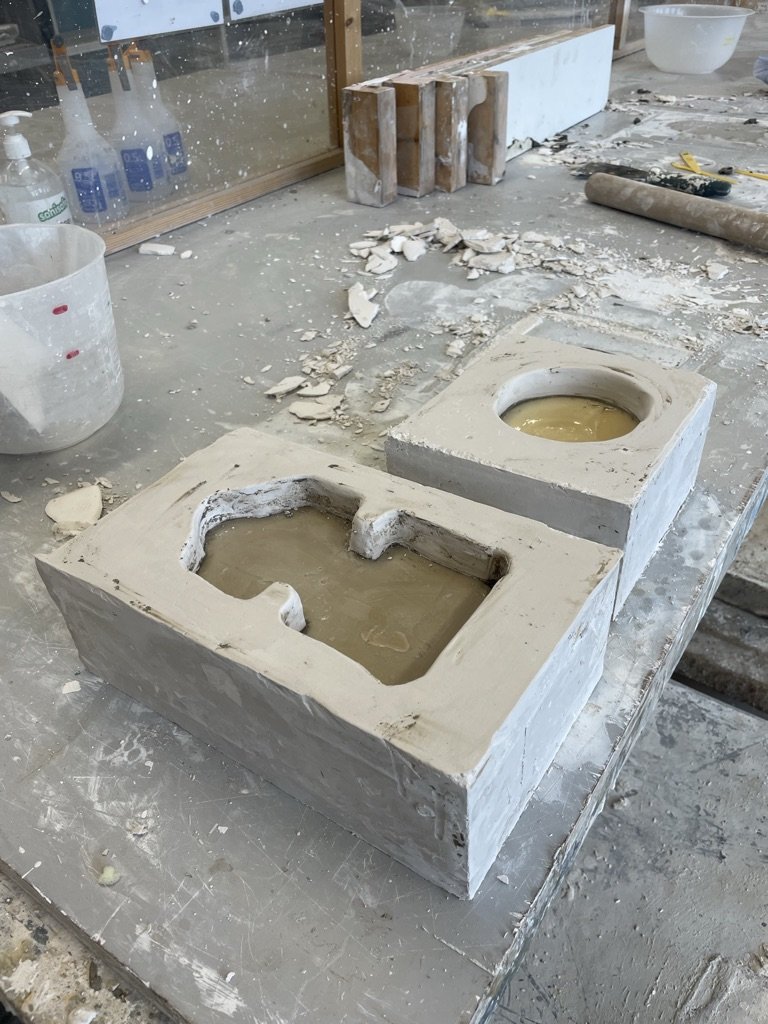
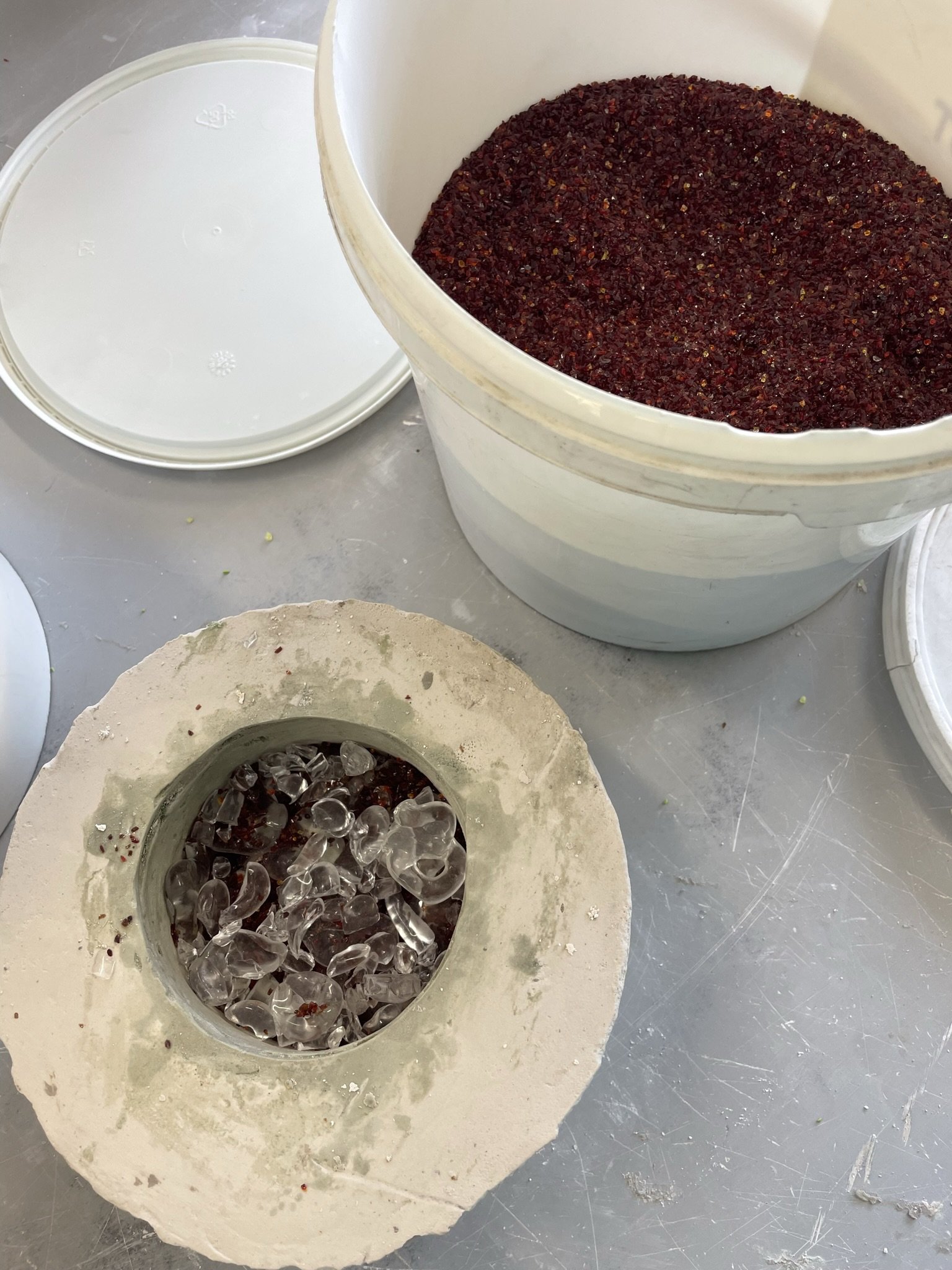
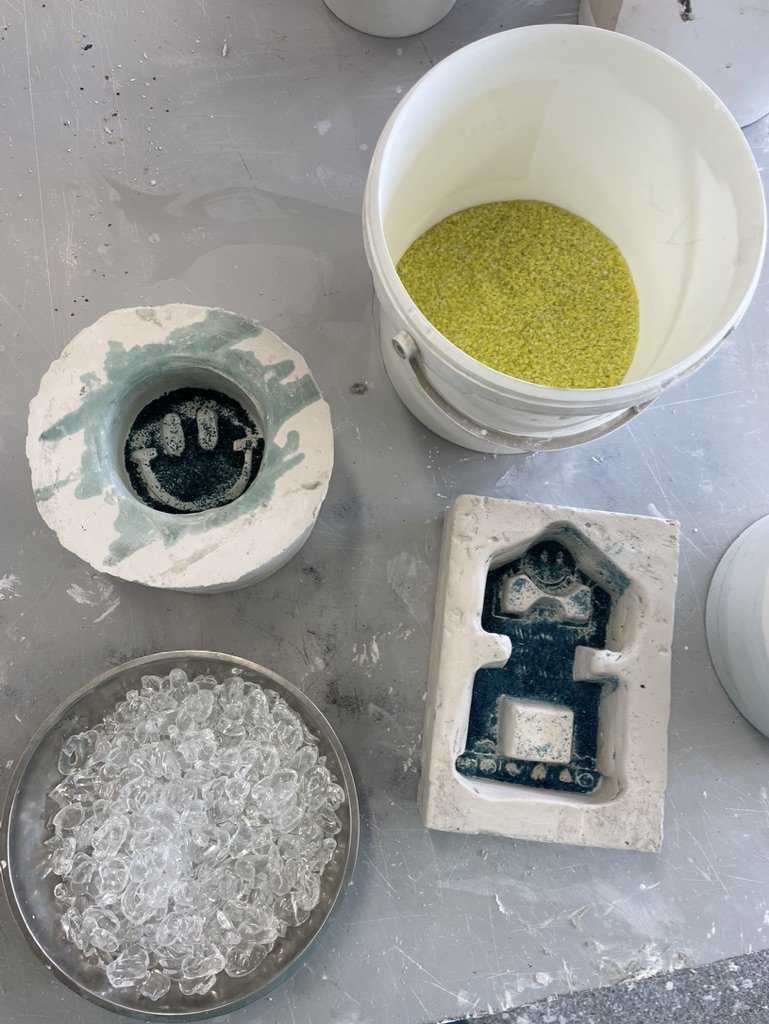
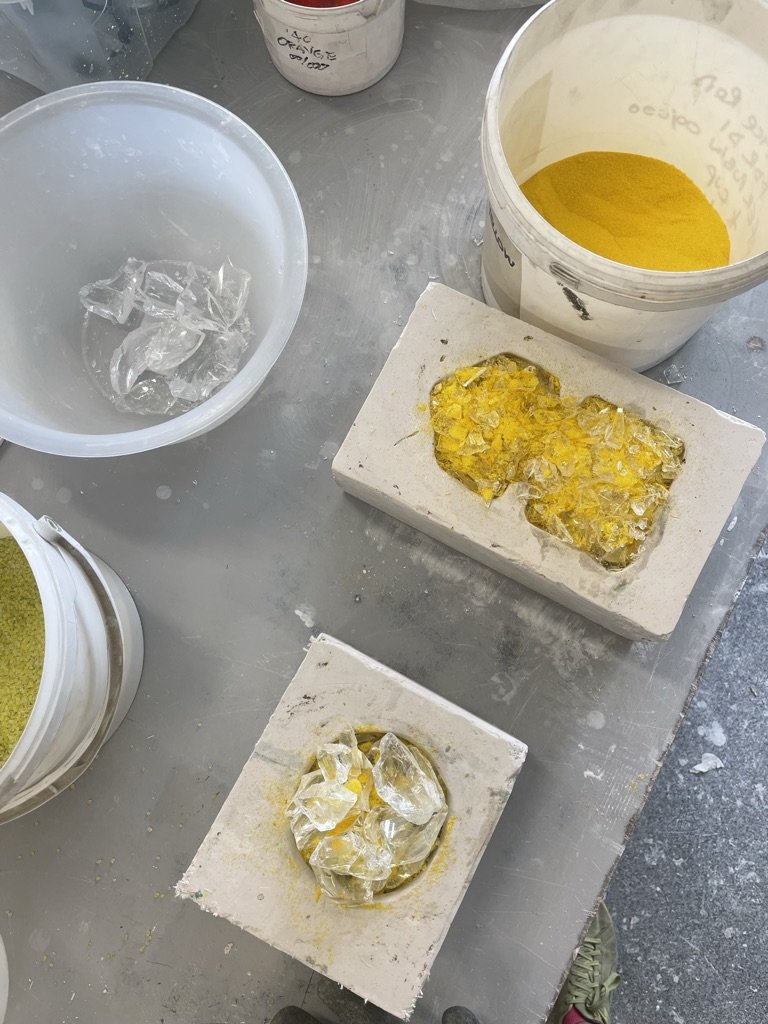
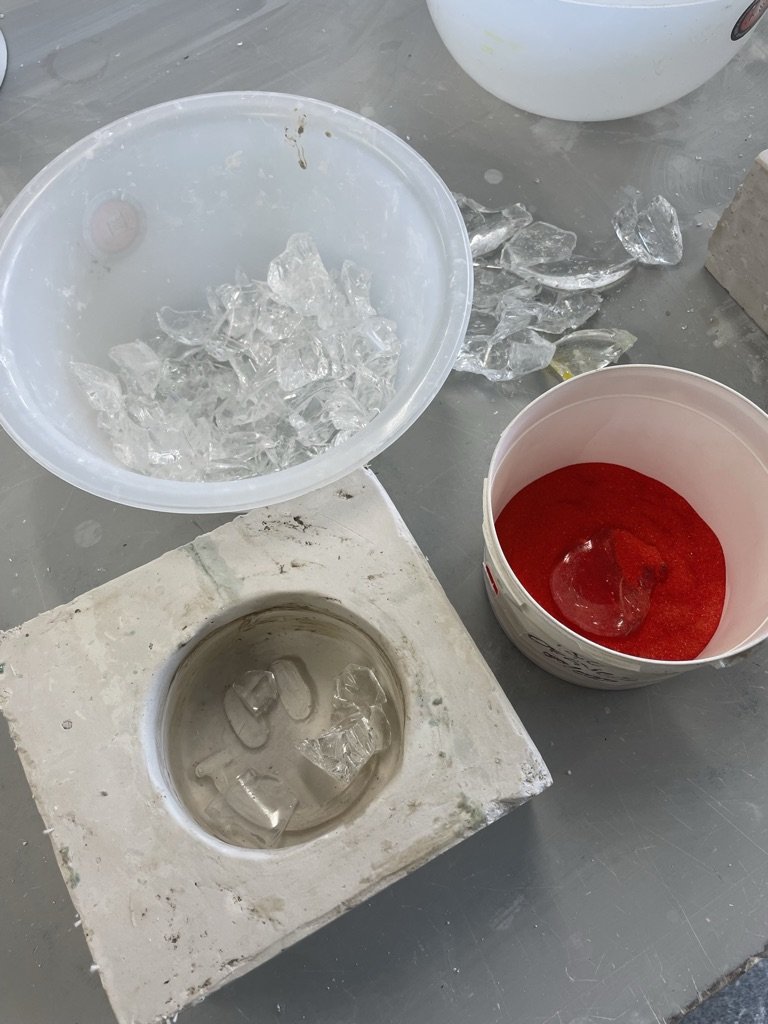
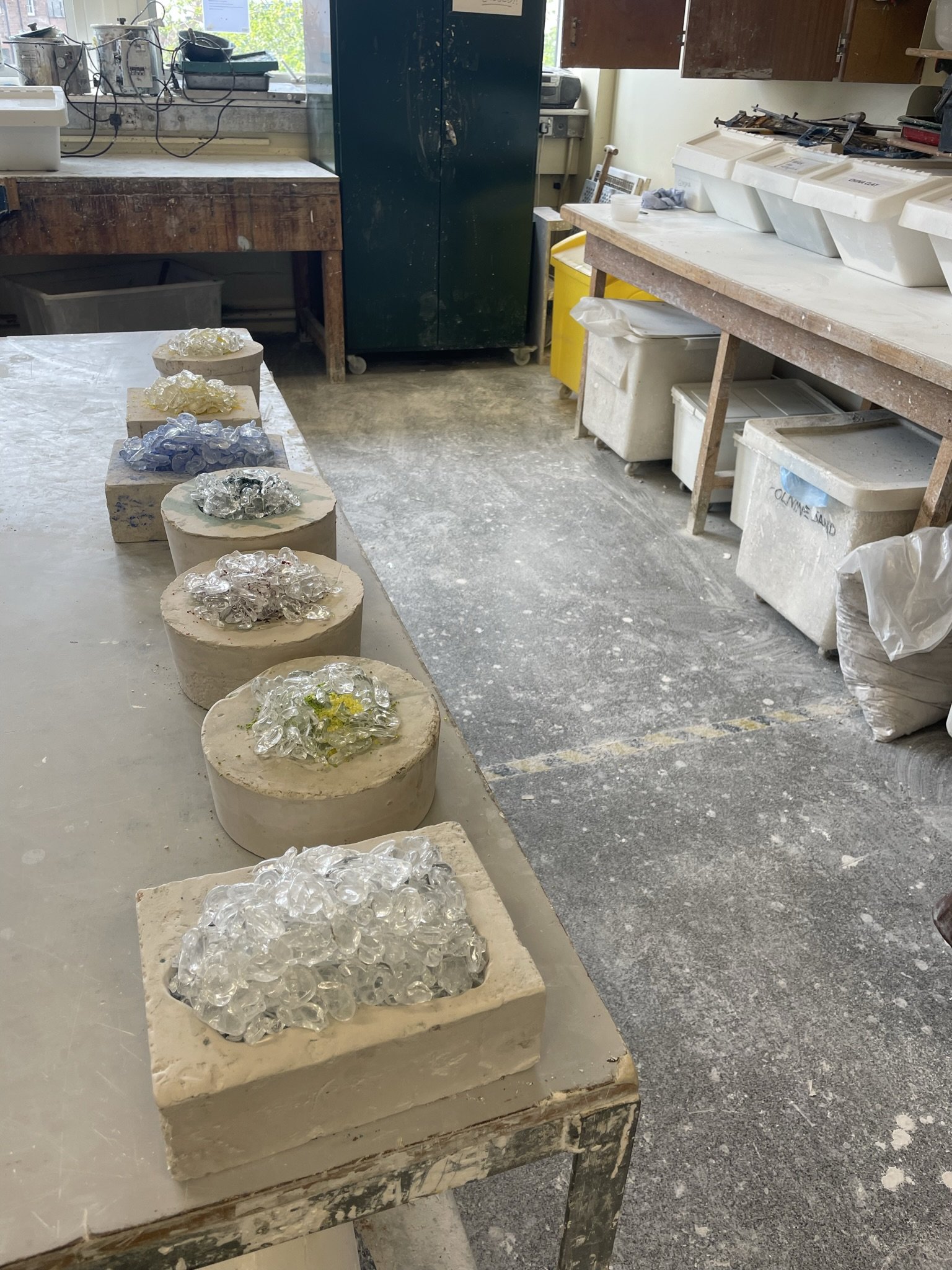
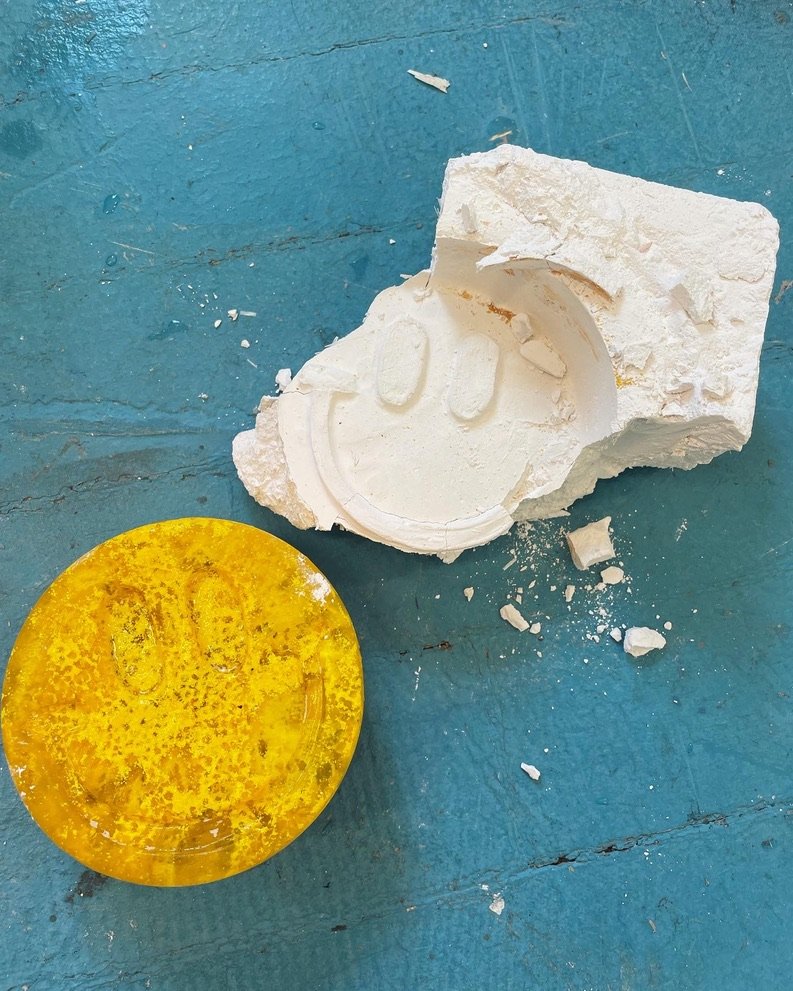
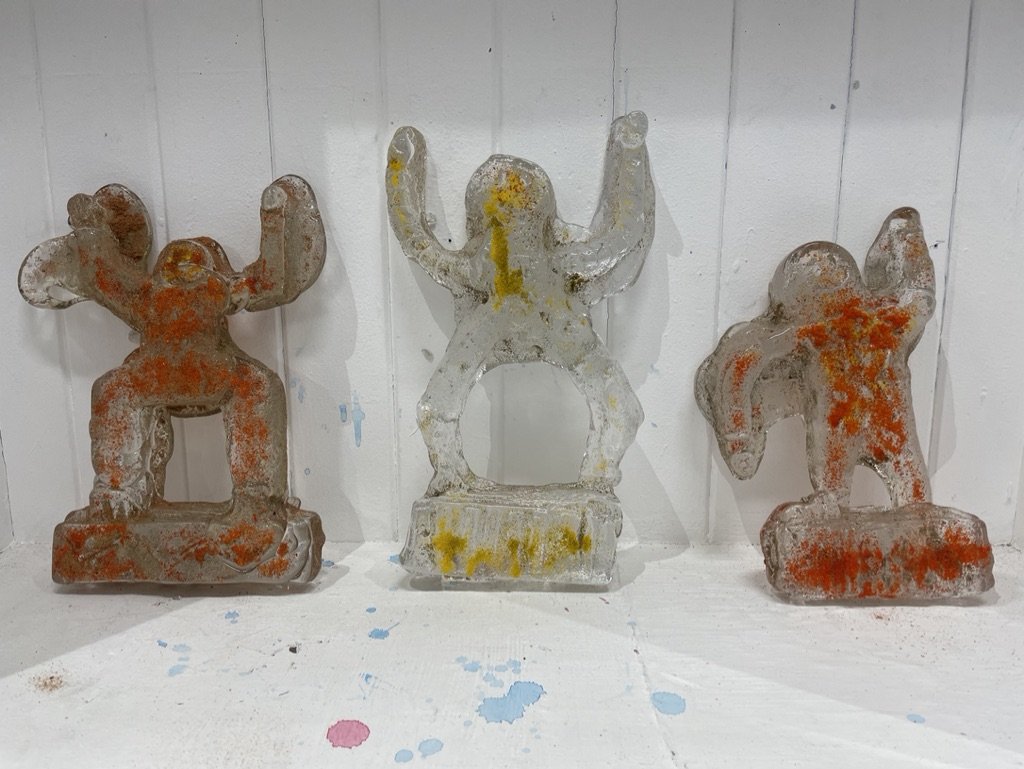
The furnace was turned off at the beginning of July so no more sandcasting but I was keen to explore potential of casting glass in a remade mold in the kiln so I did! s I have created two designs of ancient rave artefacts. Kiln casting is more refined in terms of the resulting image of object, making a wax copy means that fine detail is possible. A plaster flint mold is then made around this wax copy, once set the wax is steamed out and the cold is ready for layering the glass fragments and colour. This is put into the kiln for 5 day so the glass melts into the shape. Although the shape was predetermined but the mold itself, I loved the complete unknown of what was going to happen with the colour as I experimented with mixing left over colour that was available in the glass workshops.
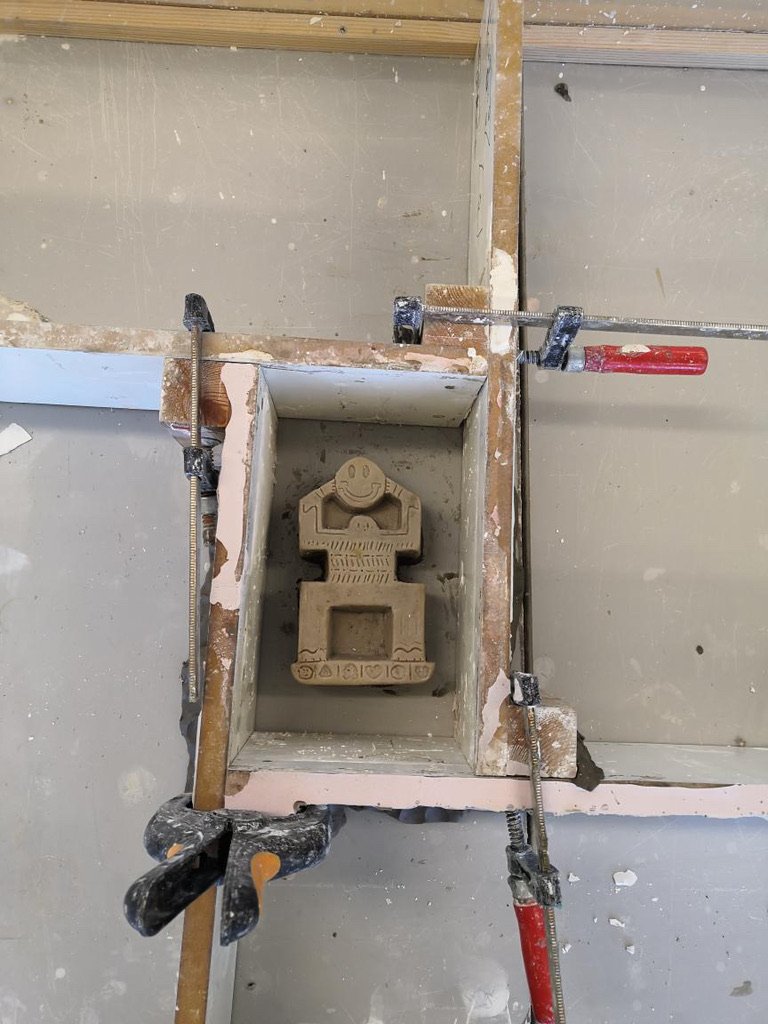
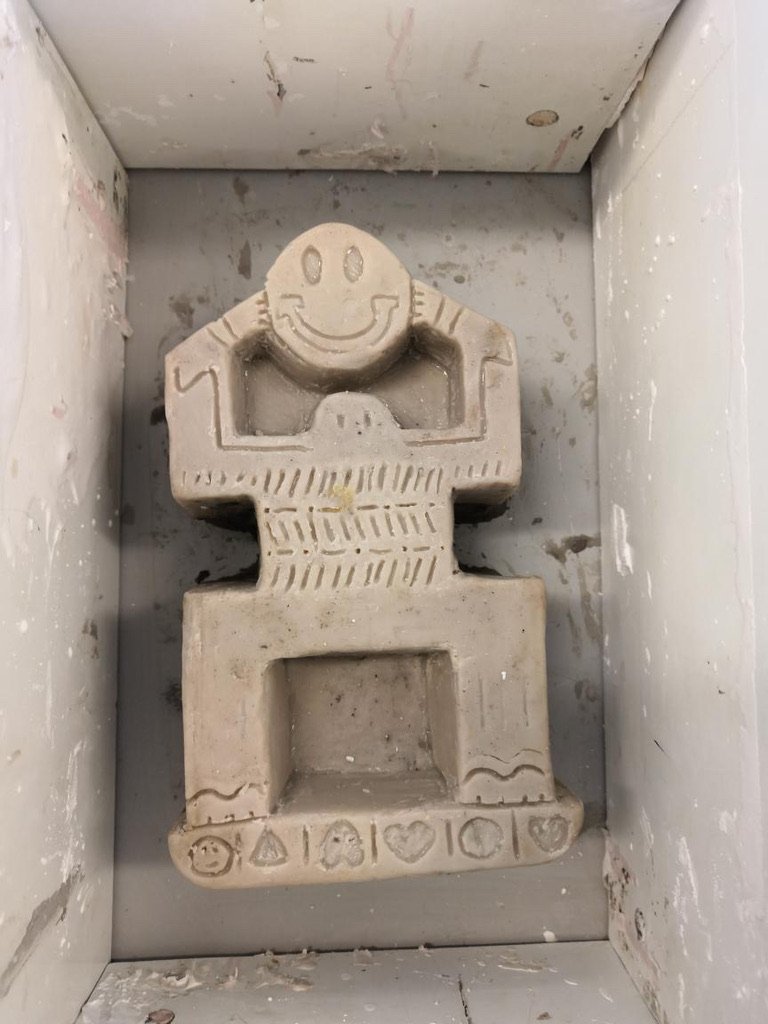
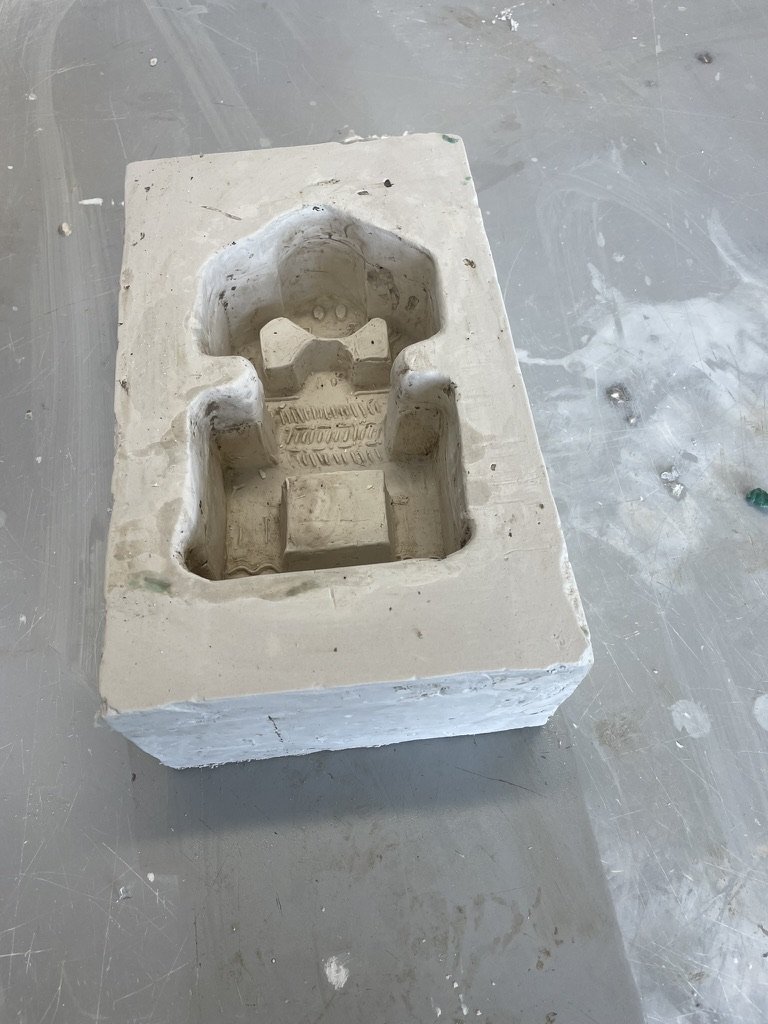
Researching 'The Archaeology of Rave’
Artists and art works
Mark Leckey
‘Fiorucci made me HardCore’ became a kind of ‘visual essay’, which tracked three decades of music and dance lineage from the Northern Soul era through to Rave, as it documented the underground club scene in Britain from the 70s till 90s. [
Useful Quotes
’I remember opening the door onto the dance floor there and seeing this room full of dry ice . A lad with a huge smiley face symbol painted on a cardboard mask loomed out the fog. It was like entering into a well-established ritual and I just plunged in.’
As an artist-archaeologist you are not expected to fit into existing perimeter and it gives more freedom to play – Leckey talking about curating universal dumb things
‘Its all to do with loops, the same thing being repeated over and over again in order to create an altered state’
‘that’s why the stone tape theory is so attractive because it marries a distant past and the future present. It sounds quasi scientific and may turn out to be true. It is appealing to believe that powerful human events get recorded by its uninterested environment and if we just find the right technology we can listen to those recordings , retransmit them.’
Matt Stokes practice investigates communities brought together through commonality, texploring these music subcultures through live collaborative events.
‘ Real Arcadia’ an alternative archaeology; unearthing the memories and ephemera of Cave Raves caves Coniston in the Lake District between 1989-1991. https://www.workplacegallery.co.uk/artists/21-matt-stokes/works/399/
Energy Flash Exhibition
‘Energy Flash’ in 2016 was the first major exhibition, at the Museum of Contemporary Art in Antwerp, Belgium, to consider Rave in the context of its wider influence on art, design, and culture. It took Rave as a case study to highlight the significant and dense history of the 1980s, with its mish-mash of political, economic, social, and technological happenings that went on to set the scene for the rave phenomena of the 1980s and 1990s to explode into existence. Through an archeological lens, ‘Energy Flash’ considered Rave in the context of Autonomy, Technology, Creativity, and Civil Liberty; offering a comprehensive critique of the historical Rave movement and its subsequent influence and intersection within the arts from the 1980s to present-day. Exhibitions such as ‘Energy Flash’ add validation to the study of modern subcultures like Rave as cultures in their own right; that warrant attention within the dominant historical timeline. These movements help contextualise our modern day experiences through the relevance of recent human behaviour and interactions, as opposed to the distant and detached nature in which we approach the study of ancient civilisations conventionally associated with archeology.
Nav Haq, the curator of ‘Energy Flash’, quotes:
Memory, whether folk recollection or official history, is always imaginary. It’s a matter of selections and revisions of contested myths and legends. Raves history is full of them.
Roland synthesises sit silently in stylish display cases while the pills position next to hysterical Sun newspaper articles on ecstasy’s evils are labelled as replicas. Exhibited behind glass these remind us that raves collected epiphanies now seem impossibly distant.
The Reno project excavation
Relevant example of the importance of digging up the recent past.
The site From the 1950s, the site acted as a safe haven for a community which was excluded from wider society and formed the focal point for black / POC in the Manchester area. from 1950s but with it’s demolition in 1986 a void was left in this community. Linda ? Having visited the club in the 1980s approached the councils to reveal the site through archaeological survey and excavation. As a focal point for the community it brought together disparate groups of amateur archaeologists alongside the old skool club regulars for a three week event.
For me the ‘material culture ‘ artefacts of the site are enlightening as to what are those of rave could be. But mostly the projects highlight the relevance of cross over between contemporary archaeology, the arts and community projects to connecting people and help us better understand the present . Why? Does it help us understand the present? The project opened up conversations / discourse between the club regulars about aspects of the clubs past but also allowed memories to resurface and new friendships to be formed.
DIGGING THE RECENT PAST
Our experience of excavating the Reno eloquently demonstrates the three main issues in dealing with the archaeology of the immediate past. First is the scale of 20th-century industrial and urban archaeology, and the consequent problems in recording this. Second, how do we record such sites, while maintaining a uniquely archaeological perspective? Finally, there is the role of 20th-century archaeology as a community experience promoting excitement and support for the investigation of the recent (and not-so recent) past.
Twentieth-century archaeology offers a number of unique challenges because of its scale, complexity, and the need to focus on the archaeological, rather than what might be social or economic, history. While – as mentioned before – some topics, particularly military sites, are already seen as credible and popular among the wider public, others will no doubt follow. The period’s transport and energy revolutions are the next two 20th-century industries that have begun to receive serious study, at least in Britain, for example. Yet we suspect that, while the 20th-century remains in living memory and, more importantly, the range of sources for its study remains enormous, archaeology will struggle to find its unique perspective. The Reno project, however, has revealed one way forward.
Why is this relevant to rave? Is it because it highlights the need of community. Rave and the acid house parties were a direct opposition to the Thatcher effect and Neoliberal individualism. The Rave phenomena presented a new kind of community born out of the ashes of declining industrialisation, these events took place in the the moderns ruins of factories and warehouses which were abundant in the late 1980s/ 90s.
They presented a new kind of community and one that broke boundaries and encouraged inclusivity gay/ straight black / white non of this mattered so much within the the party scene. Black communities had been excluded from mainstream bars and clubs and already had this alternative ‘nightlife’ as seen in the Reno.
As the music evolved the new sound of rave replacing the northern should sounds, its sound-systems and events attracting mixed crowds and encouraging integration as the music brought people together to dance. This emerging sound off of electronic music was unlike anything heard before and it widened the generation gap in music experience more than ever.
Patrick hough
Patrick is an Irish artist and filmmaker exploring the links between cinema, technology and archaeology. He is preoccupation with Egyptian mythologies and archaeology but through the lens of cinematography and re-made artefacts as props.
‘In a thousand years’ is a film created in response to the discovery and excavation of Cecelia de Milne 1930s ‘The Ten Commandments’ Film Set which was discovered in the Californian sands. The set itself one of the largest in film history and ‘De Milne’ buried it post filming because it was more effort to deconstruct and he didn’t want anyone else to use it. It raises questions about object histories when the archaeological object is in fact a replica ‘prop’ created for cinematic purposes. The film is part poetic narrative spoken by the excavated ’sphinx’ as she muses on her existence poses questions to what, who and why she is.
‘If in a thousand years’ creates discussion surrounding object histories, working with replica artefacts from a cinematic context. The embodiment of past culture within a fake artefact which in itself depicts something of the archaeology of cinema in the time in which it was created. What is significant is that this set and its artefacts are ‘fake’ but still embodies perception of ancient Egypt as depicted by cinematography in the 1930s.
These props are indeed archaeological artefacts, having lay buried in the sands they become an archaeology of cinema. Opposing, contradicting our perception of what archaeology can be. His work questions what we can learn about the present from ‘digging up the recent past and in this case a subjective view of the ancient past.
‘Object interviews’ opens up discourse on the relationship of cinema to history and history to fictioning. Specialist discuss the fake Egyptian cinema prop artefacts. Each interveiwee coming from a specialised background; a curator of Egyptian artefacts, a social critical theorist and a prop maker.
When an object – a film prop – is removed from its original context and specialists of differing field are invited to analyse and offer interpretation upon it – it highlights that the use of an object is subjective and dependent upon the individuals point of view and experience. It highlights that in archaeological interpretation of ruins and artefacts, the time in which the viewer exists can not be separated and they bring their own preconceptions based upon the time in which they live. This is why archaeological interoperation of site is constantly evolving both based on new discovery but also upon changing ideology within society.
The ideas explored resonate ancient history to now – the flow of time, there is no end point and start point just a constant flux as well as considering the display of artefacts and the changing context of how we view these in a museam.
‘For if our visual history forms part of our visual culture, which itself mirrors our shifting socio-political context, then these objects can reveal much about the politics of representation within our systems of signification.’ – quote about Patrick Hough
https://www.rca.ac.uk/students/patrick-hough/
https://youngartistsinconversation.co.uk/Patrick-Hough
Collective Memory
The show suggested that the contemporary art museum becomes properly contemporary when it harnesses the ability to present what sociologist Maurice Halbwachs called ‘collective memory’. In his 1952 book on the subject Halbwachs wrote: ‘Our recollections, each taken in itself, belong to everybody; but the coherence or arrangement of our recollections belong only to ourselves – we alone are capable of knowing and calling them to mind.’ The artist as historian in this sense, then, is the keeper or, perhaps more accurately, the instigator of collective memory: its writings, materials, images. The artist gives the audience the tools with which to dig. – Frieze review of way of the shovel.
Hito Steyerl – The Spam of the Earth: Withdrawal from Representation
https://www.e-flux.com/journal/32/68260/the-spam-of-the-earth-withdrawal-from-representation/
Issue #32
February 2012
Dense clusters of radio waves leave our planet every second. Our letters and snapshots, intimate and official communications, TV broadcasts and text messages drift away from earth in rings, a tectonic architecture of the desires and fears of our times.1 In a few hundred thousand years, extraterrestrial forms of intelligence may incredulously sift through our wireless communications. But imagine the perplexity of those creatures when they actually look at the material. Because a huge percentage of the pictures inadvertently sent off into deep space is actually spam. Any archaeologist, forensic, or historian—in this world or another—will look at it as our legacy and our likeness, a true portrait of our times and ourselves. Imagine a human reconstruction somehow made from this digital rubble. Chances are, it would look like image spam.
Image spam is one of the many dark matters of the digital world; spam tries to avoid detection by filters by presenting its message as an image file. An inordinate amount of these images floats around the globe, desperately vying for human attention.2They advertise pharmaceuticals, replica items, body enhancements, penny stocks, and degrees. According to the pictures dispersed via image spam, humanity consists of scantily dressed degree-holders with jolly smiles enhanced by orthodontic braces.
Reading List
Arévalo, A., 2020. Tropical Fantasia: Towards a New Archivo Museological Imaginary. [online] Stedelijk Studies Journal 10. Available at: <https://stedelijkstudies.com/journal/tropical-fantasia-towardsa-new-archivo-museological-imaginary/>
Bennett, J., 2010. Vibrant matter. Durham, N.C.: Duke University Press.
Cahill, Z., 2014. The Way of The Shovel. [online] Frieze.com. Available at: <https://www.frieze.com/article/way-shovel>.
Collin, M., 2018. Rave On. London: Serpent’s Tail. Dander, P., Filipovic, E. and Leckey, M., 2015.
Mark Leckey, On Pleasure Bent. Verlag der Buchhandlung.
Haq, N., 2016. Rave : rave and its influence on art and culture. 1st ed. London: Black Dog Publishing.
Higgs, J., 2015. The KLF: Chaos, Magic and the band who burned a million pounds. Orion Publishing Group Ltd,.
McKay, GA, (ed.) 1998, Diy culture: party & protest in nineties Britain , Verso, London and New York Museum of Modern Art, 2016.
Mark Leckey in Conversation | Sunday Sessions.https://www.youtube.com/watch?v=Fp4eovJQ7d8
Ottewill, J. 2022, How UK cities Shaped Rave Culture, Velocity Press.
Leckey, M., Wallis, C., Coustou, E. and Atkins, E., n.d. O’ magic power of bleakness. Tate Publishing.
Leckey, M., Davis, E. and Bovey, A., 2013. The universal addressability of dumb things. London: Hayward Pub.
Praetzellis, A., 2006. Archaeological Theory in a Nutshell. Routledge.
Renfrew, C., 2003. Figuring it out. 1st ed. Thames and Hudson.
Reynolds, S., 2013. Energy flash. London: Faber and Faber.
Roelstraete, D., 2013. The way of the shovel. Chicago Press.
Stokes, M., 2007. Lost in the rhythm. Sunderland: Art Editions North.
Tate, 2016. I Wallow in the Mire of Nostalgia’.Patrick Hough
Casting Smiles and Dancers
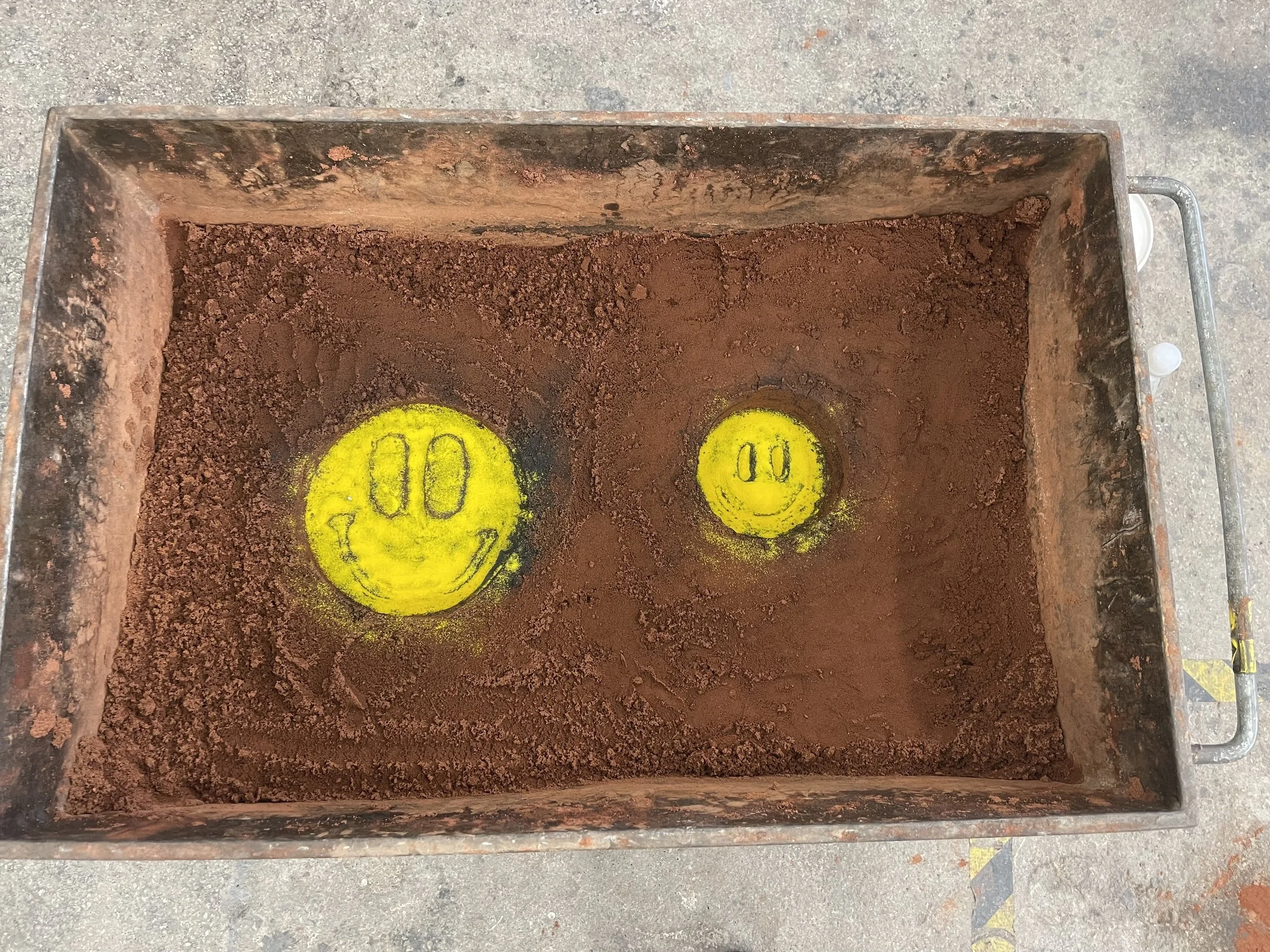
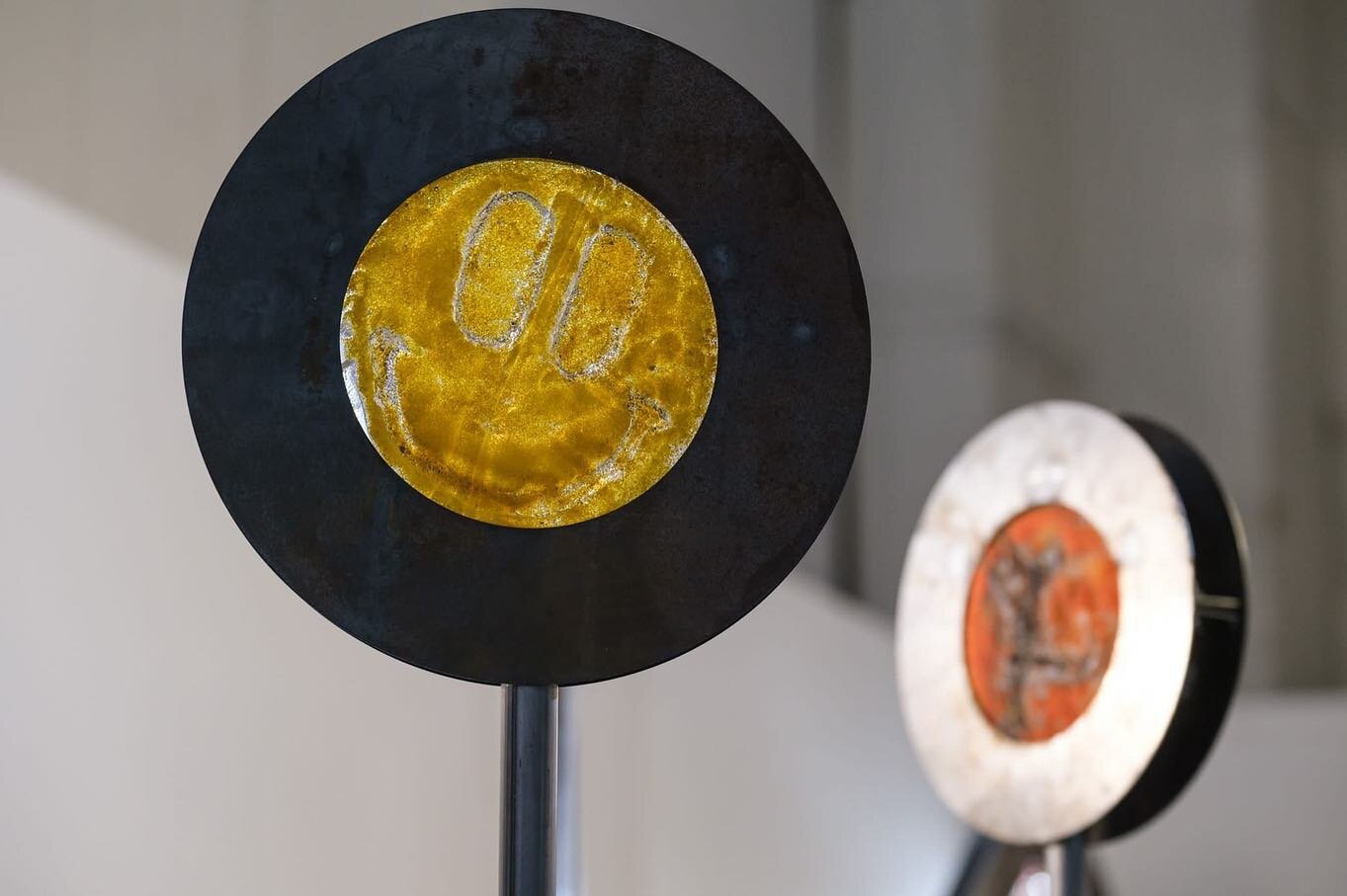
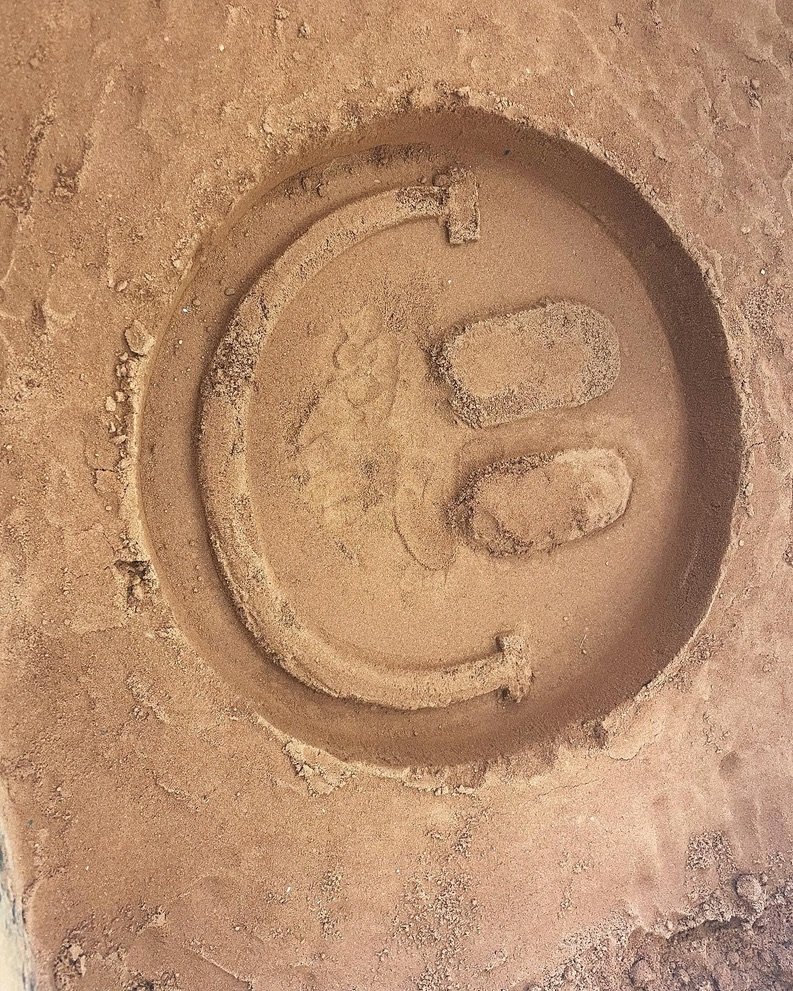
This semester has been an opportunity for forays in into a new material of glass. Initially I contacted the glass department as I hoped to cast a melted effect glass smiley but this idea was tricky to find the process to do so. Laura the glass technician suggested a sand cast smiley as an alternative. Sandcasting has been an ideal opportunity for experimentation and as a none glass maker it encouraged me to explore its potential without much knowledge of outcome which was freeing.
I love how the process itself mimics archaeological process in that the image is created through digging directly into the sand using small excavation tools to draw. Once the hot glass is poured into the shape and sufficiantly hardened, the object is then excavated out of the sand.




Lighting up the Glass
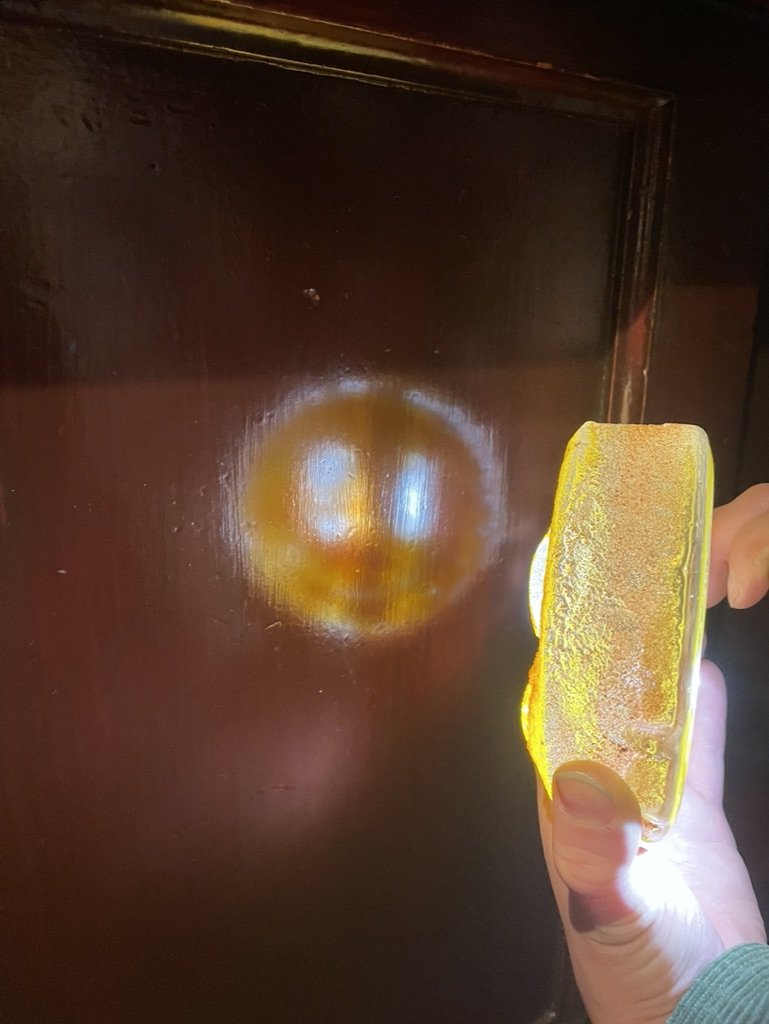
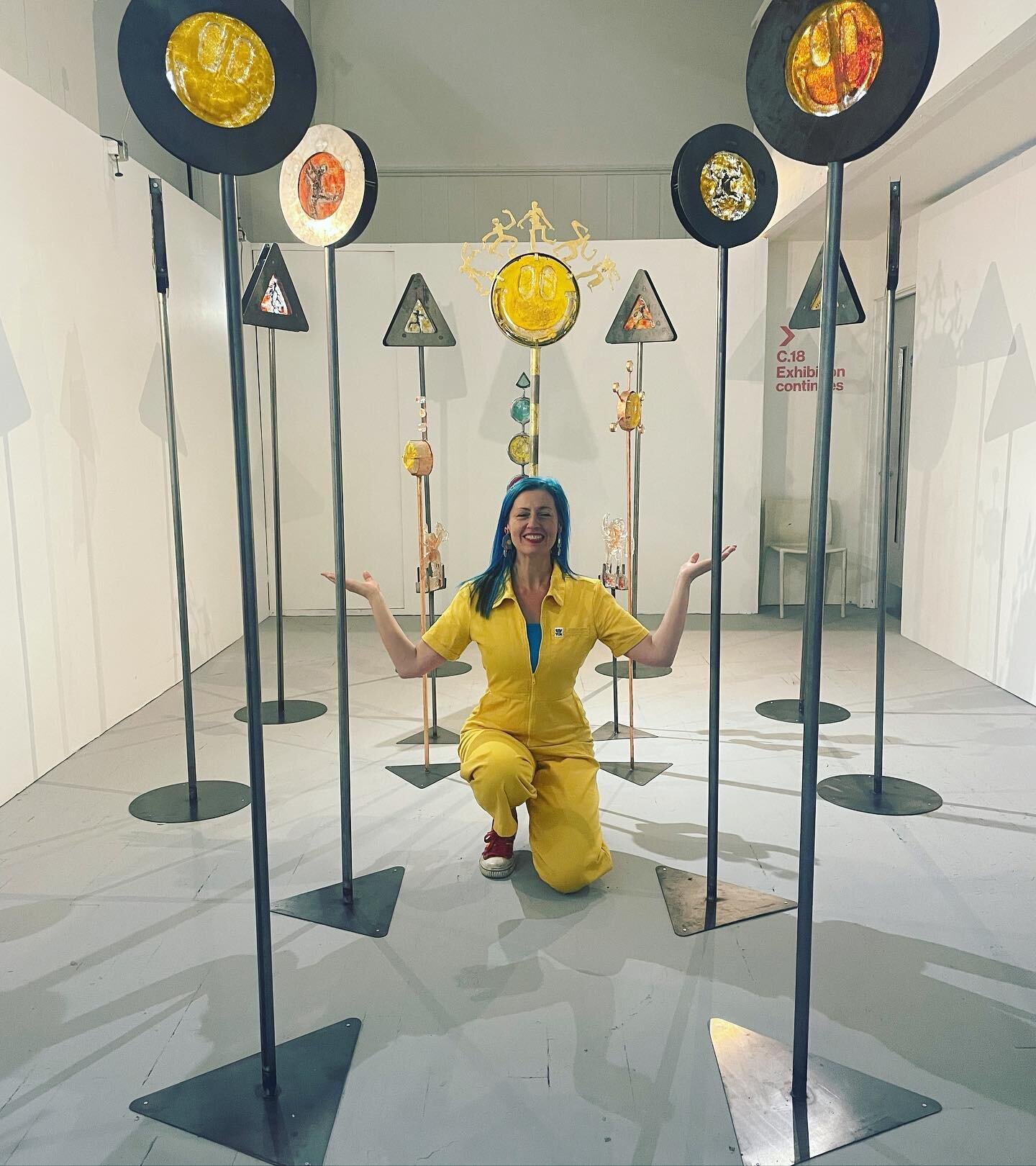
Working with qualities of glass and the opportunity to shine a refection of itself. This was the motivation behind the glass totem construction of the glass totems


Site Play
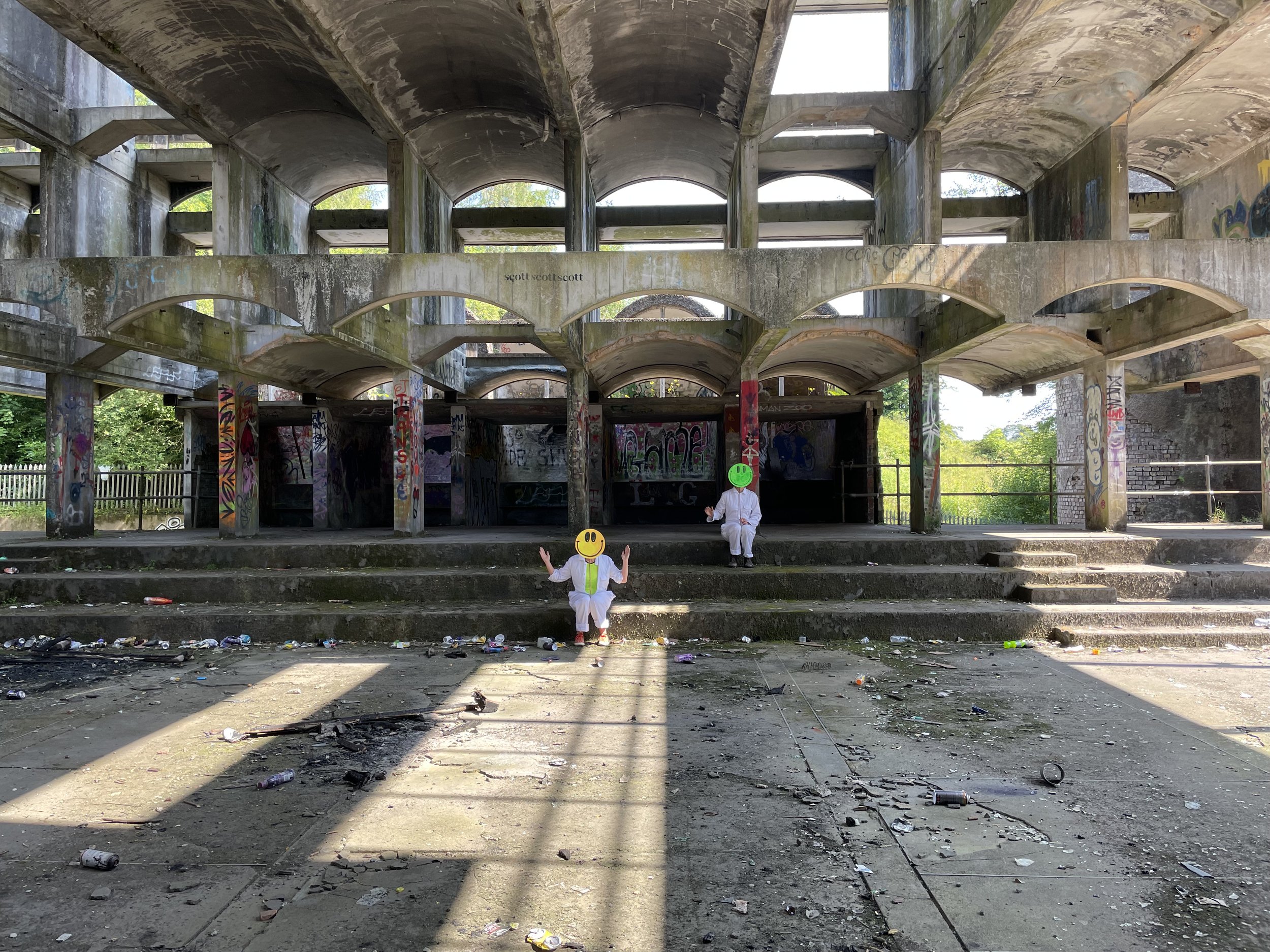
Artist Mark Leckey discusses all manner of supernatural possibilities, and his works contain a strange and magical quality juxtaposed with archeological concepts.
He speaks of ‘Stone Tape Theory’ and quasi-scientific theories which have the potential to be true. The concept of this is the speculation that the stone walls of a building possess properties similar to a magnetic tape, and that traumatic events could be ‘recorded’ by the walls themselves. This effect may manifest as hauntings to some, but perhaps we haven’t the found the means to decipher these recordings? To follow this thought into fictioning of a ‘Mythology for Rave’, I wonder perhaps, if the collective heightened and emotional energy present at a Rave might be absorbed by stones walls capturing its spirit.


Cast a Smile
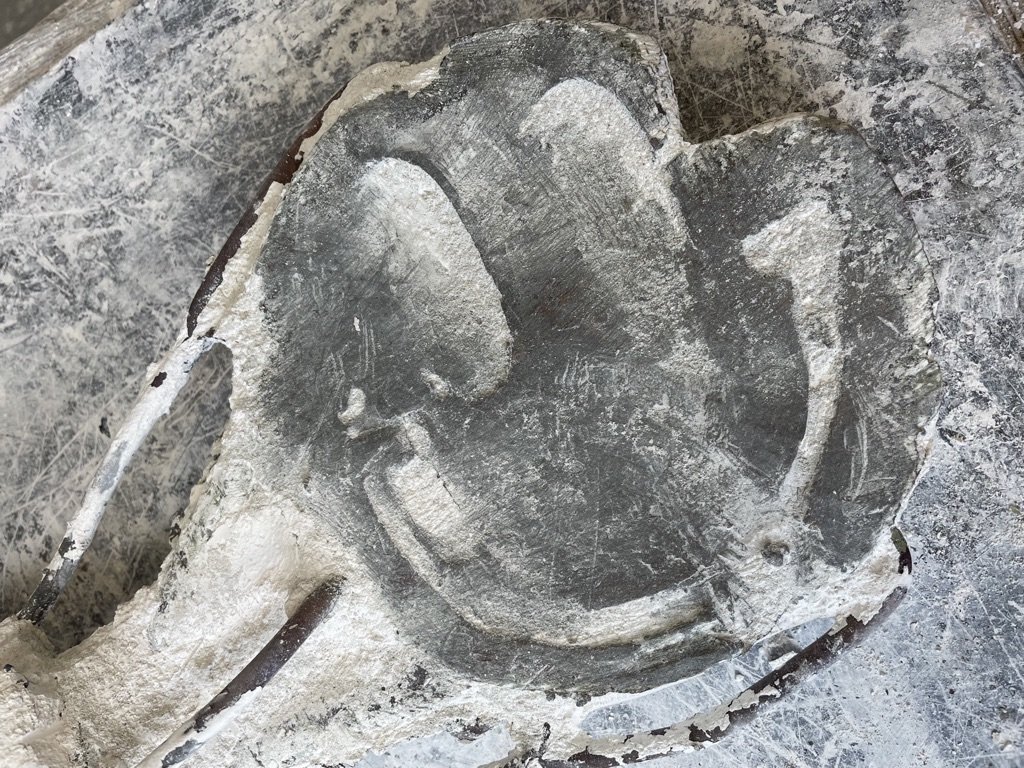
History of the Smiley
https://www.frieze.com/article/brief-history-smiley
Strangely the roots of the smiley face are in the capitalist and corporate world. Originating in Worcester, Massachusetts in 1963 when graphic designer Harvey Ball design the cheery smile for State Mutual Life Assurance Company as a morale booster for employees. The smiley was never copywritten and it soon became a ‘feel good ‘ symbol in the 1960s in line with the culture of freedom and hedonism which emerged through the hippy movement and summer of love.
“The simple yellow smiley face created in 1963 (probably) has led to tens of thousands of variations and has appeared on everything from pillows and posters to perfume and pop art. Its meaning has changed with social and cultural values: from the optimistic message of a 1960s insurance company, to commercialized logo, to an ironic fashion statement, to a symbol of rave culture imprinted on ecstasy pills, to a wordless expression of emotions in text messages. In the groundbreaking comic Watchmen, a blood-stained smiley face motif serves as something of a critique of American politics in a dystopian world featuring depressed and traumatized superheroes. Perhaps Watchmanartist Dave Gibbons best explains the mystique of the smiley: “It’s just a yellow field with three marks on it. It couldn’t be more simple. And so to that degree, it’s empty. It’s ready for meaning. If you put it in a nursery setting…It fits in well. If you take it and put it on a riot policeman’s gas mask, then it becomes something completely different.” – https://www.smithsonianmag.com/arts-culture/who-really-invented-the-smiley-face-2058483/
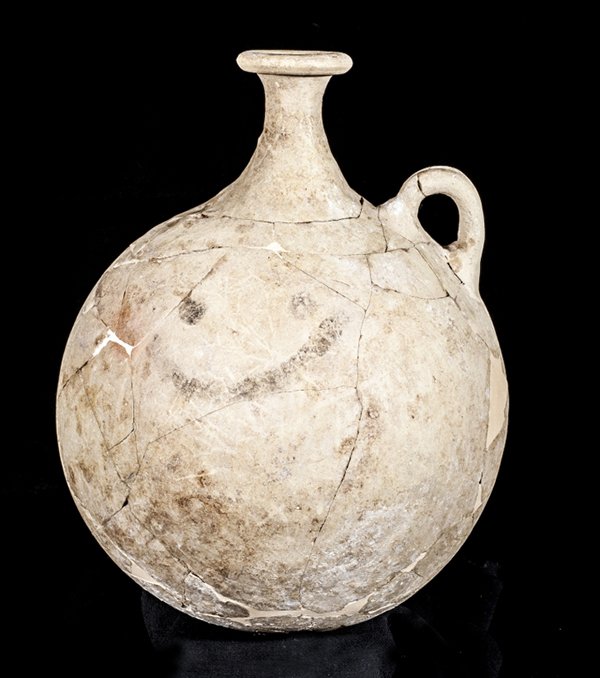
In 2017 an artefact dating to 1,700 BCE was discovered in Turkey and appear to have a smiley emoji! Its a drinking vessel believed to have been for ‘sweet drink’ sherbet!
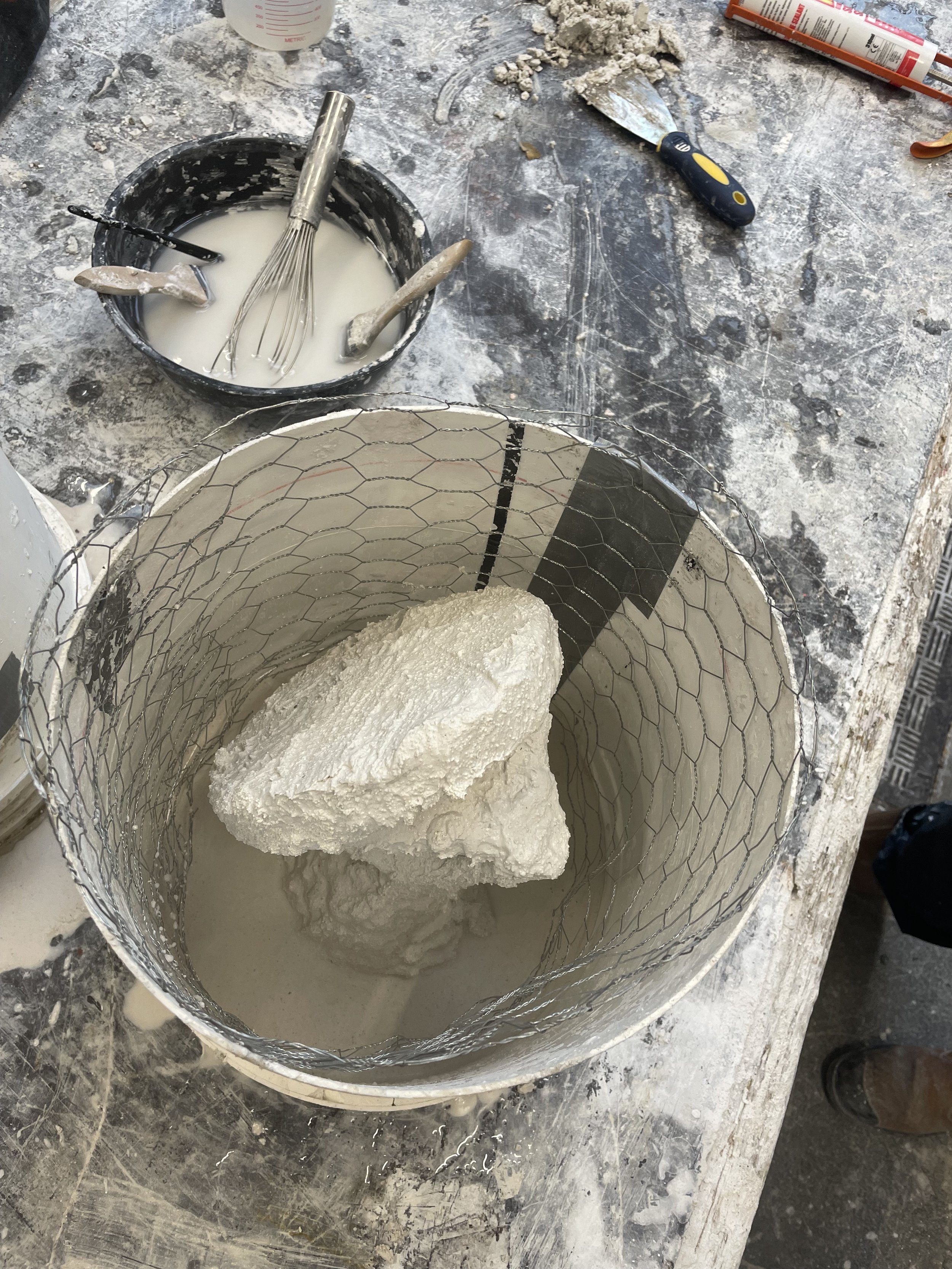
Casting a Bronze Smiley
The iconic smiley face of acid house has been reproduced and represented across a multitude of physical forms; it adorns artefacts such as clothing, household items, art prints, and other decorative objects. These items harbour a nostalgia for the rave era but do not give an understanding of Rave or the culture associated with the free party scene, the connection is merely through a visual aesthetic.
Many smiley objects exist and continue to be produced today; they are the archeology of our present but begs the question, what traces will be left and how ‘out of context’ will these items be described in the future? Our present day archives will be interpreted by a future society through the context in which they live, and we can not predict which elements may become incorporated into a narrative that leads to misinterpretation of the significance of these artefacts, as is the case with present day archaeologists and the artefacts left by ancient civilisations.
We can consider, what is the purpose of the creation of a bronze smiley? Perhaps it is an art object, though its materiality of a semi precious metal such as bronze may lead to its interpretation as an icon to represent a deity of Rave. If similar smiley faces were discovered in a multitude of places, would they constitute and archeological culture and thus an assemblage?




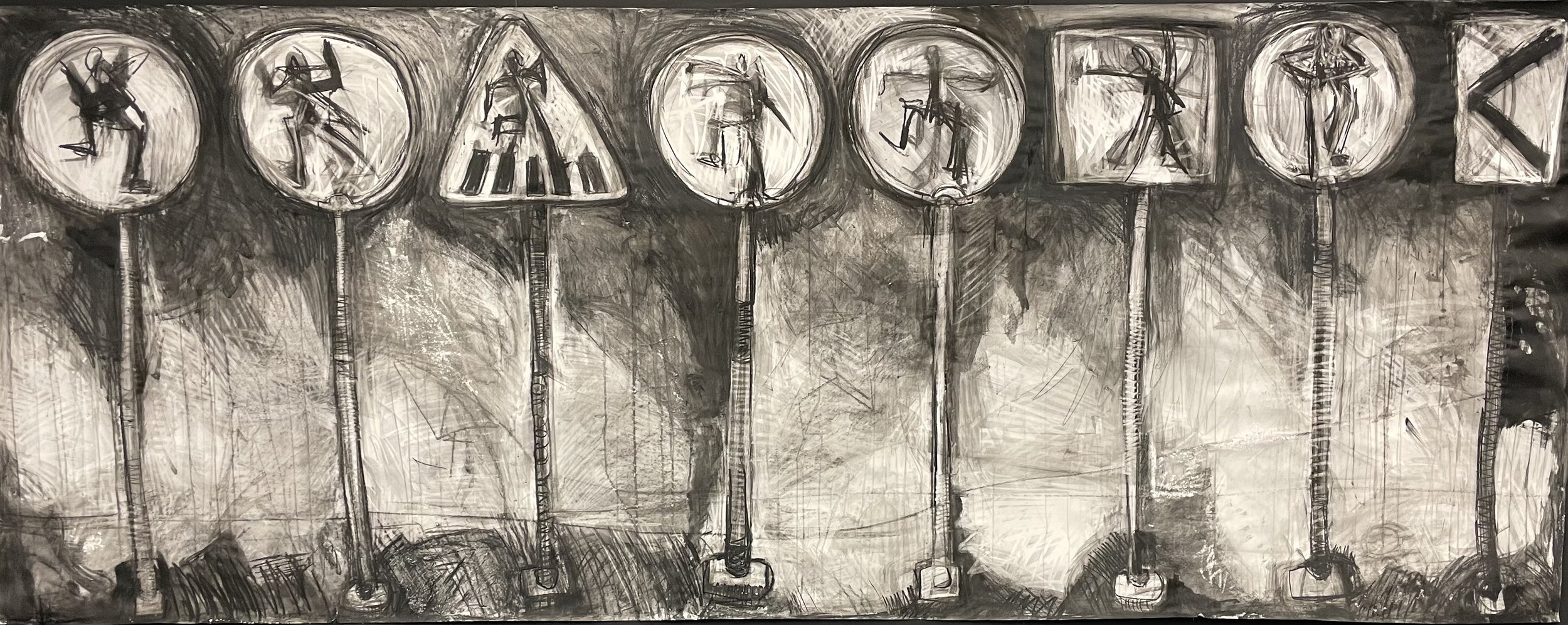
Rave Directions
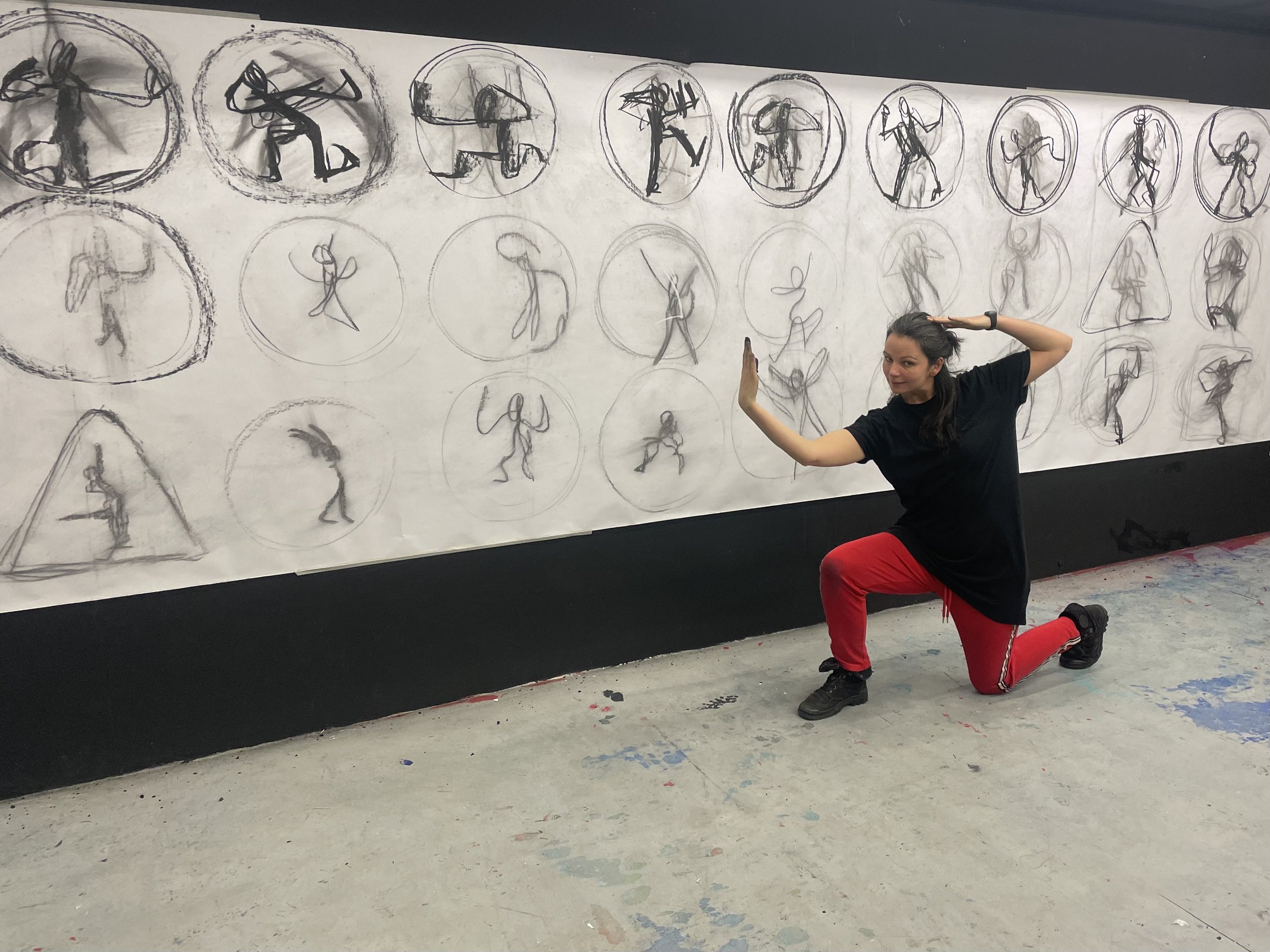
Developing a set of instructions Rave in collaboration with Fiona Oliver Larkin.
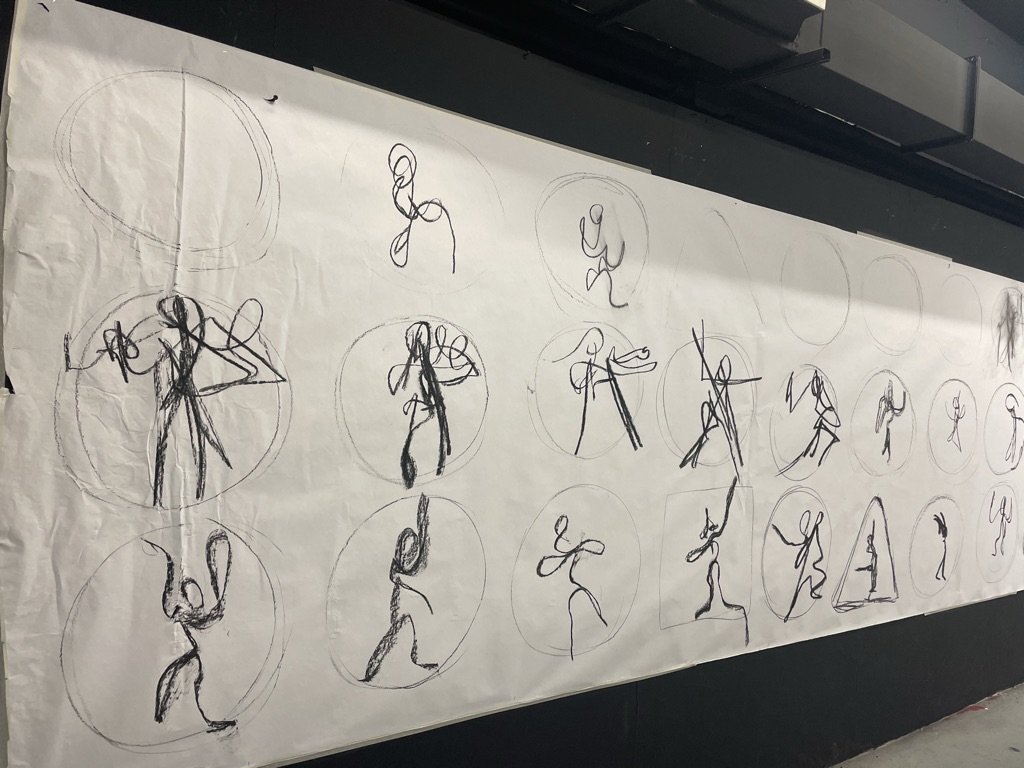
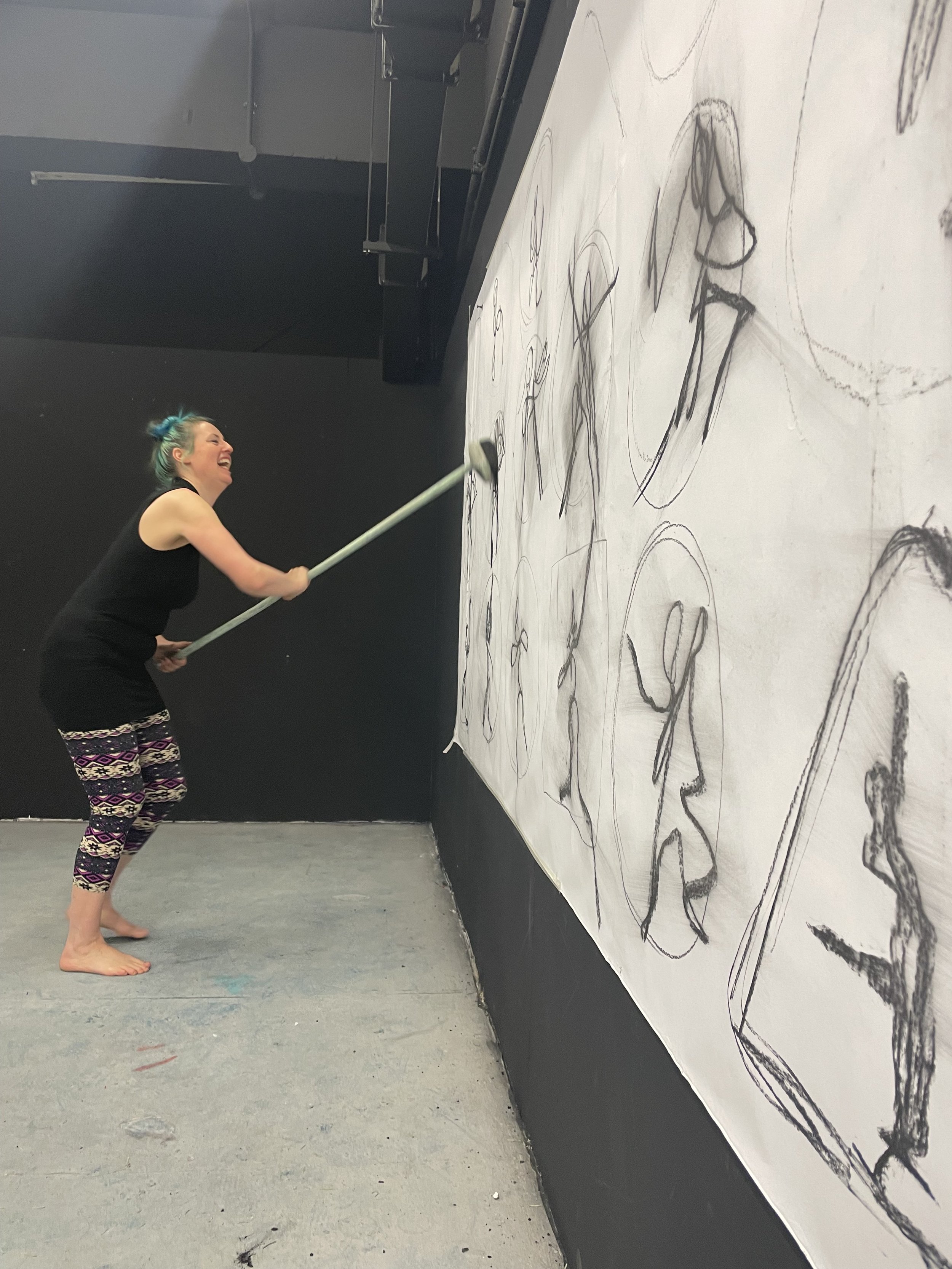
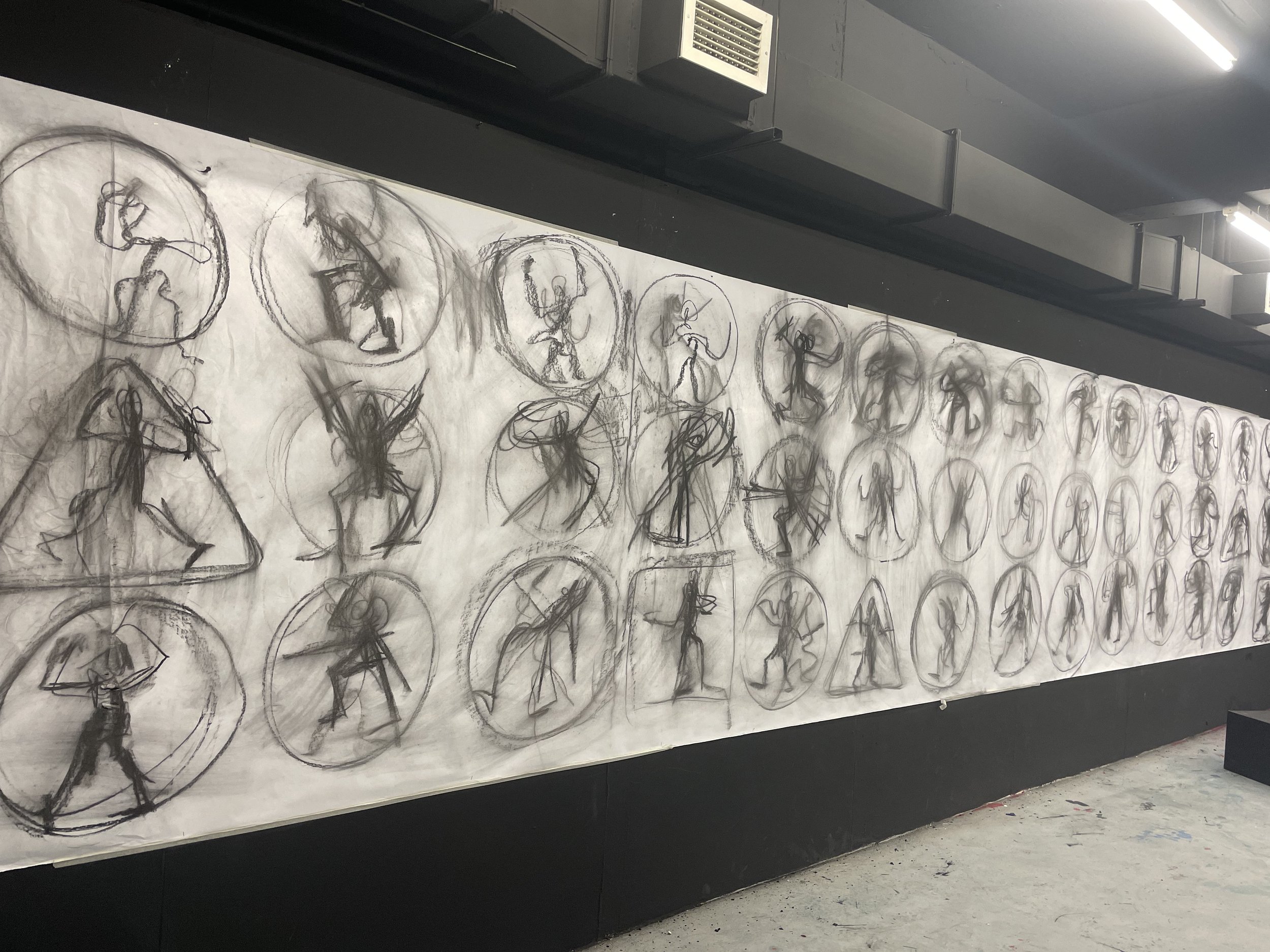
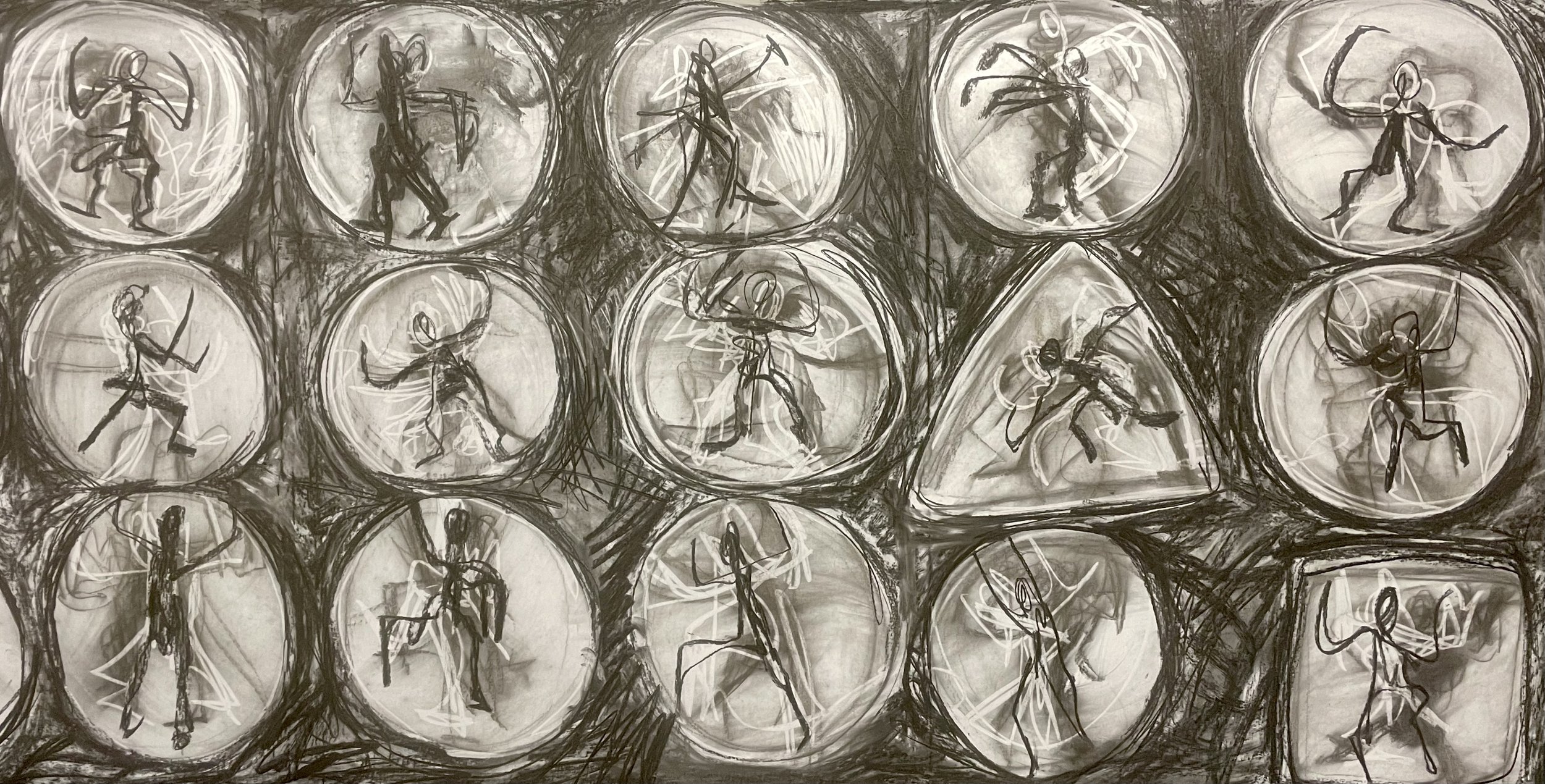
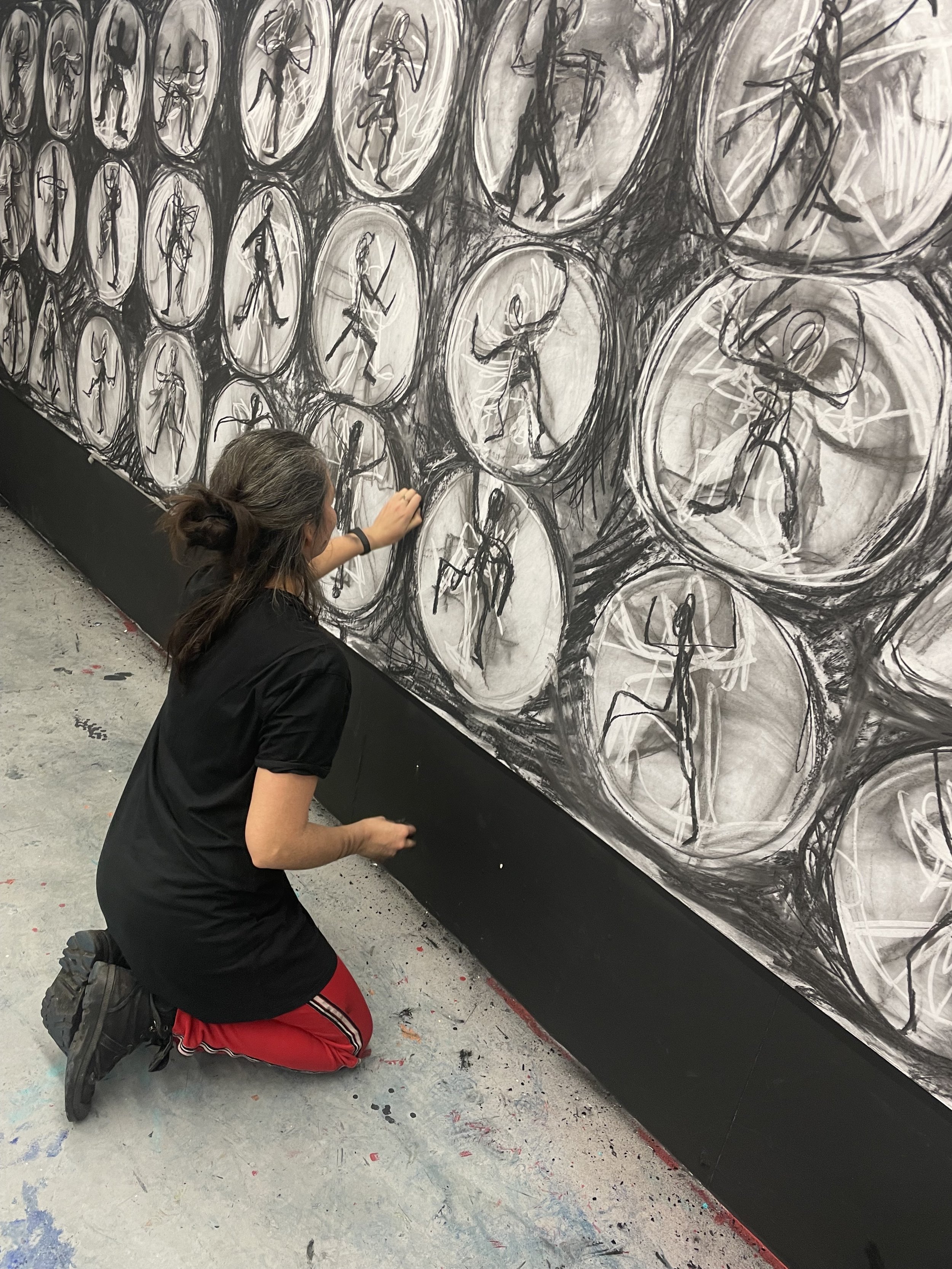
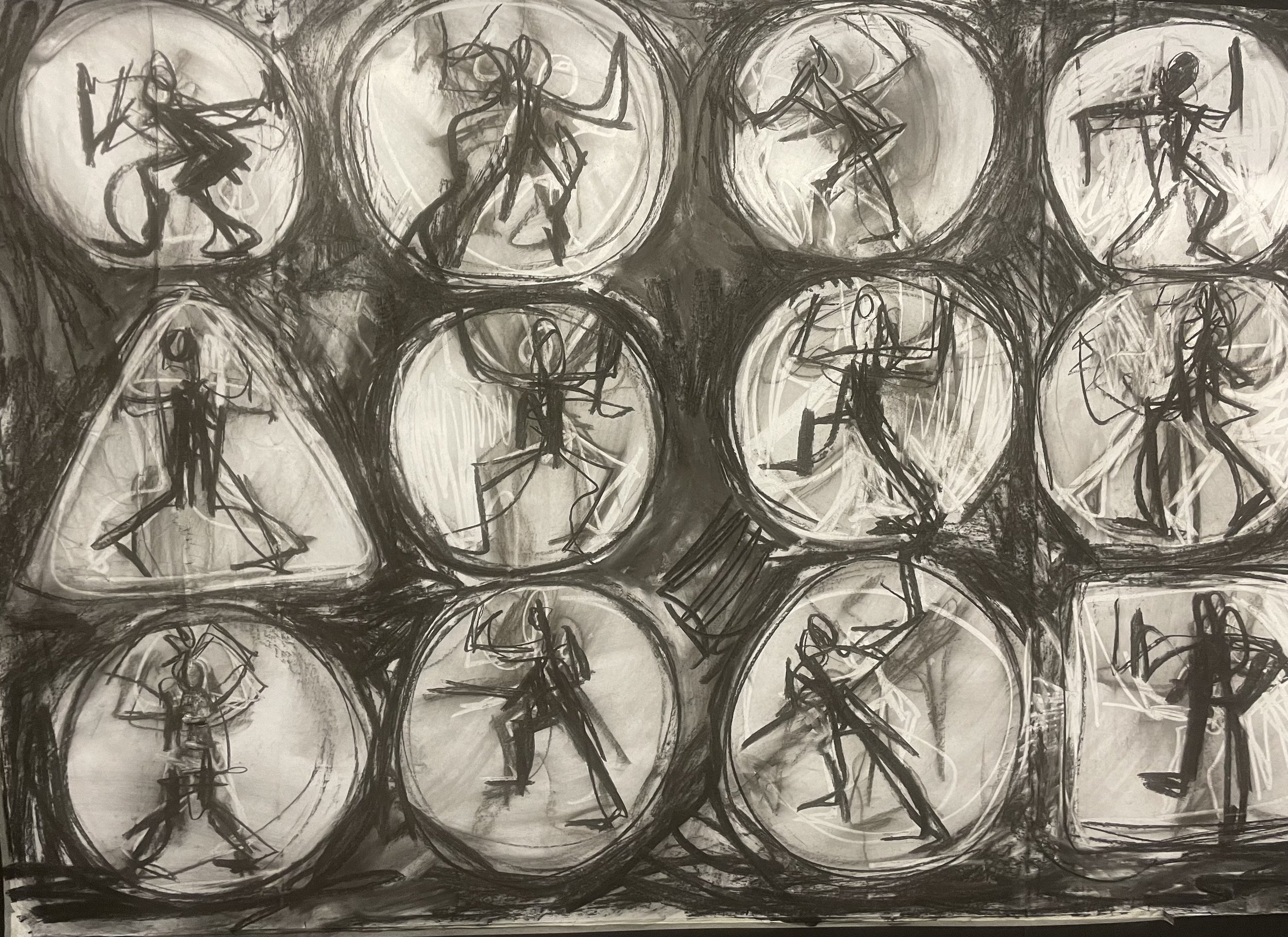
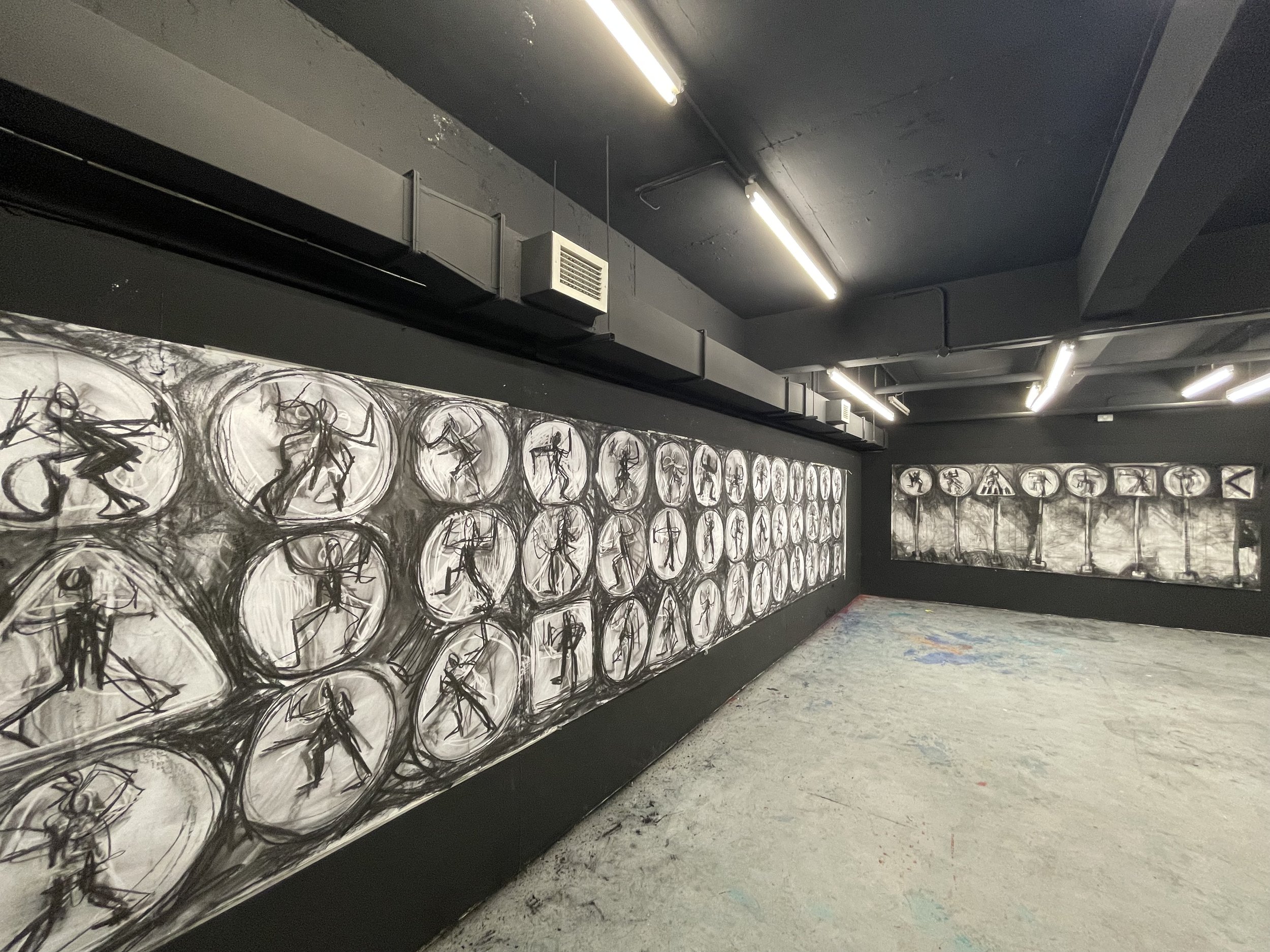
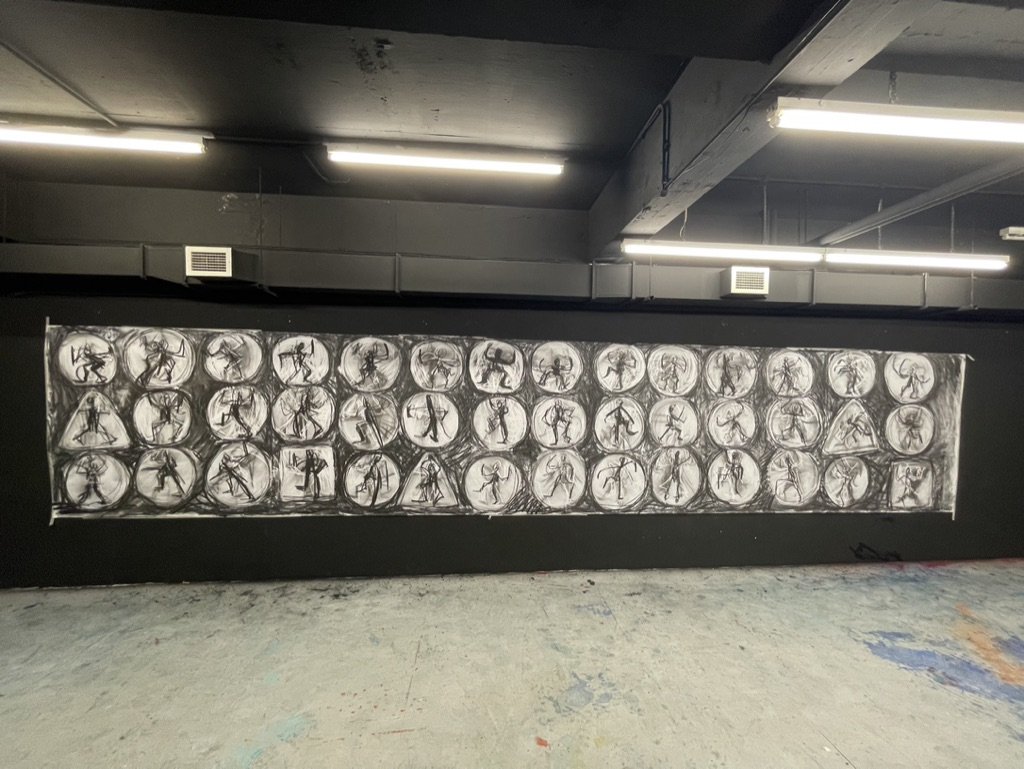
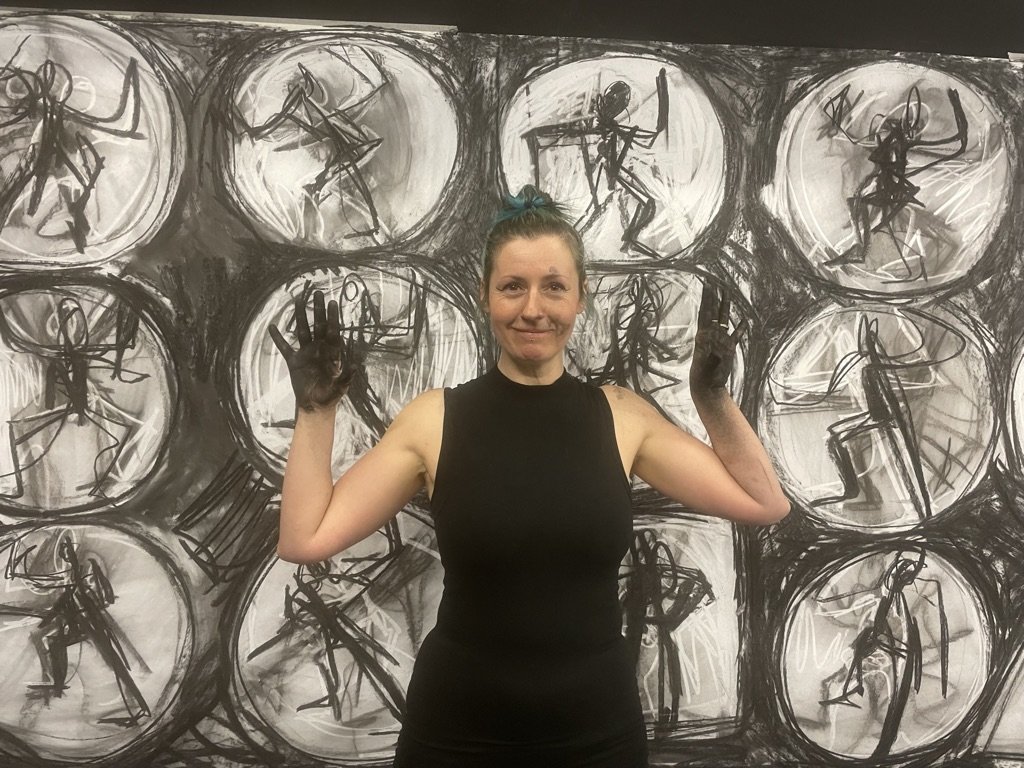
We turned up. We danced. We drew.

Rave Lollipops, Charcoal on Paper, 4 x 1.5m, 2022
The Archaeology of Rave
Its been a busy few months of making in the studio creating artEfacts and giant lino prints for new edition of The Rave Cave at Hidden Door 2021. It’s exciting to see it finally coming together in the space…

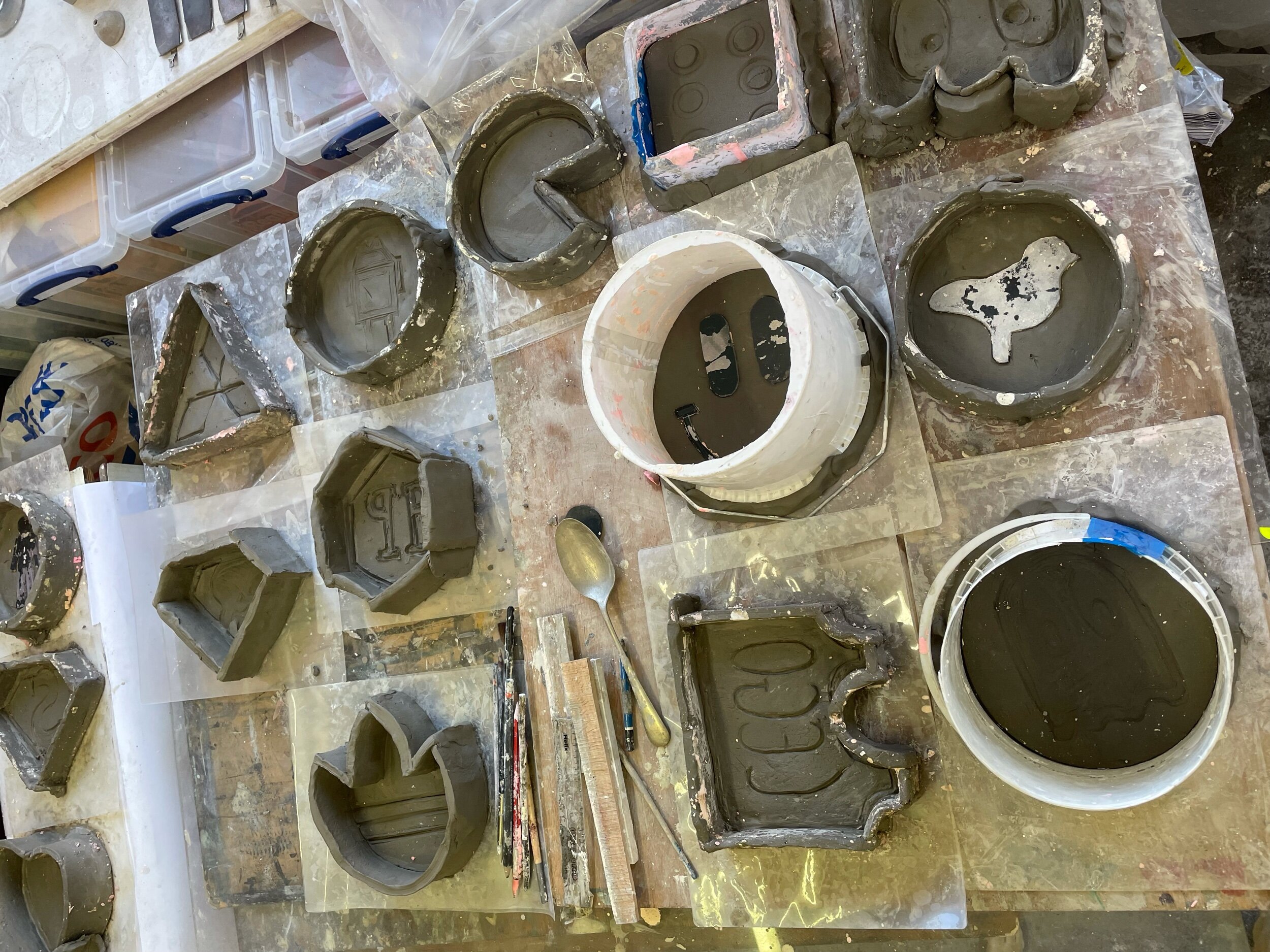
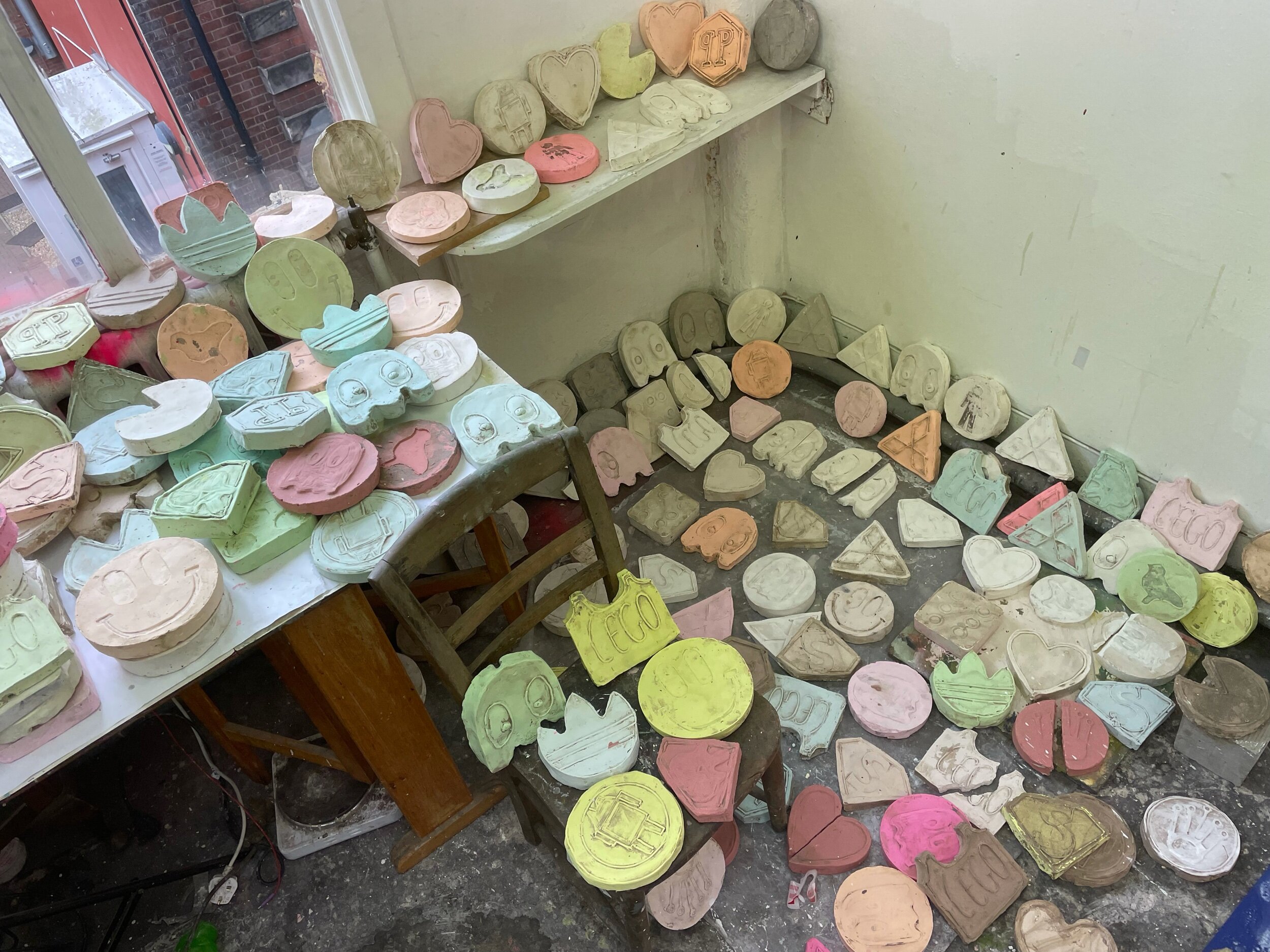
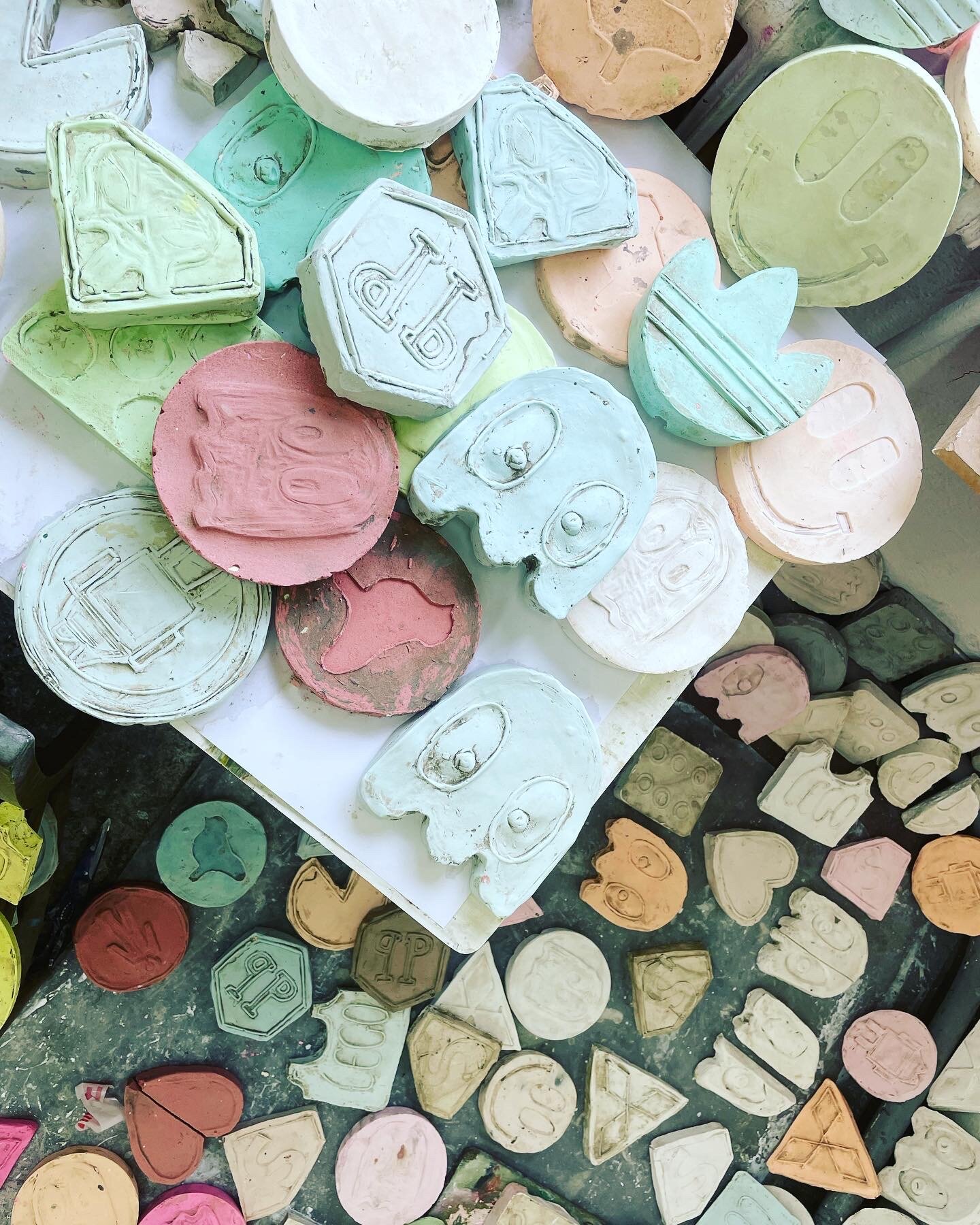
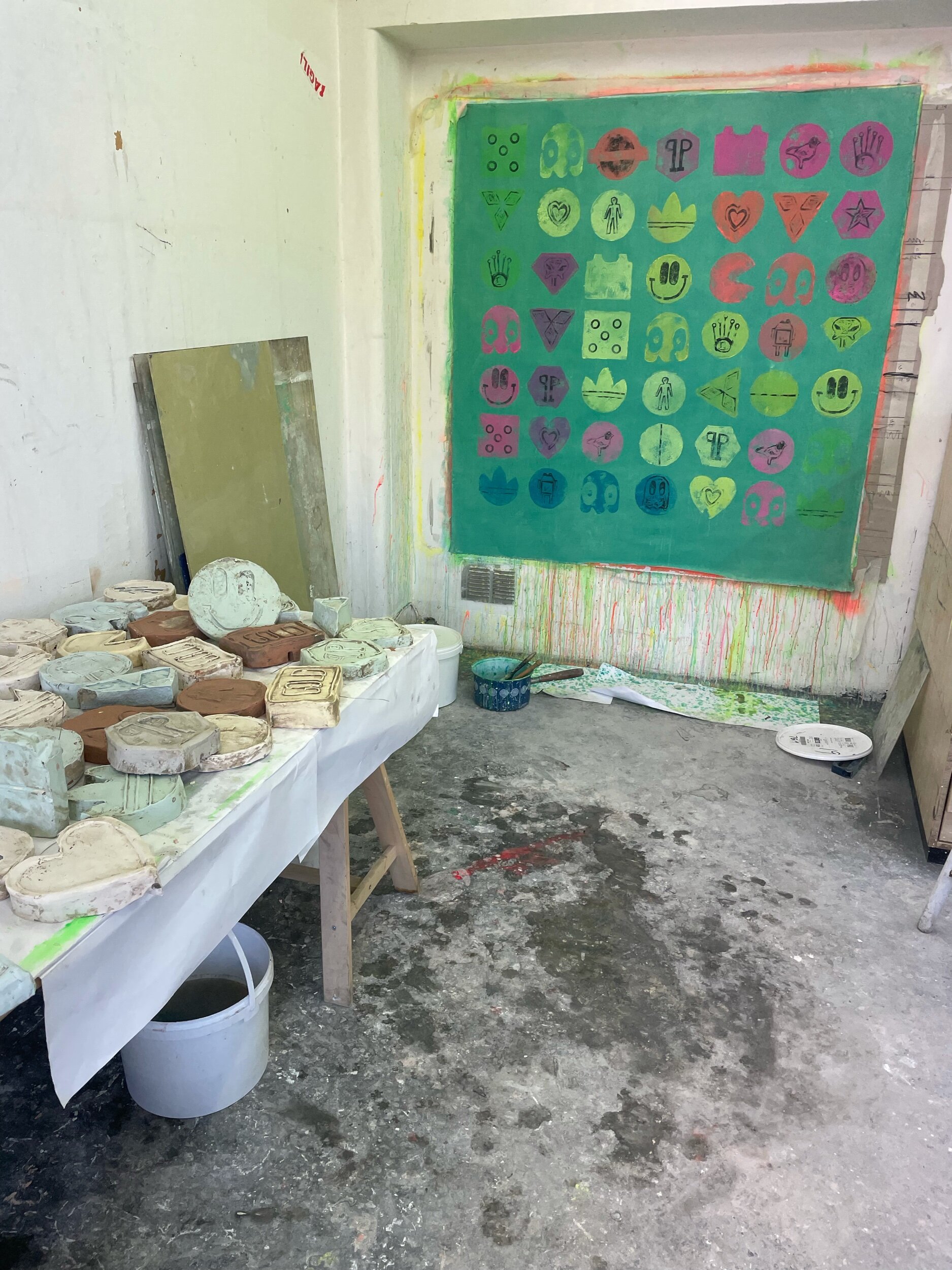
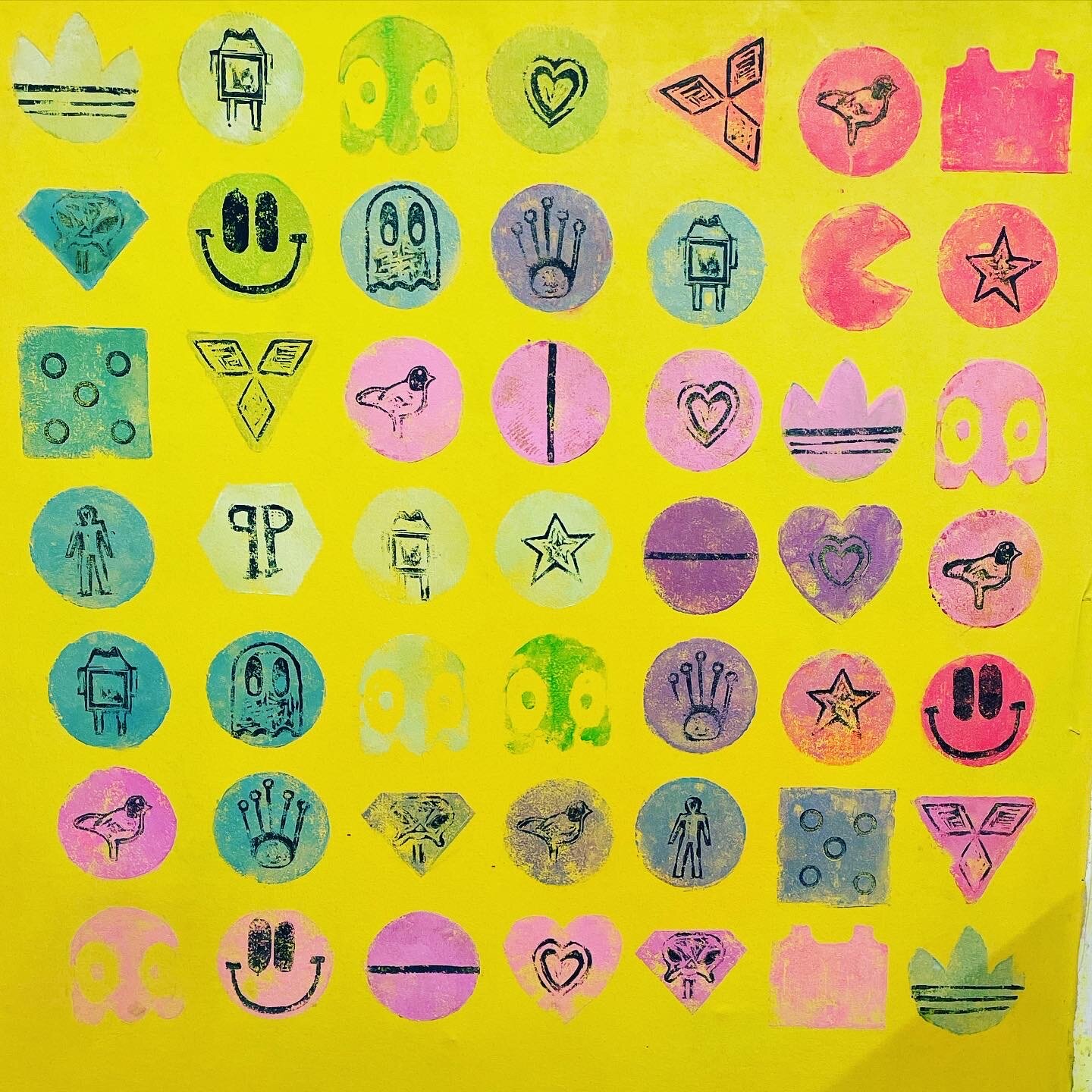
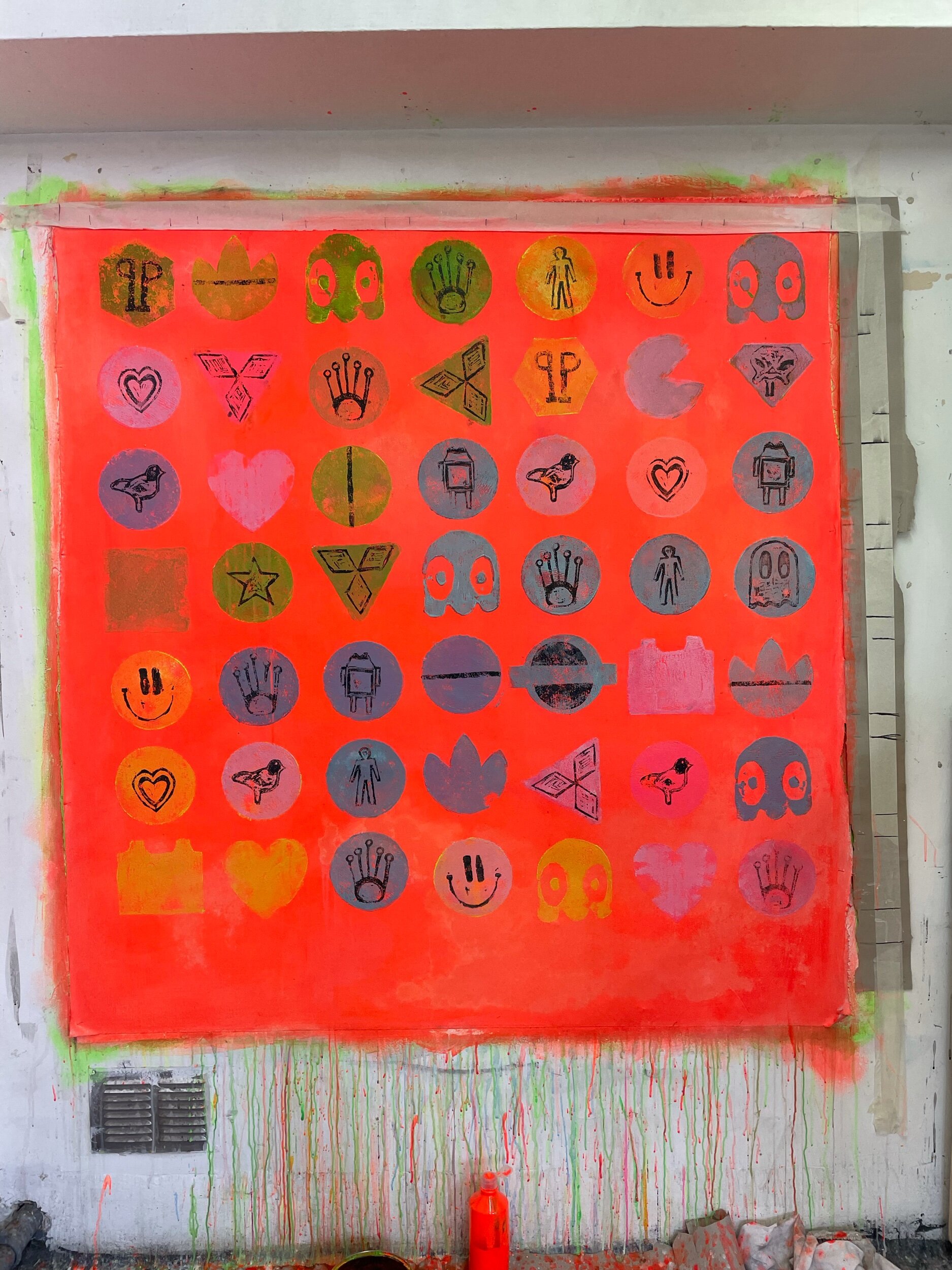
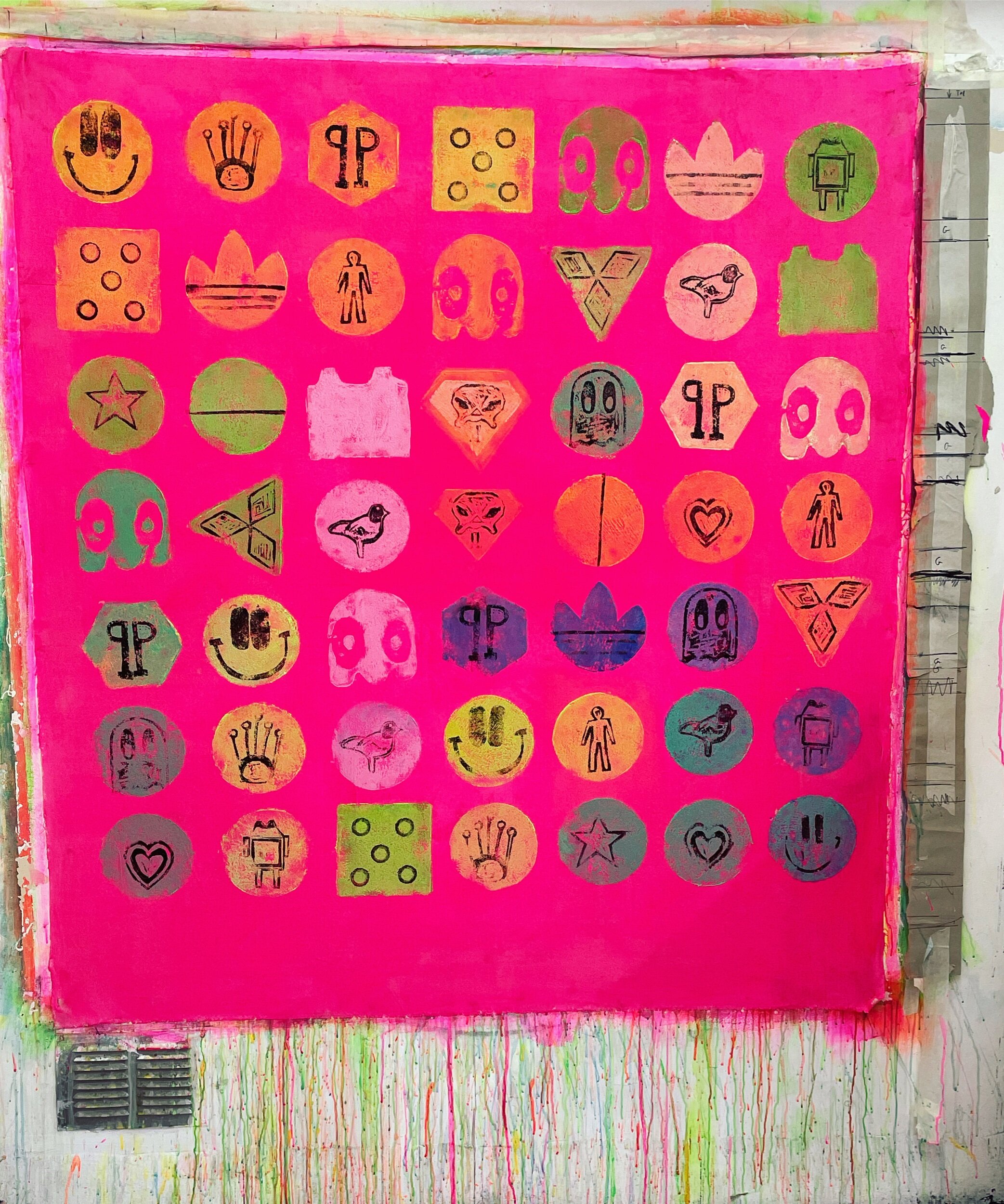
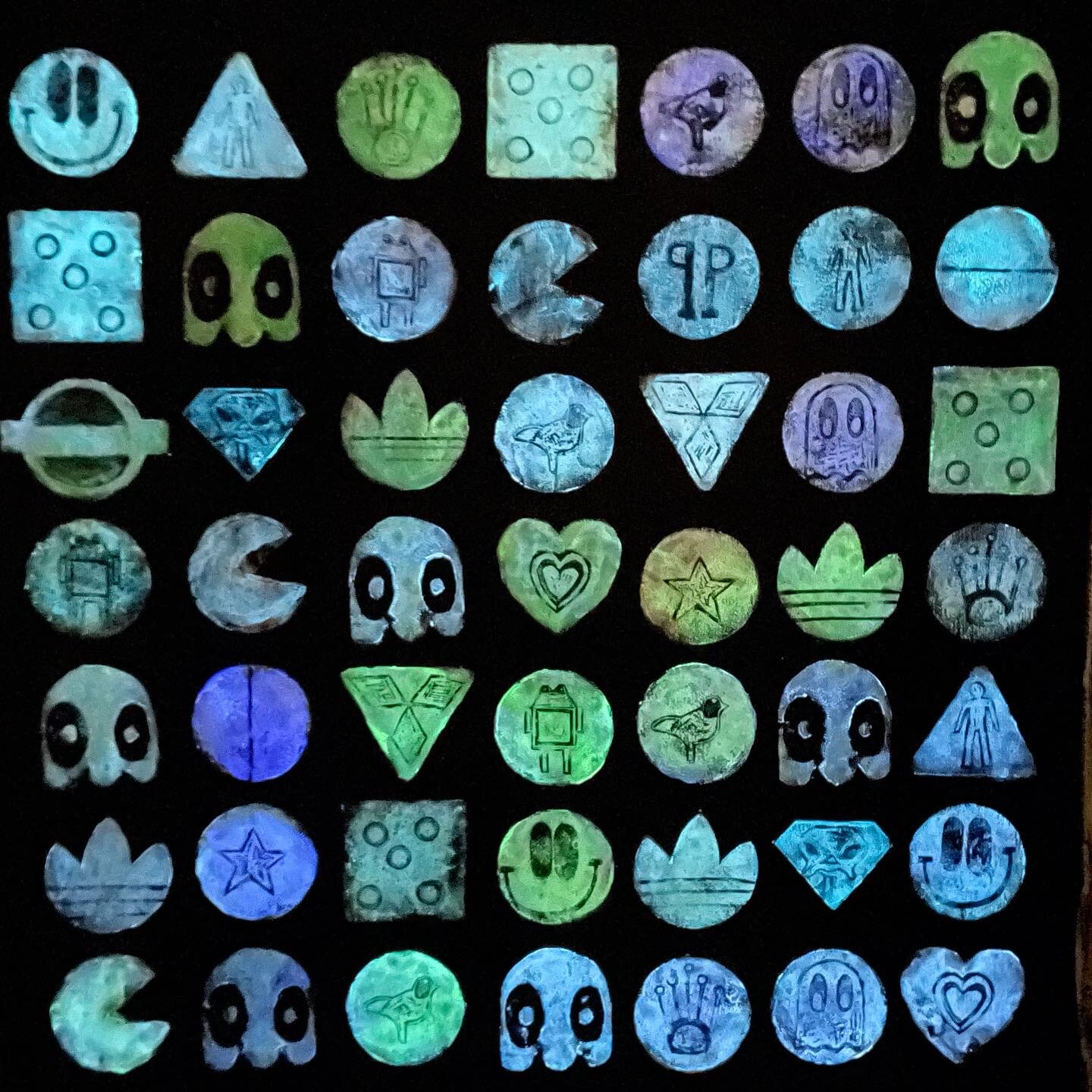
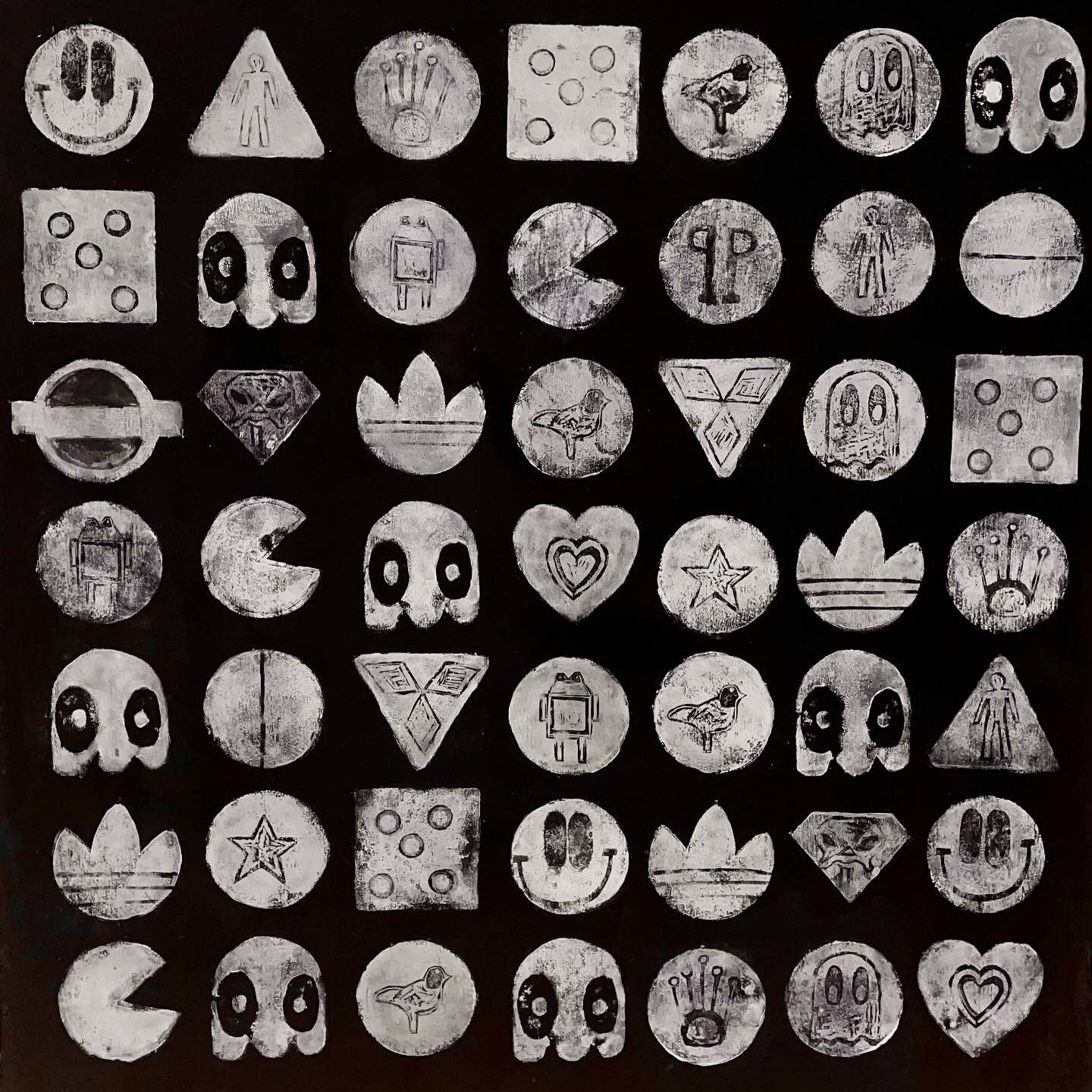
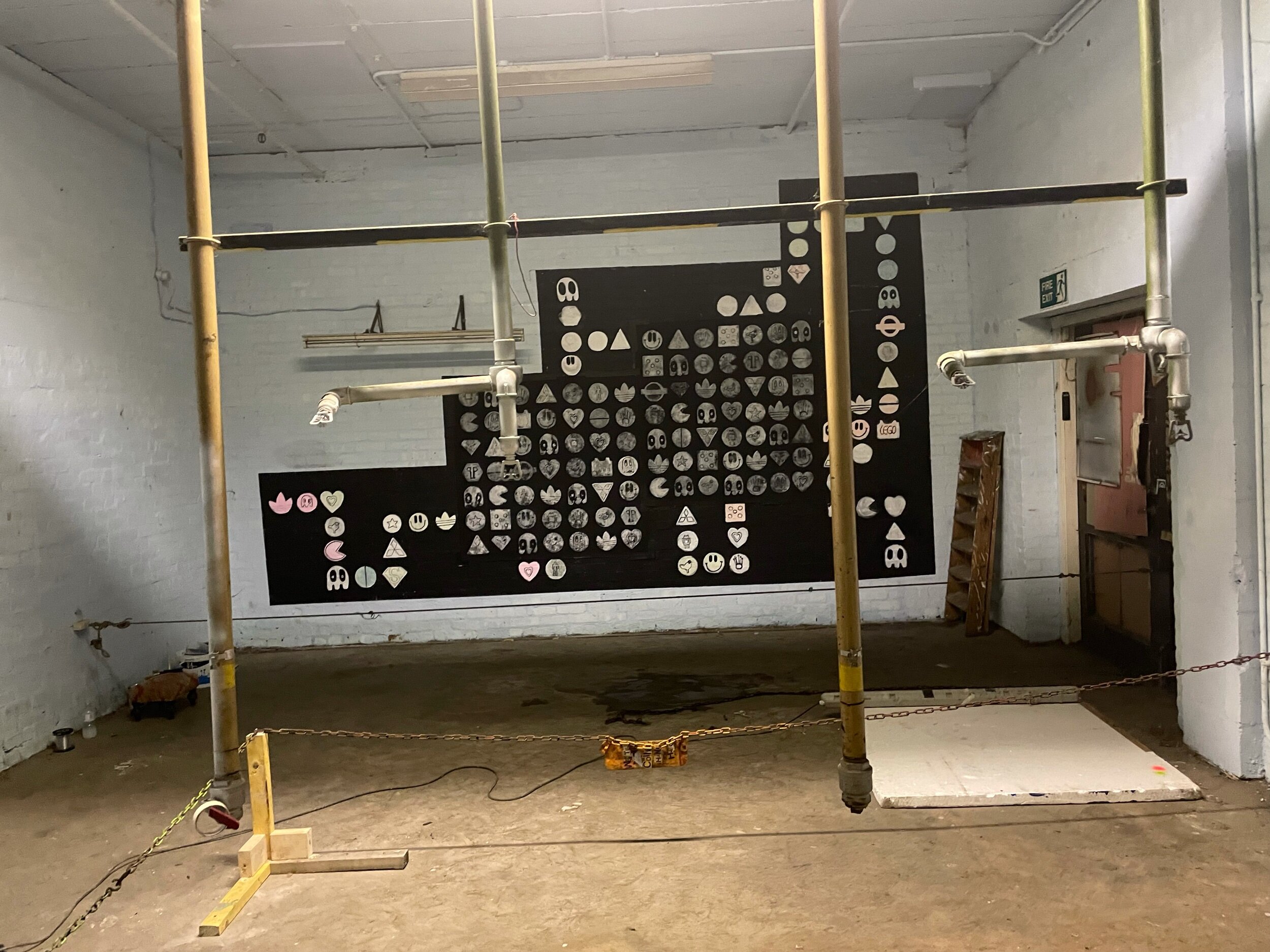
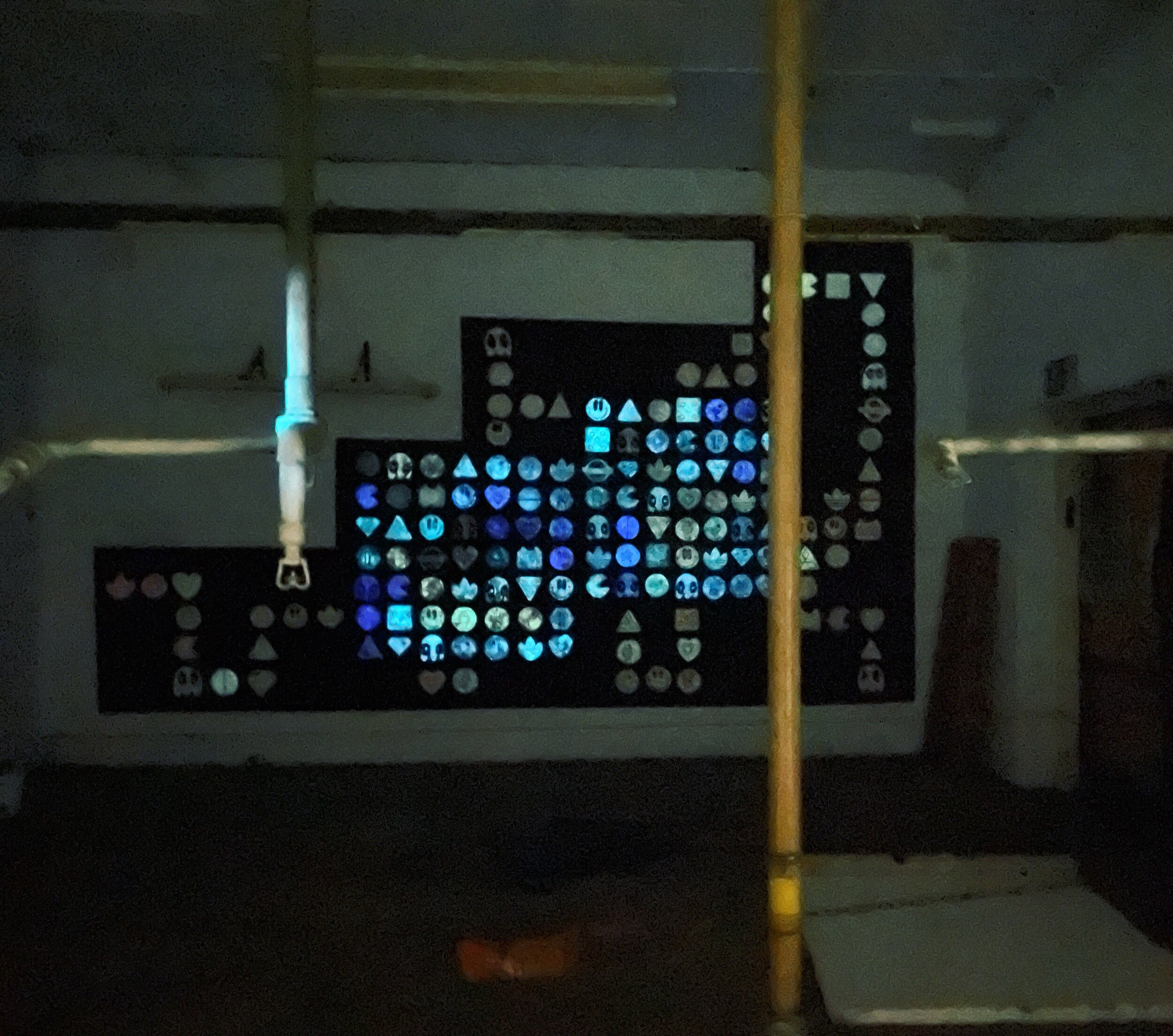
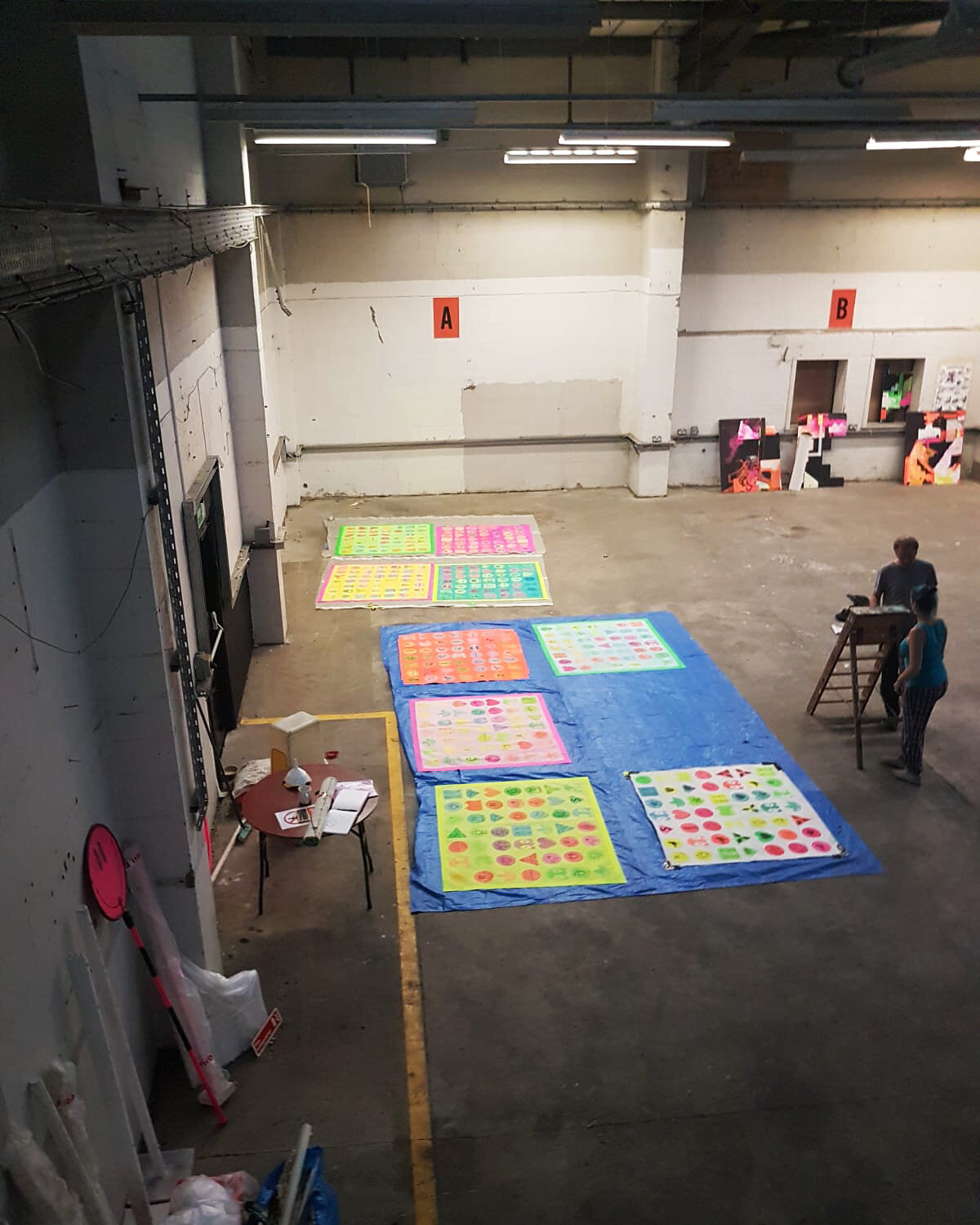
Exhibit 'E'
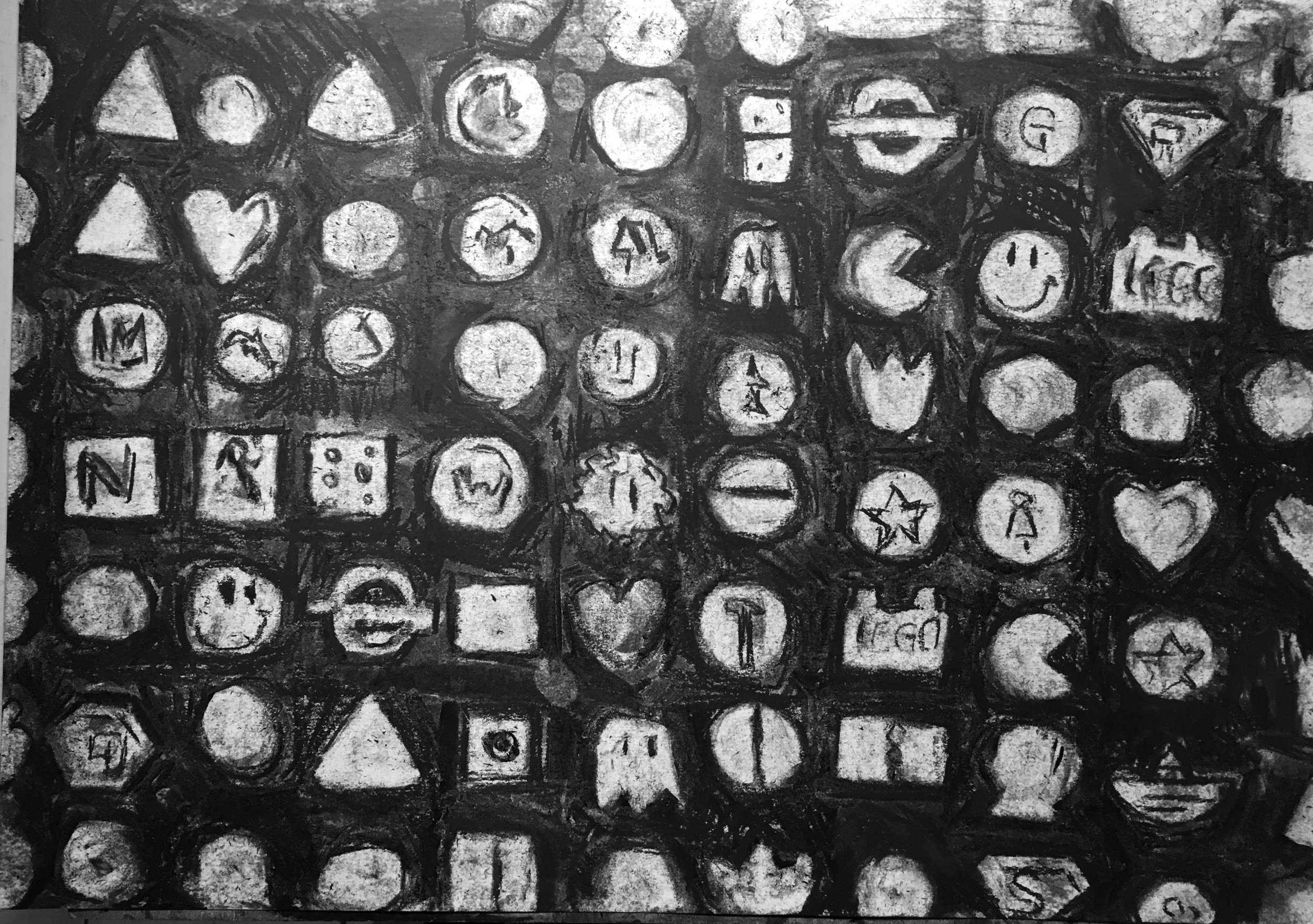
Continuing to research Rave material culture I came across several photographs of pill’s ‘E’ laid out into neat rows. They reminded me of how archaeological finds are sometimes displayed in a museum. There are so many different shapes and colours and I thought they would be interesting to draw….
Planning a Rave
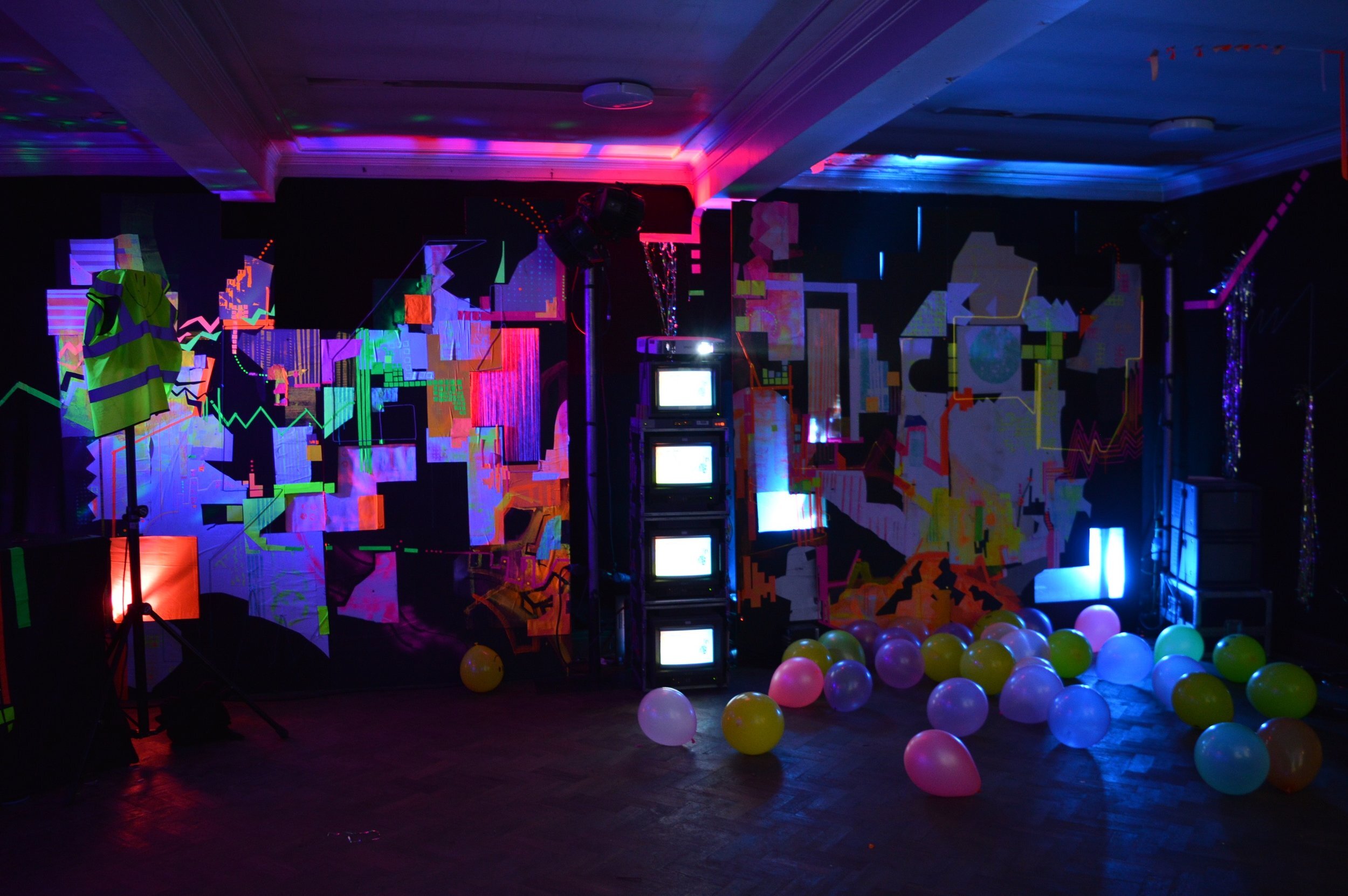
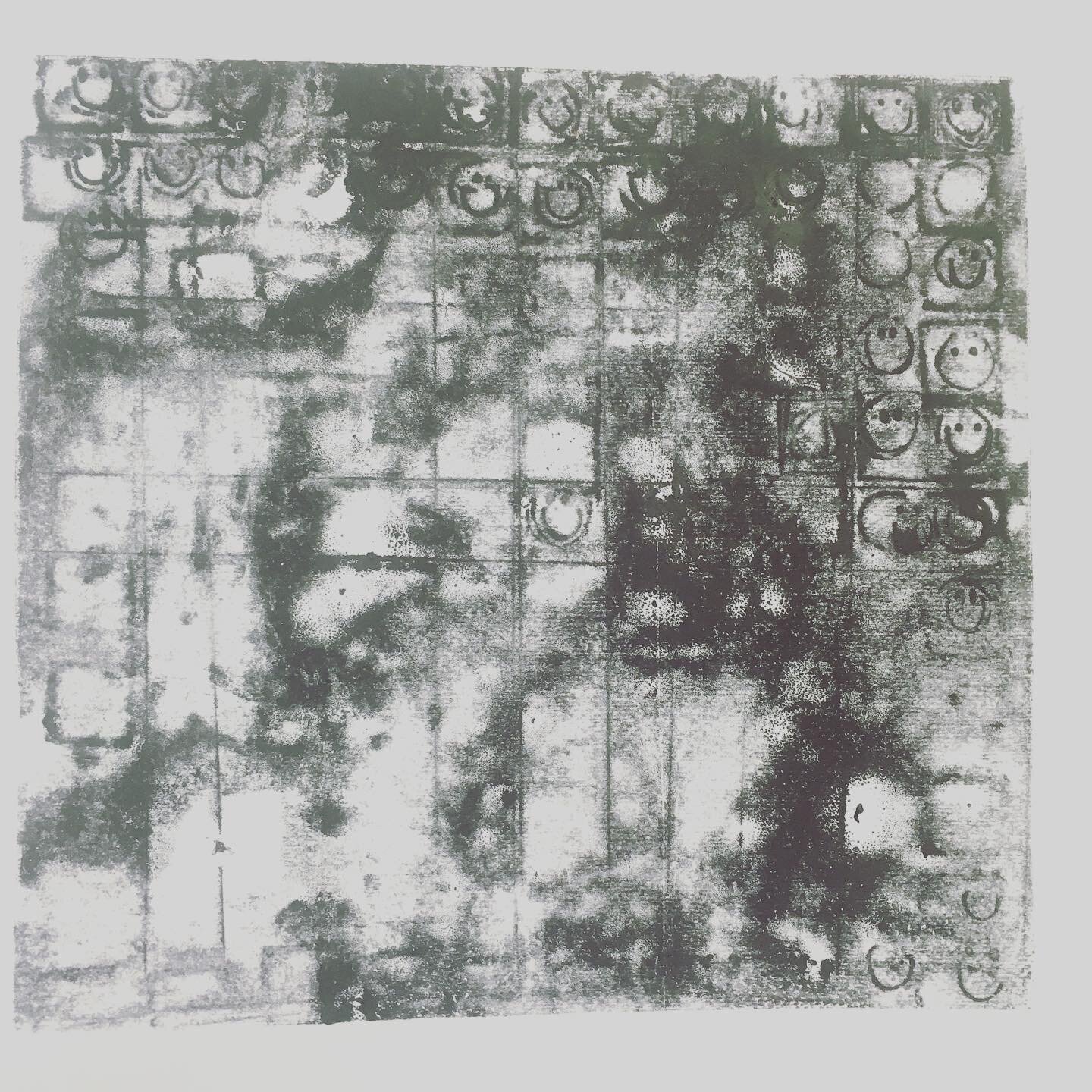
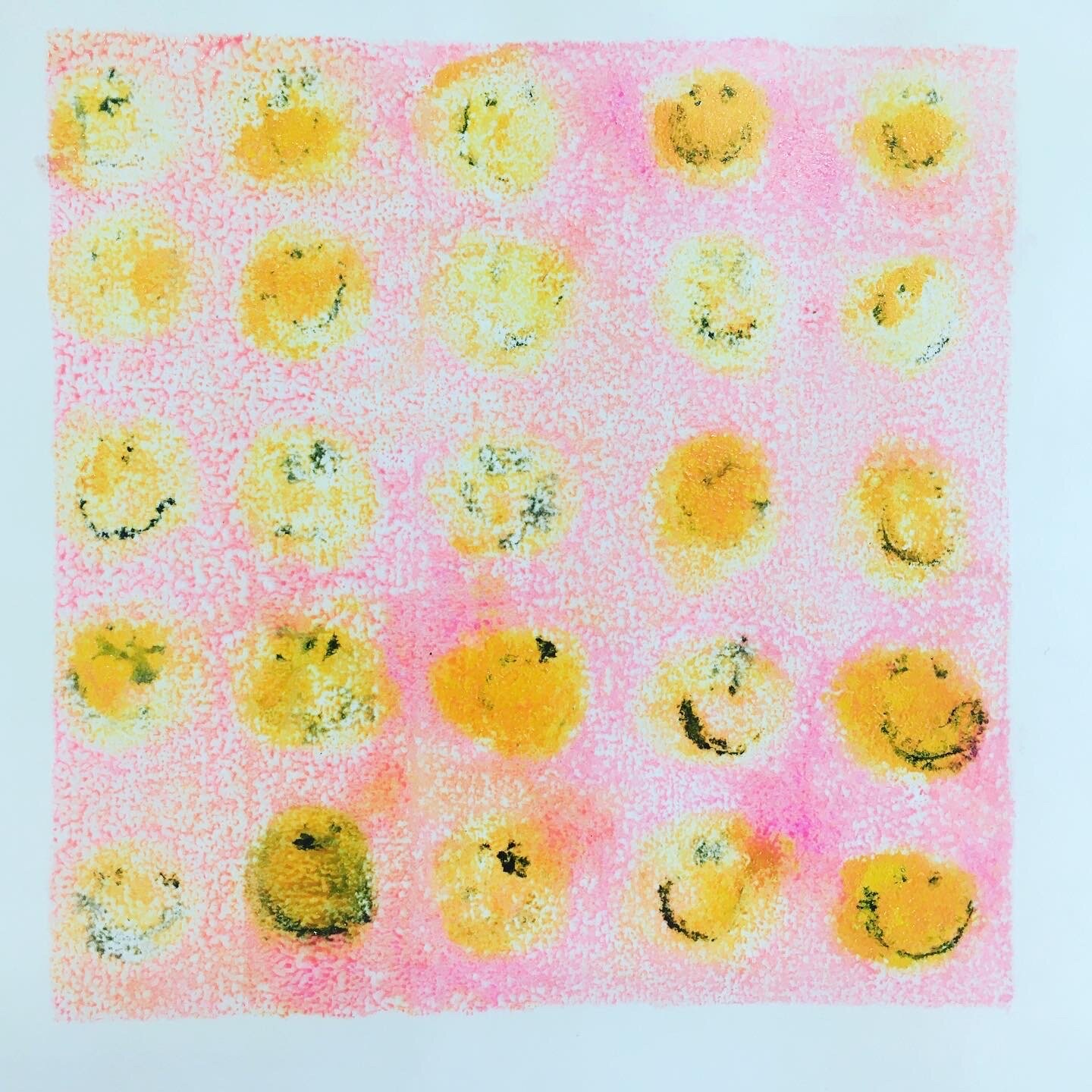
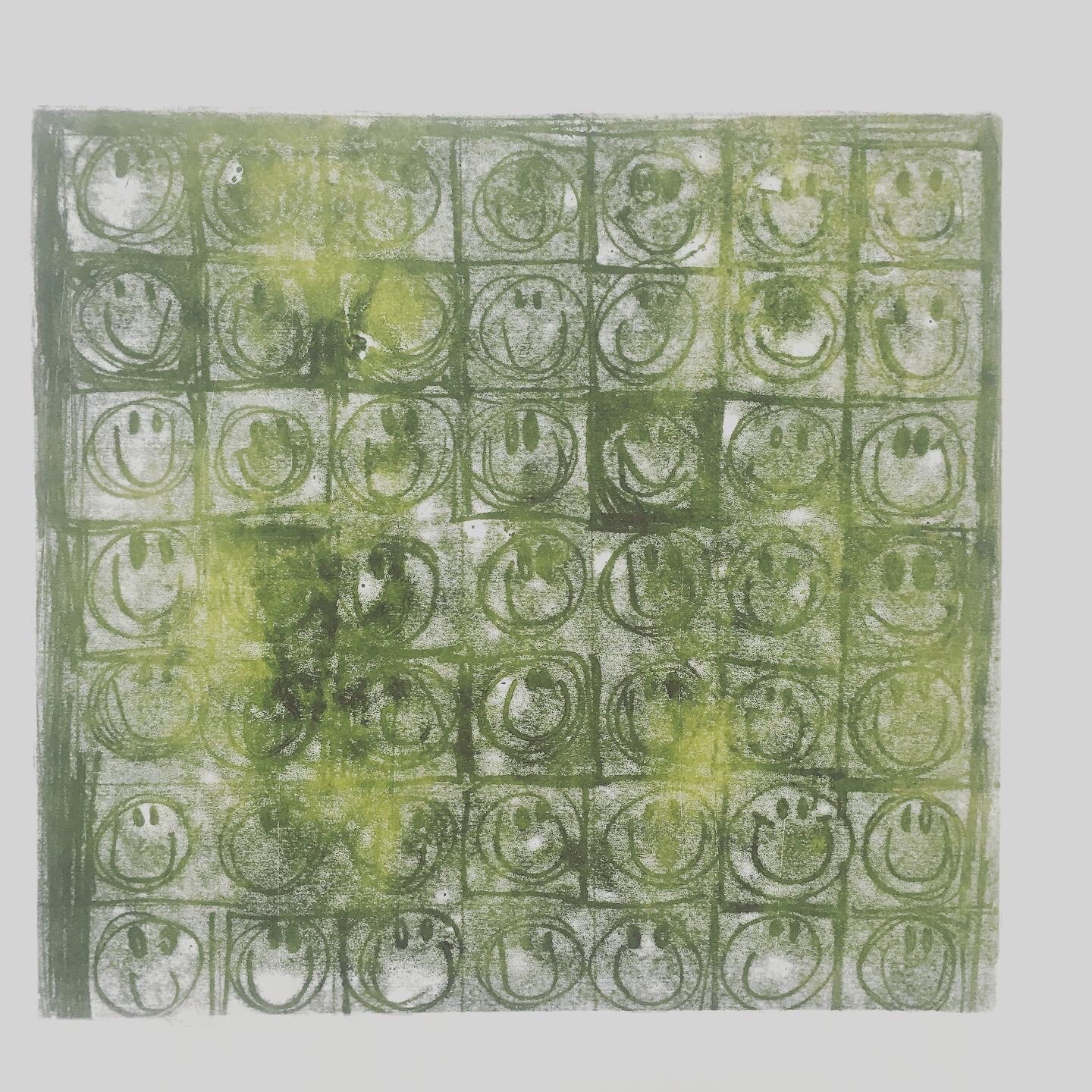
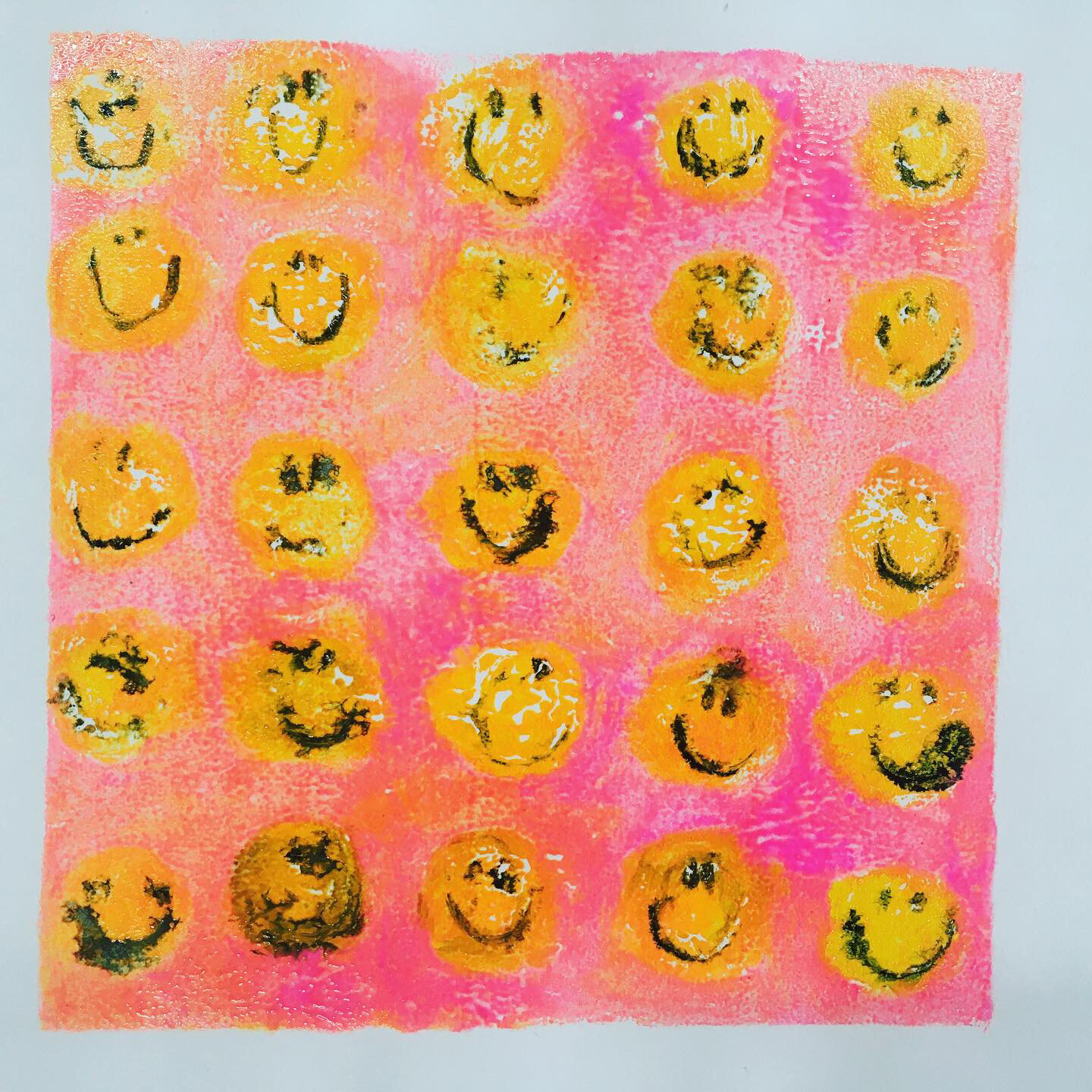
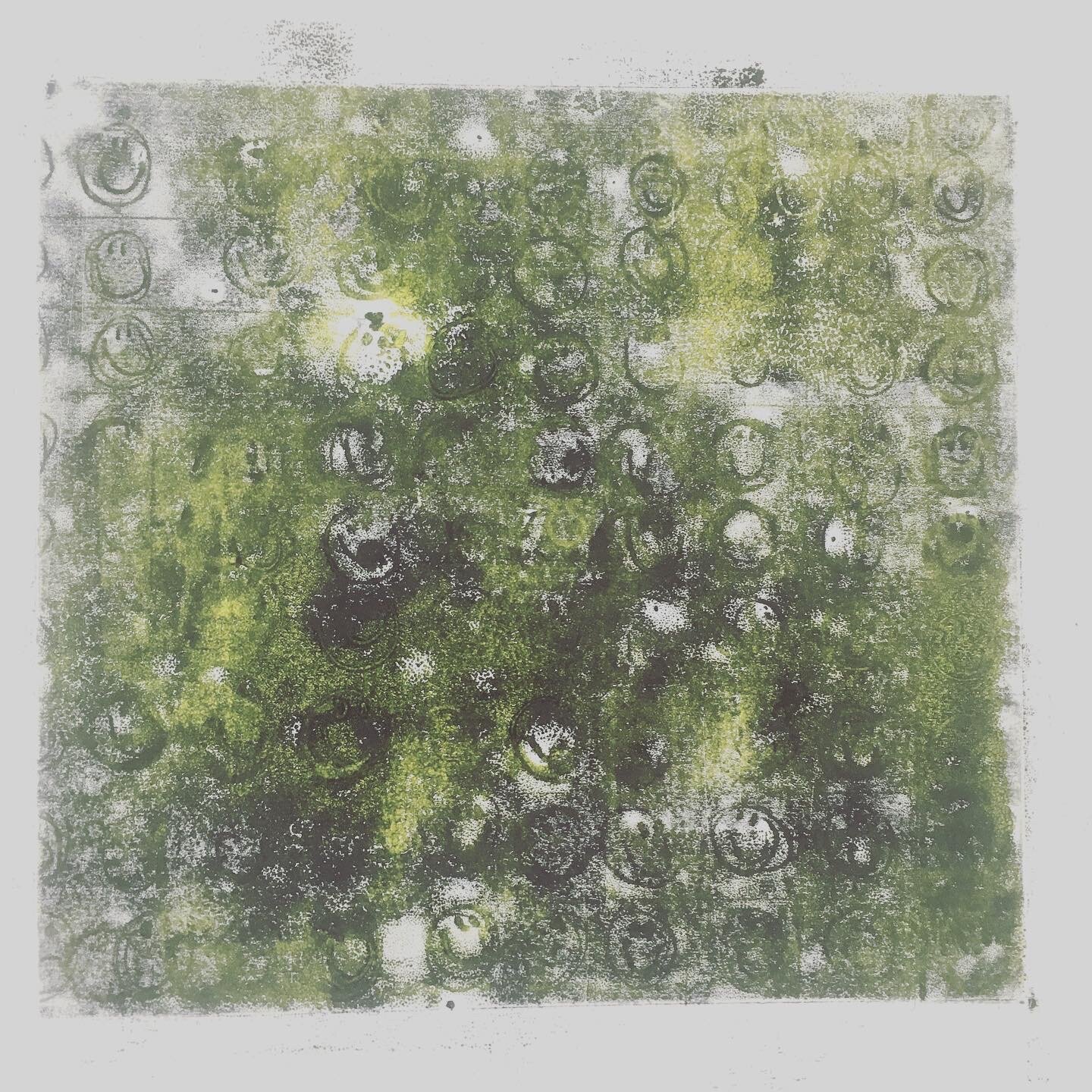
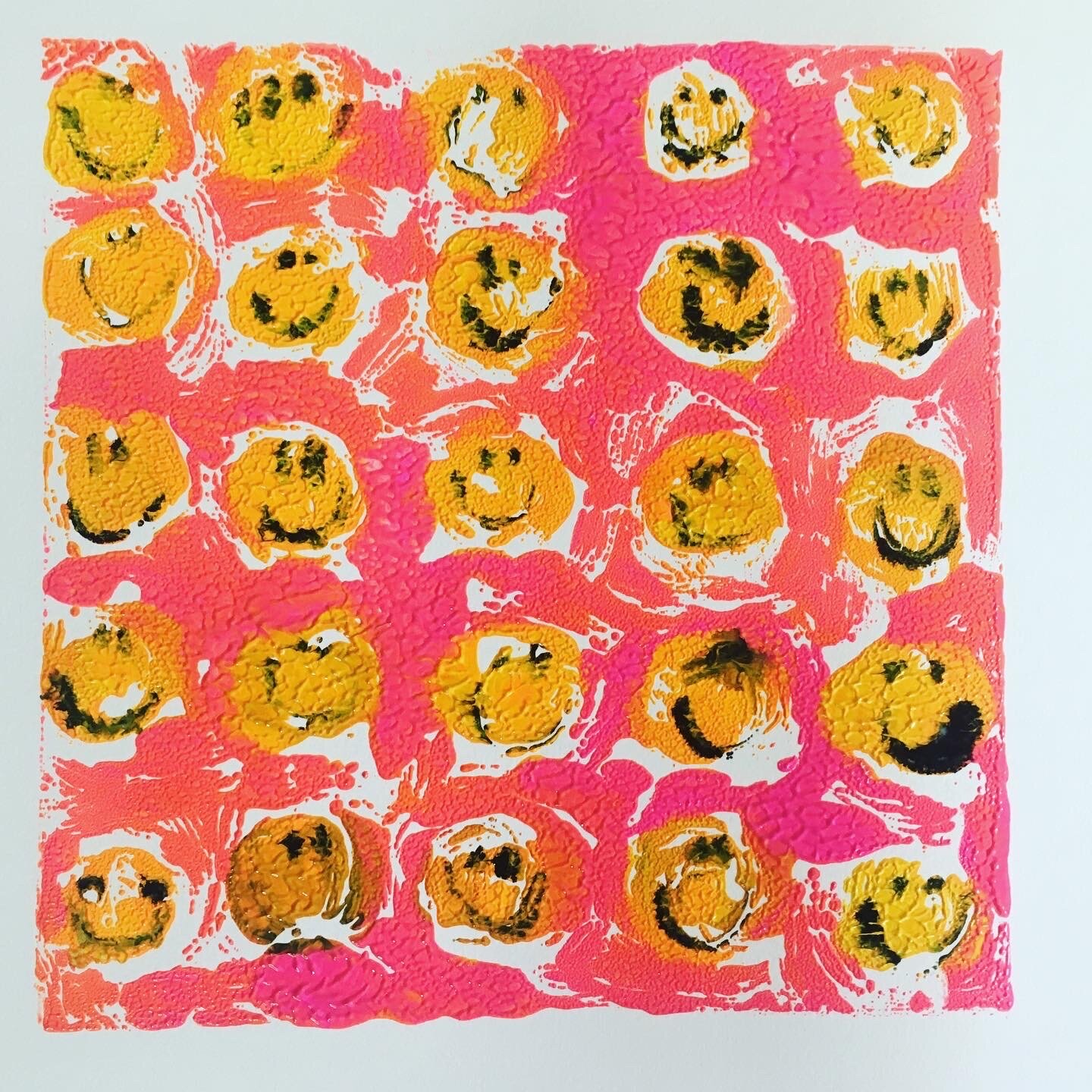
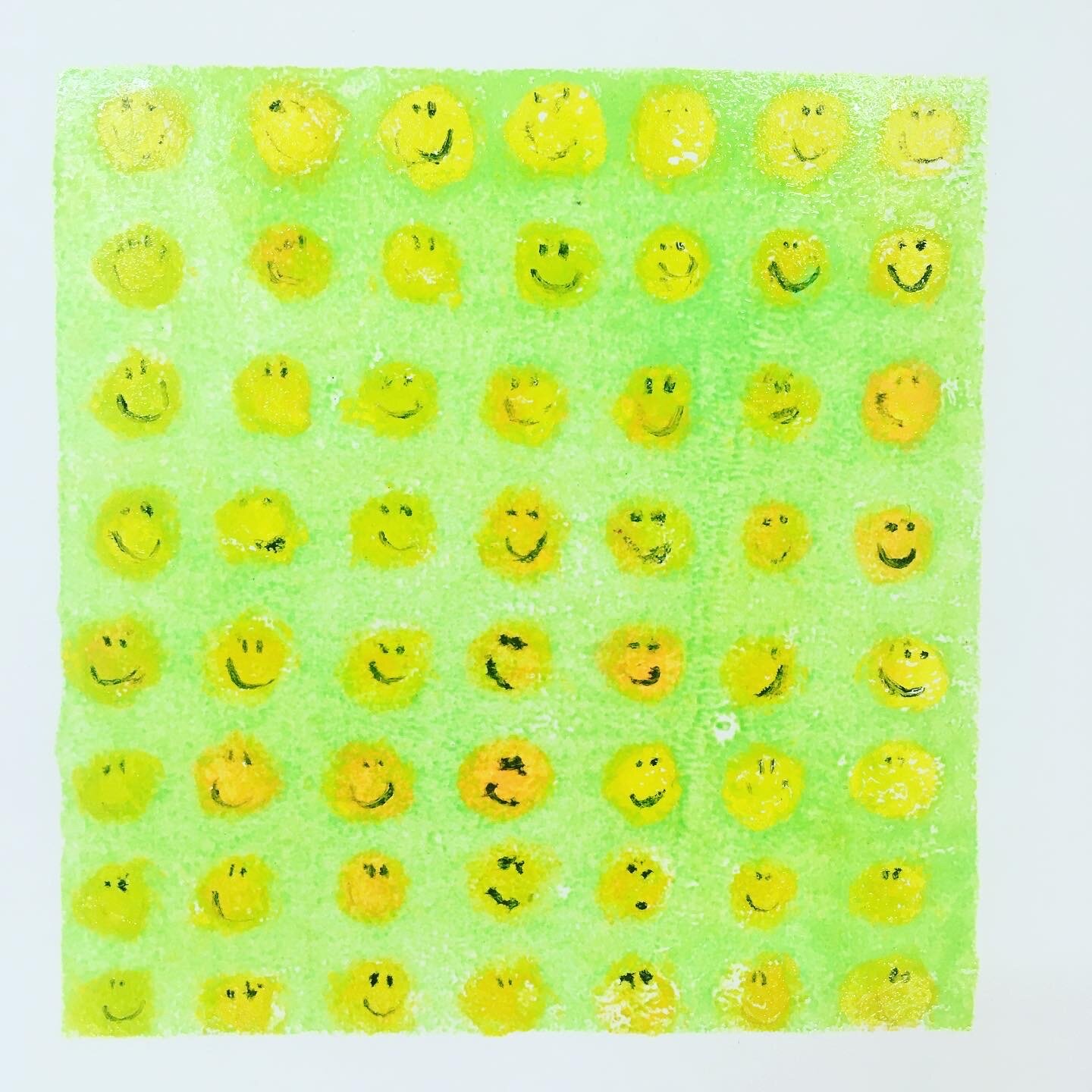
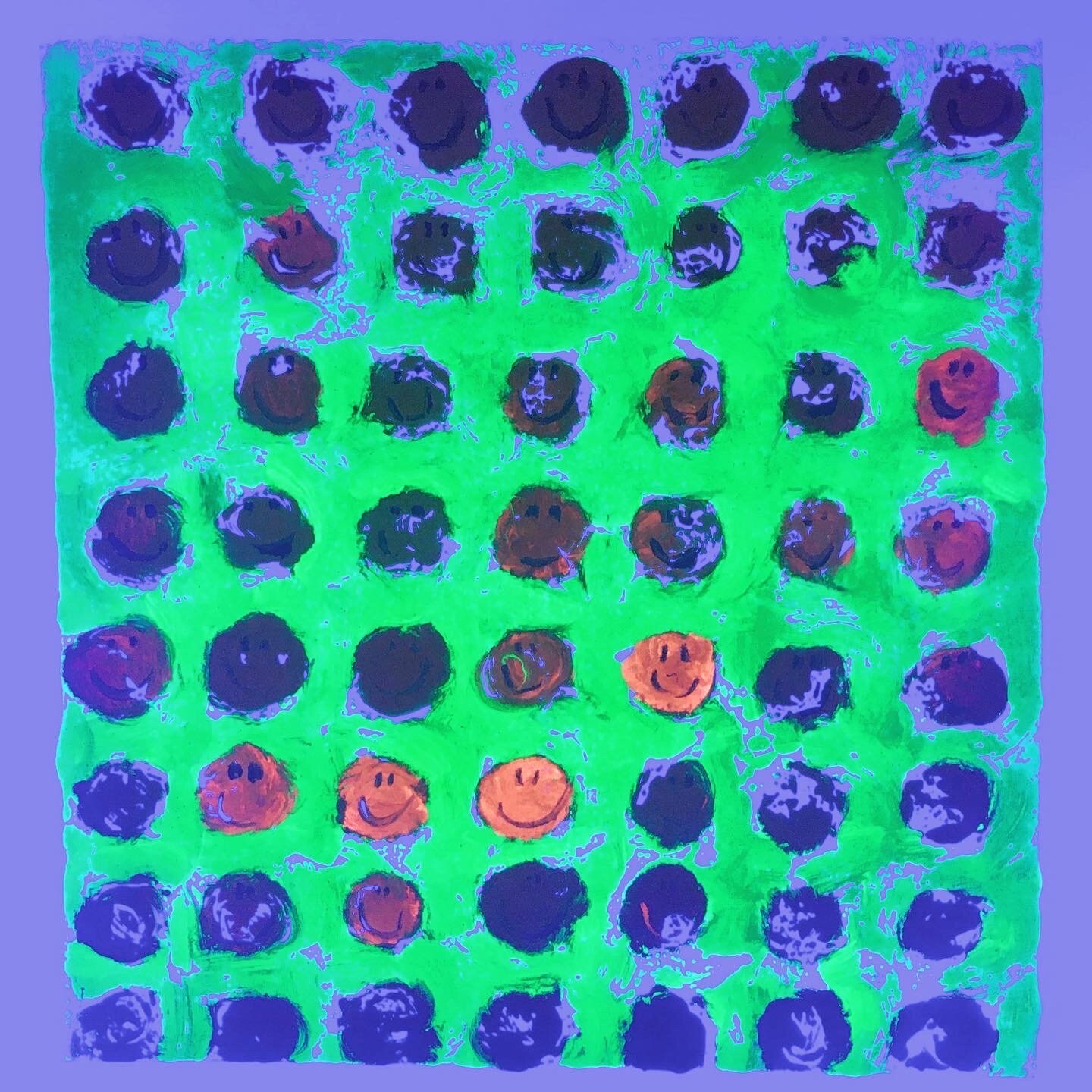
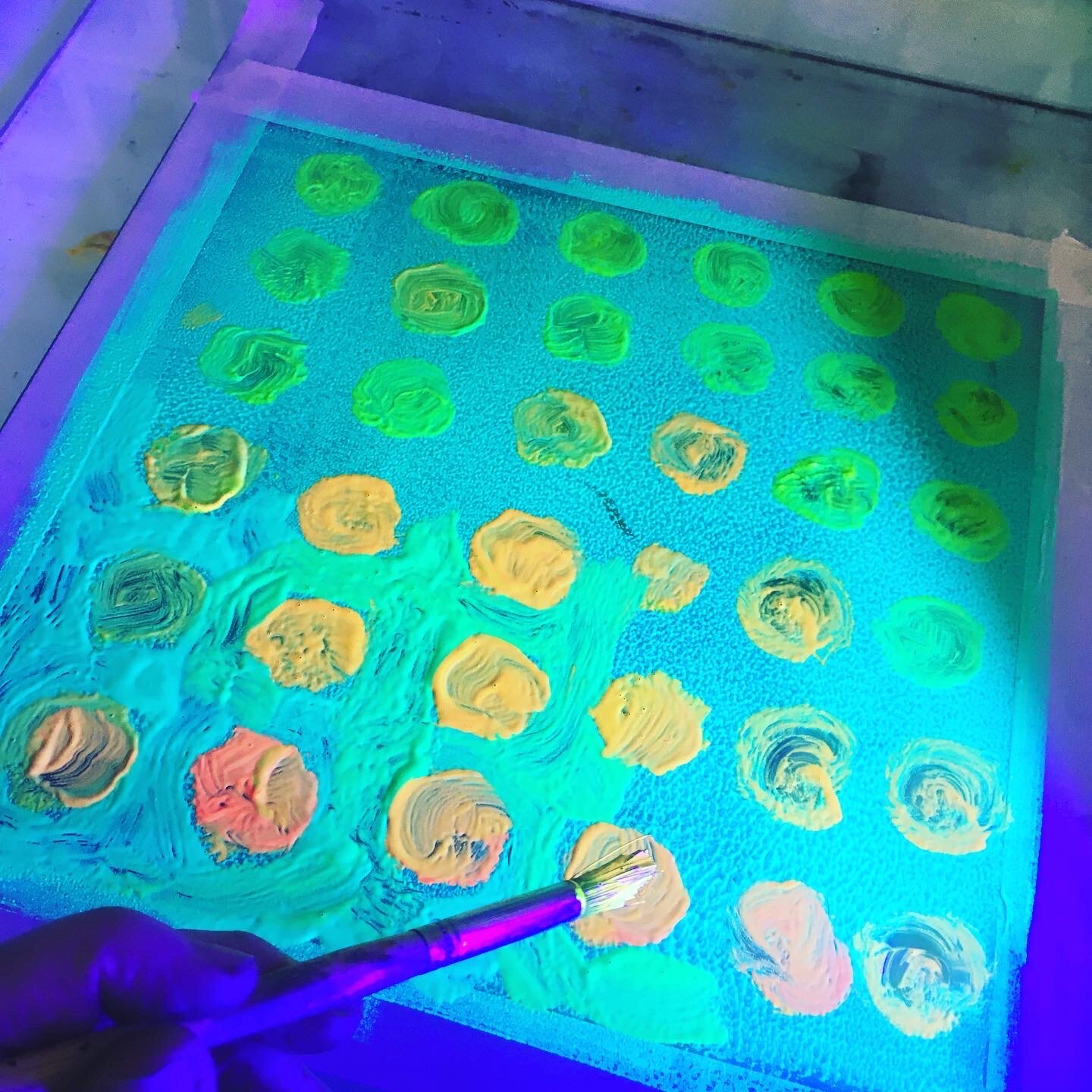
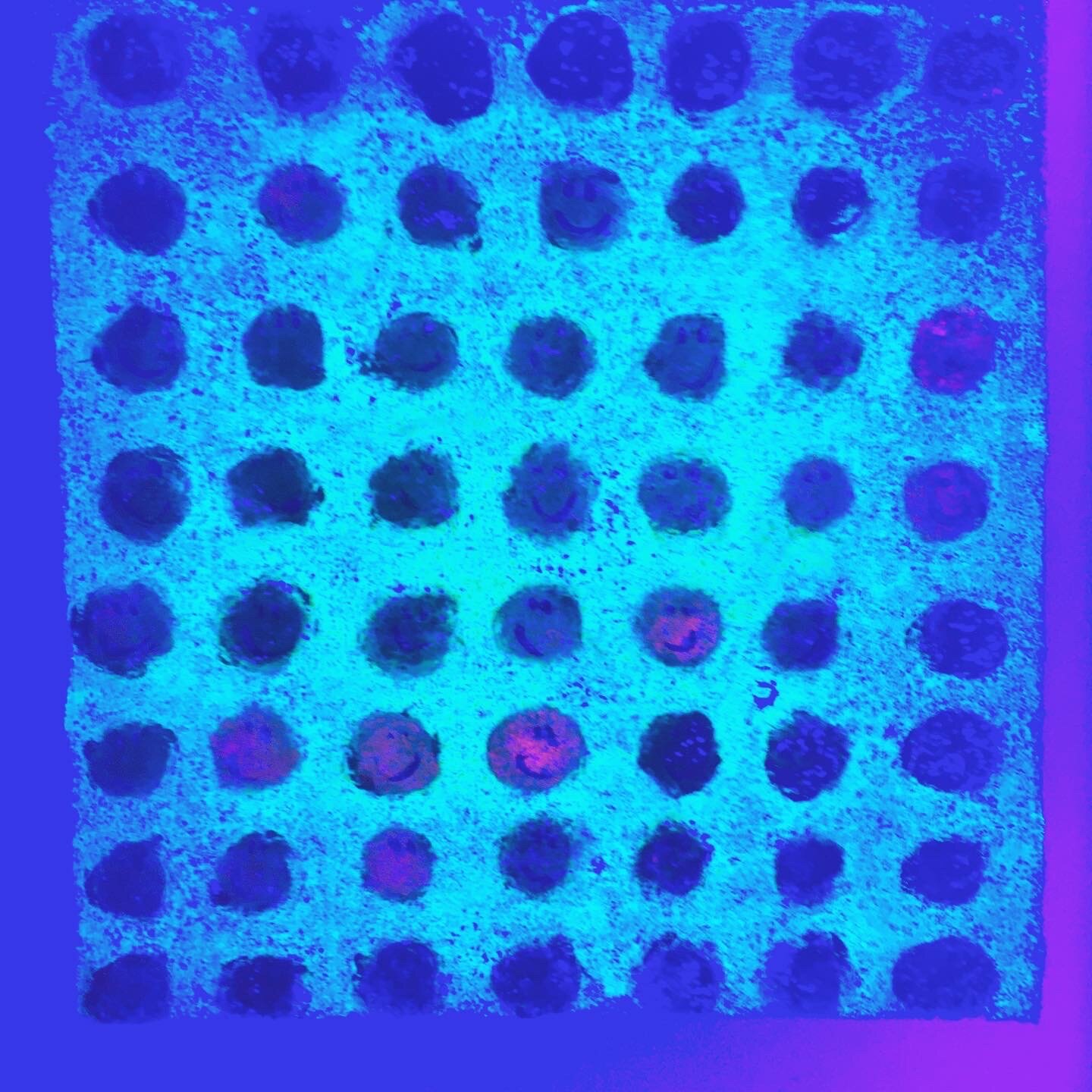
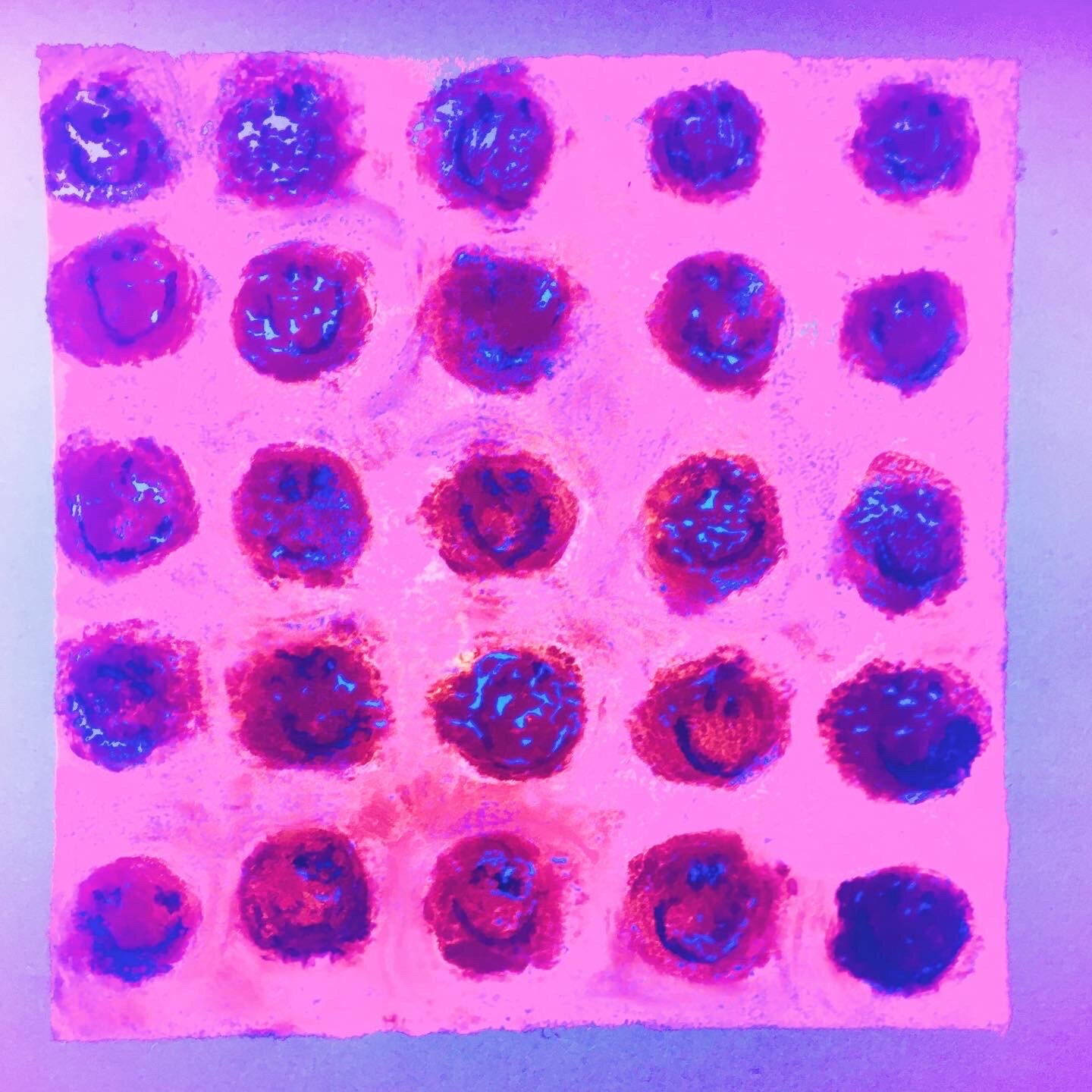
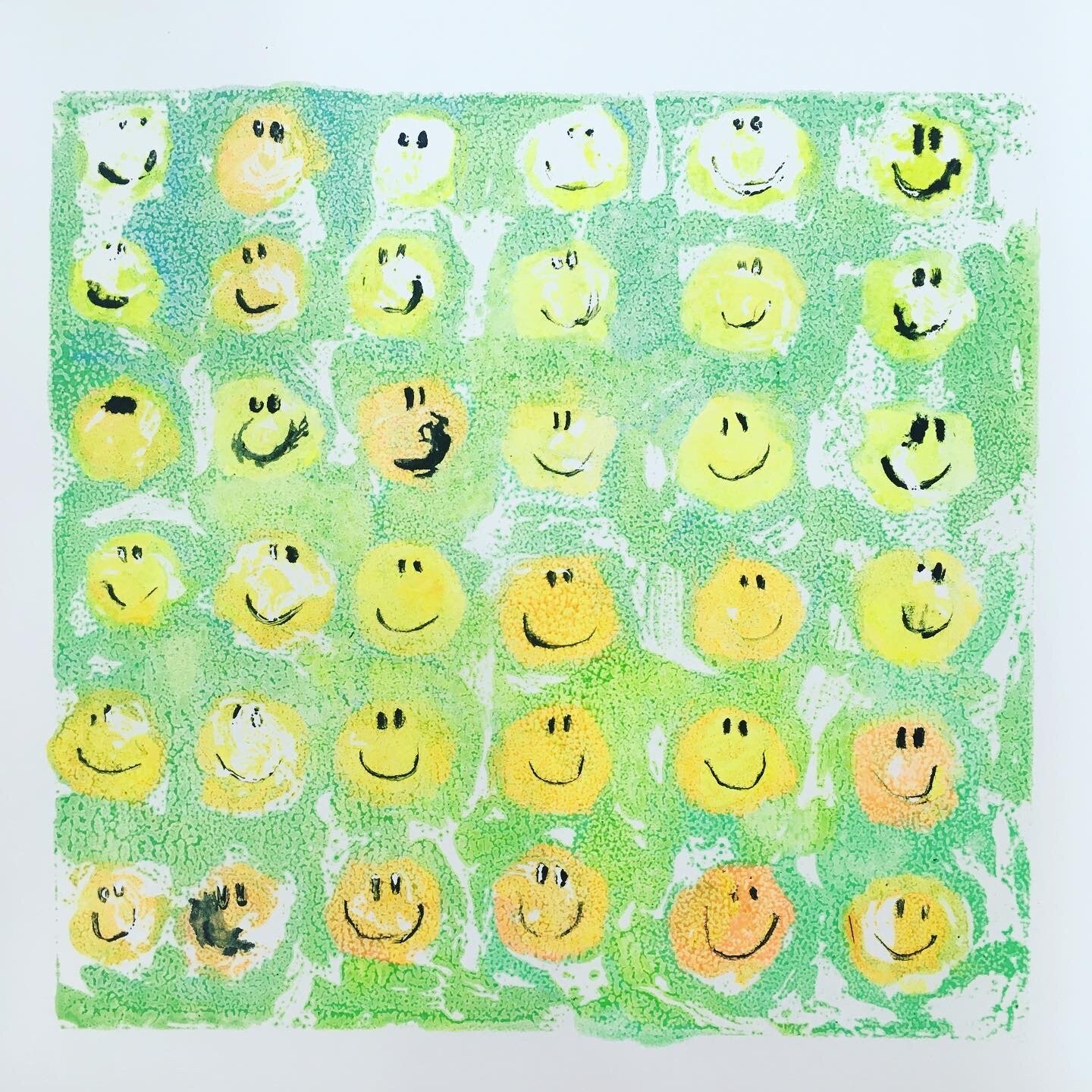
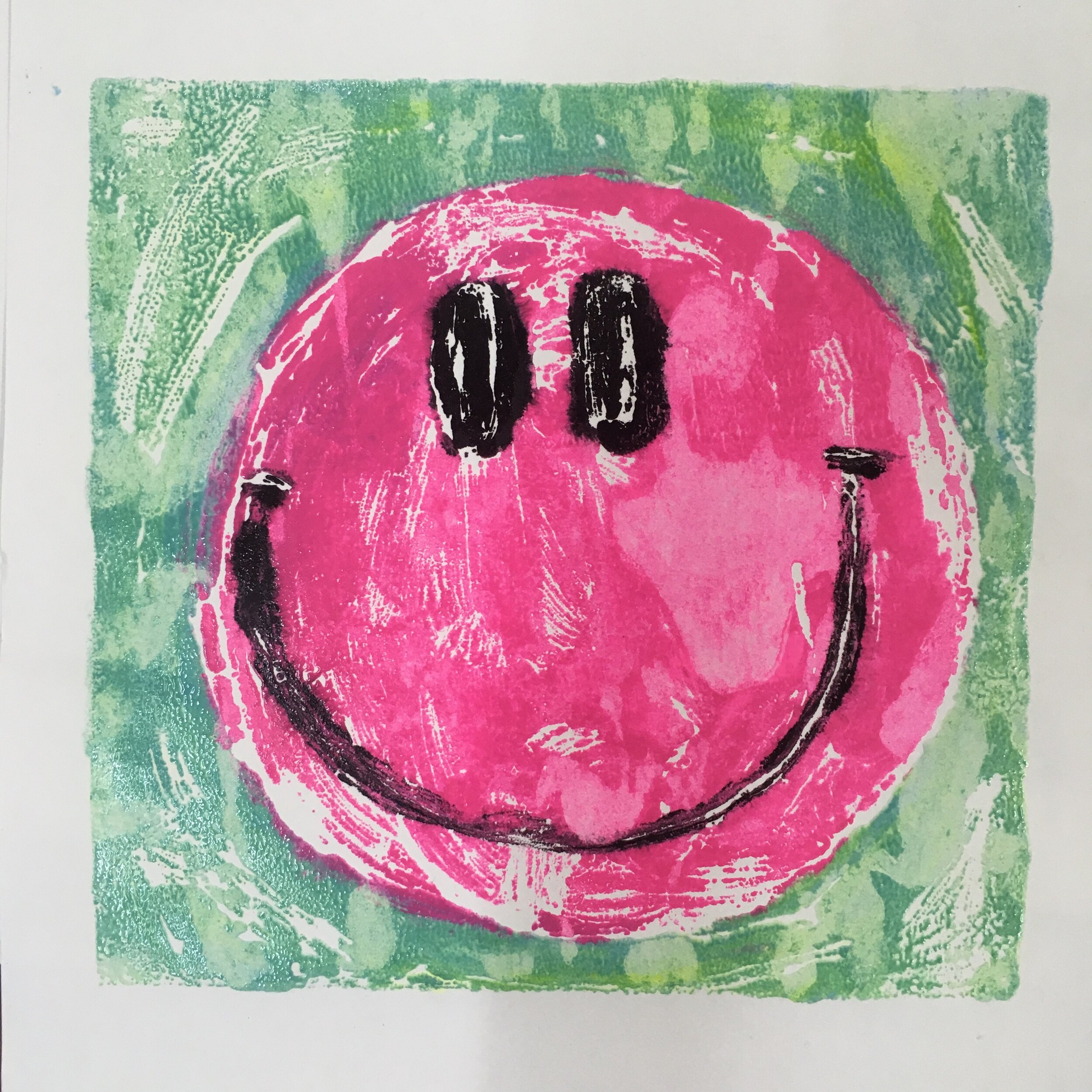
The Rave Cave was created for Hidden Door 2018 in collaboration with London based artist Lewi Quinn , we created an immersive experience involving light, sound and performance. I’ve been invited to re-imagine this project for a live stream project with Hidden Door in Early April 2021. I plan to collaborate with a wider group of creatives including a dancer, theatre practitioner, a costume designer as well as the wider public to create a pop up event in celebration of 80s rave culture. In the studio this week I have been thinking about the set design and have began mono printing the acid house logo to create smiley rave face prints.
Play-Parks
Over lockdown I spent a lot of time in my local park, Montgomery Street Park. One of my lockdown habits was to go out to draw everyday and the temporarily abandoned & empty play-park made for interesting subject matter. I love the complexity of the space - the view dissected by the boundary railings and the play-park furniture.


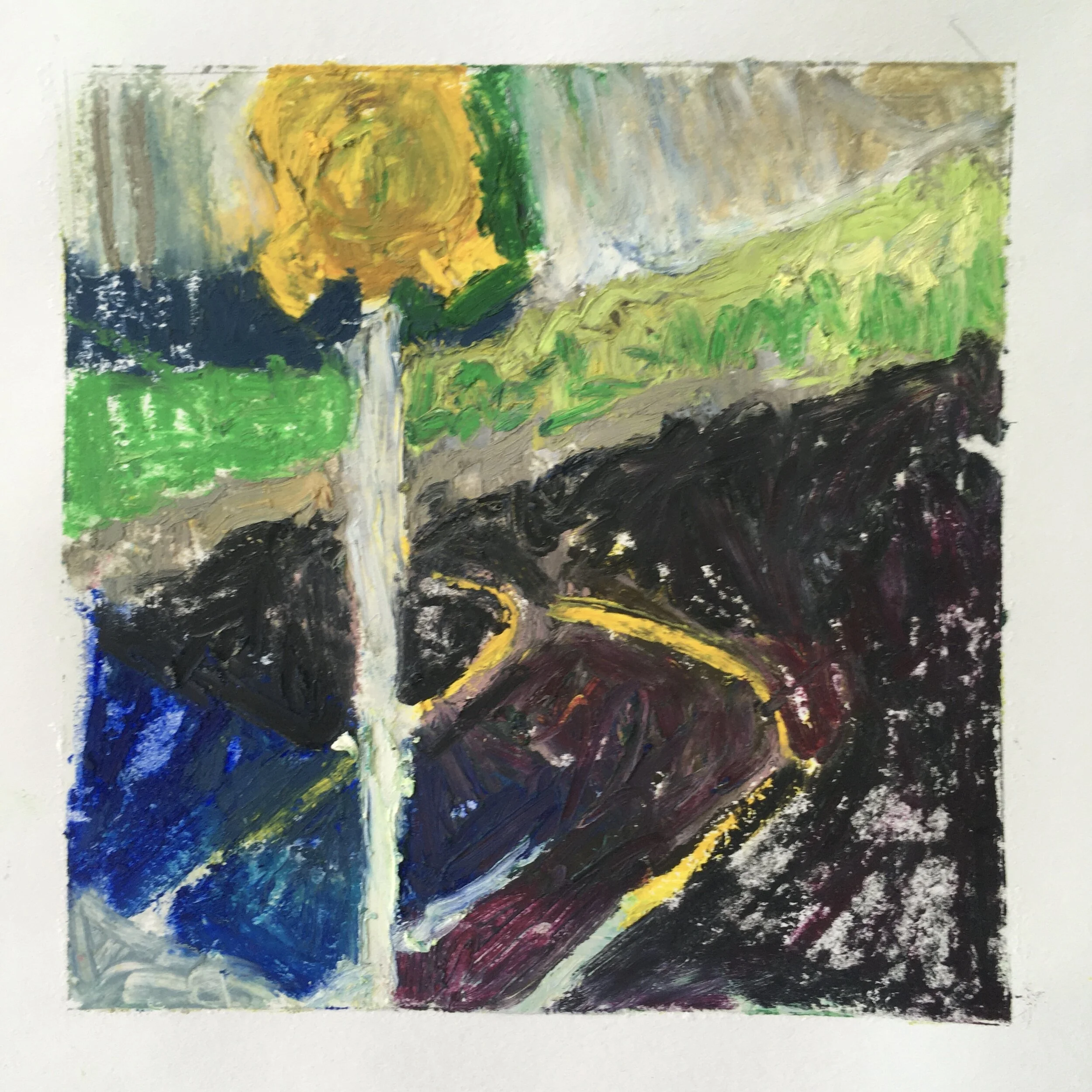


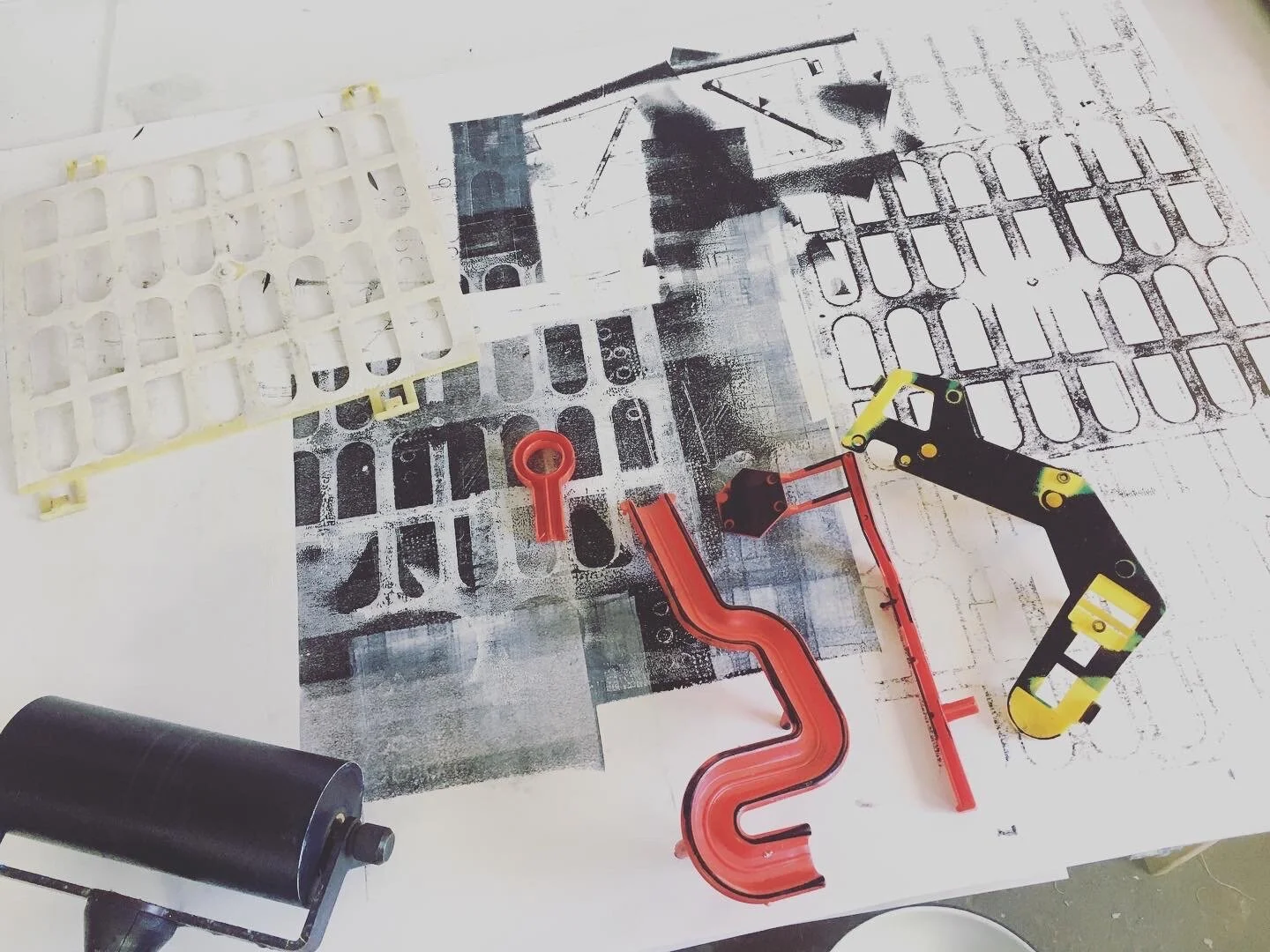
Thinking of how this project fits into wider context of my practice, I began looking into the history of play-parks. After the Second World War vast open spaces were left behind from the bombing. In these spaces ‘Adventure Playparks’ sprang up where the kids built them out of junk left behind, inspired by this thought I have began to make work with my collection of hoarded junk - these collages have been made out of collected ephemera and prints made using broken and discarded toys.


'Fun of the Fair' at Porty Art Walk 2018

Fun of the Fair
Venue 40, 1 Vernon Cottages, Portobello
Saturday 1 Sept - 10 am - 6pm
Sunday 2 Sept - 11 am - 5
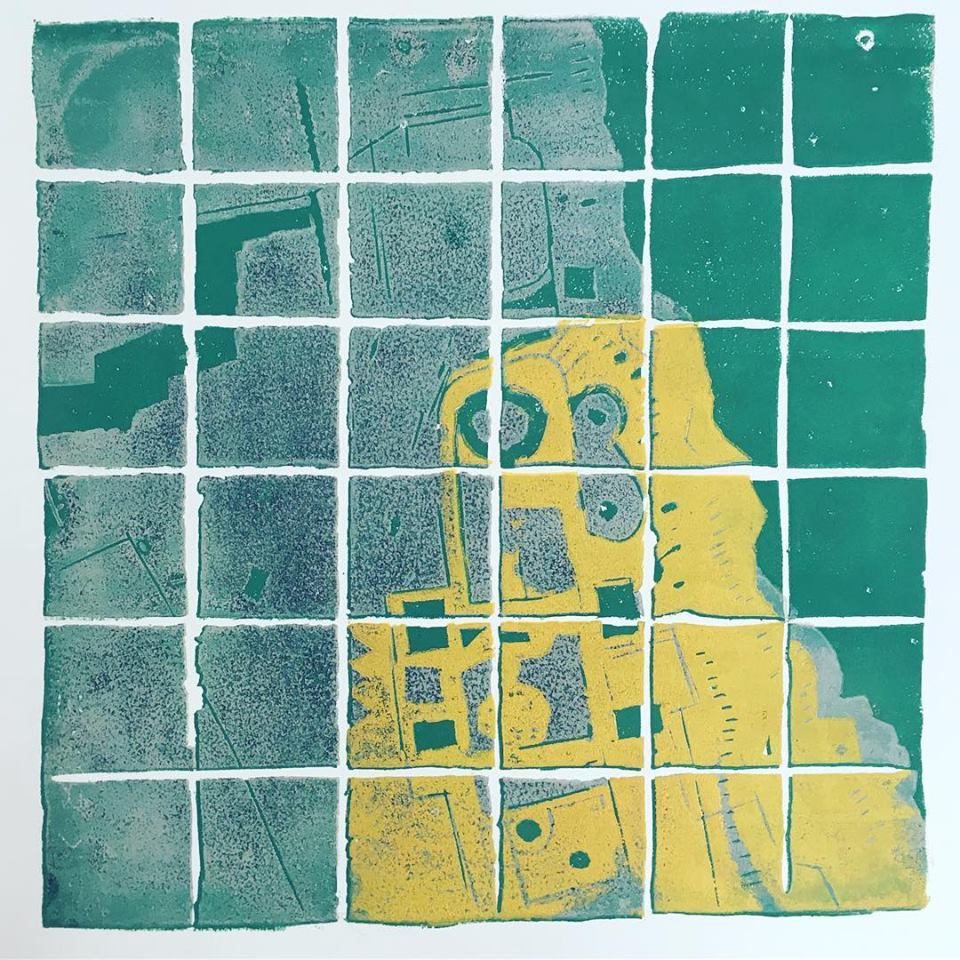
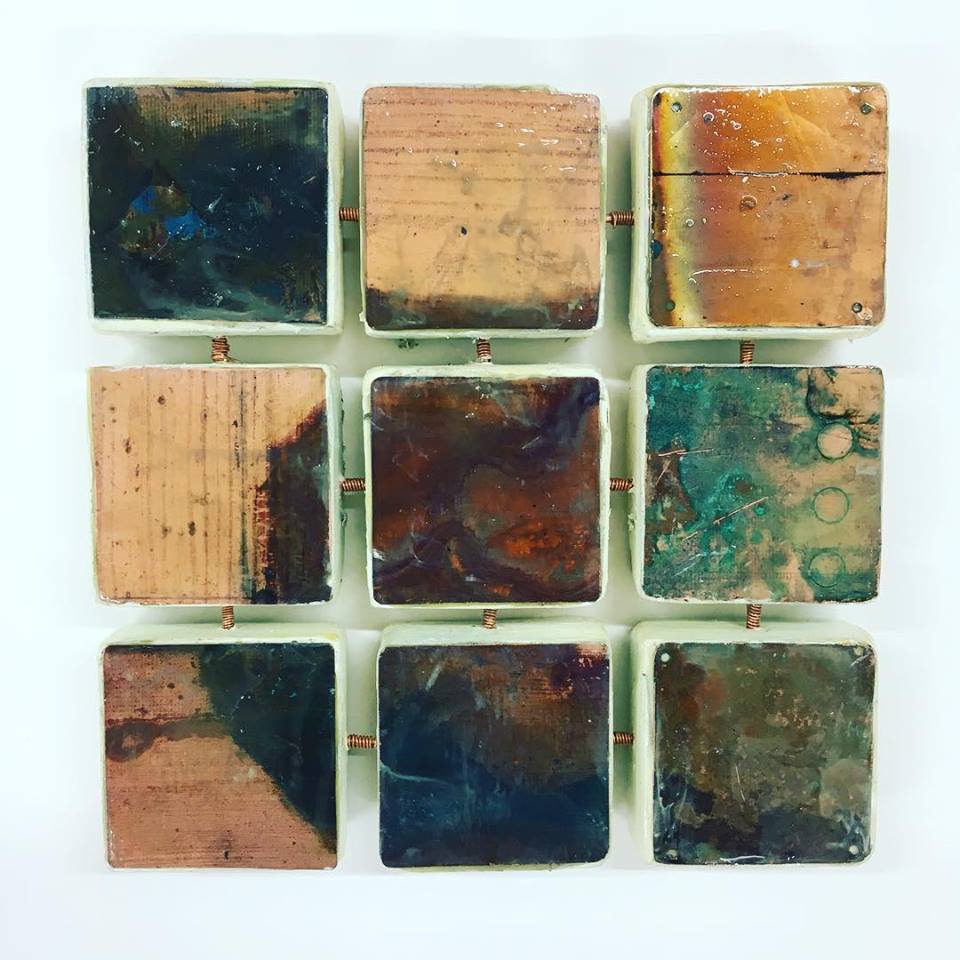
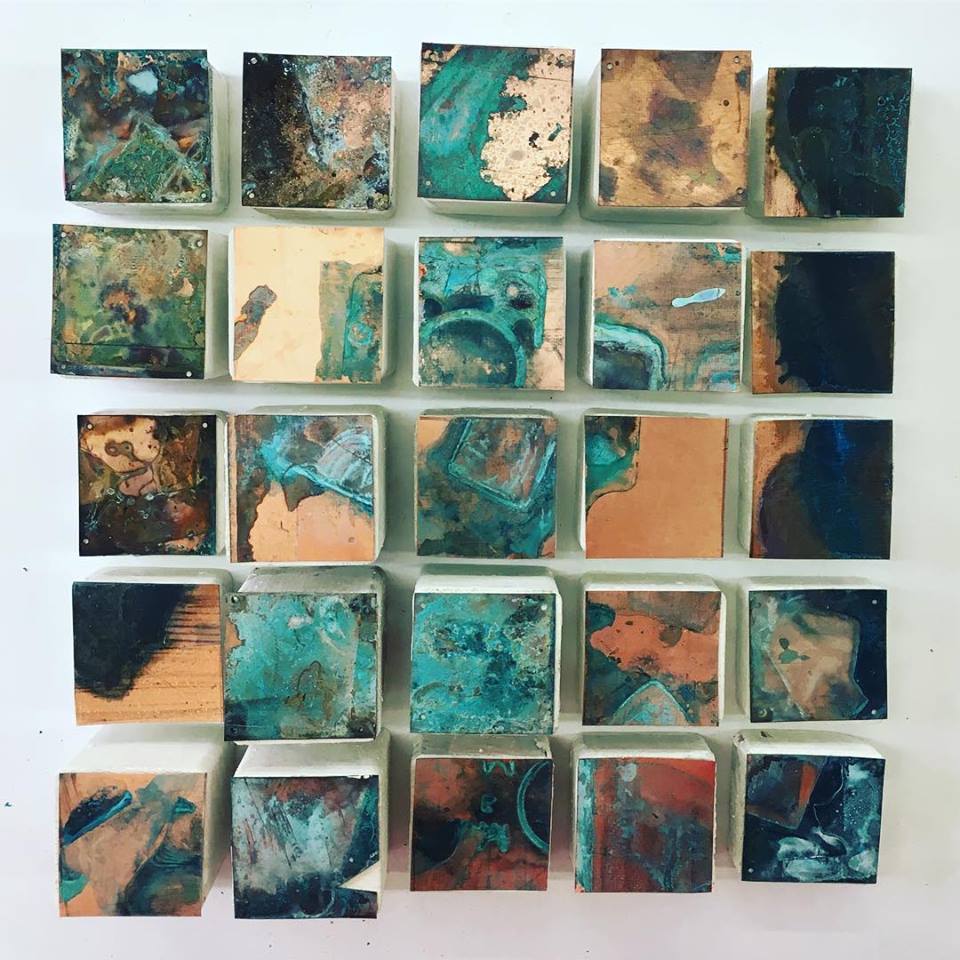
An exhibition of prints and copper drawings inspired by maps and old photographs of Portobellos lost tourist attractions: The Marine Gardens, Lido and Funfair.
Join the Facebook Event
Also two of my monoprints will be on display either end of the Pipe Street toilets so make sure you take a wander and check them out!
Fun Fun Fun
I'll be showing in an art house as part of the Art Walk Porty next month. The theme for this years event is 'Pleasure Ground'. In its heyday, Portobello was bustling tourist attraction and on sunny days hundreds of visitors would flock to the fun fair and open air swimming pool. Old photographs show the roller coaster that used to be on the site. I've been using these photographs to create these linocut prints.


Copper squares
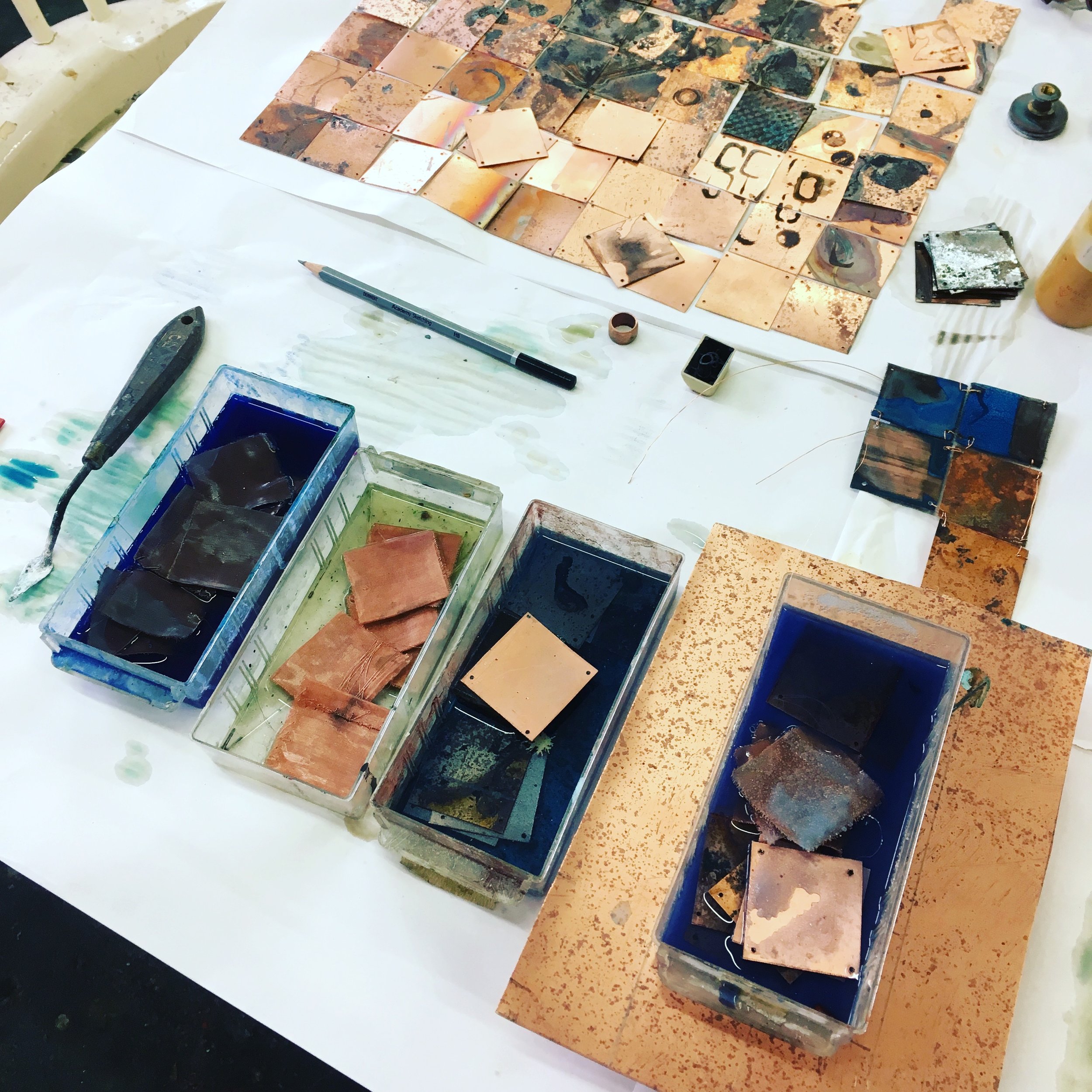
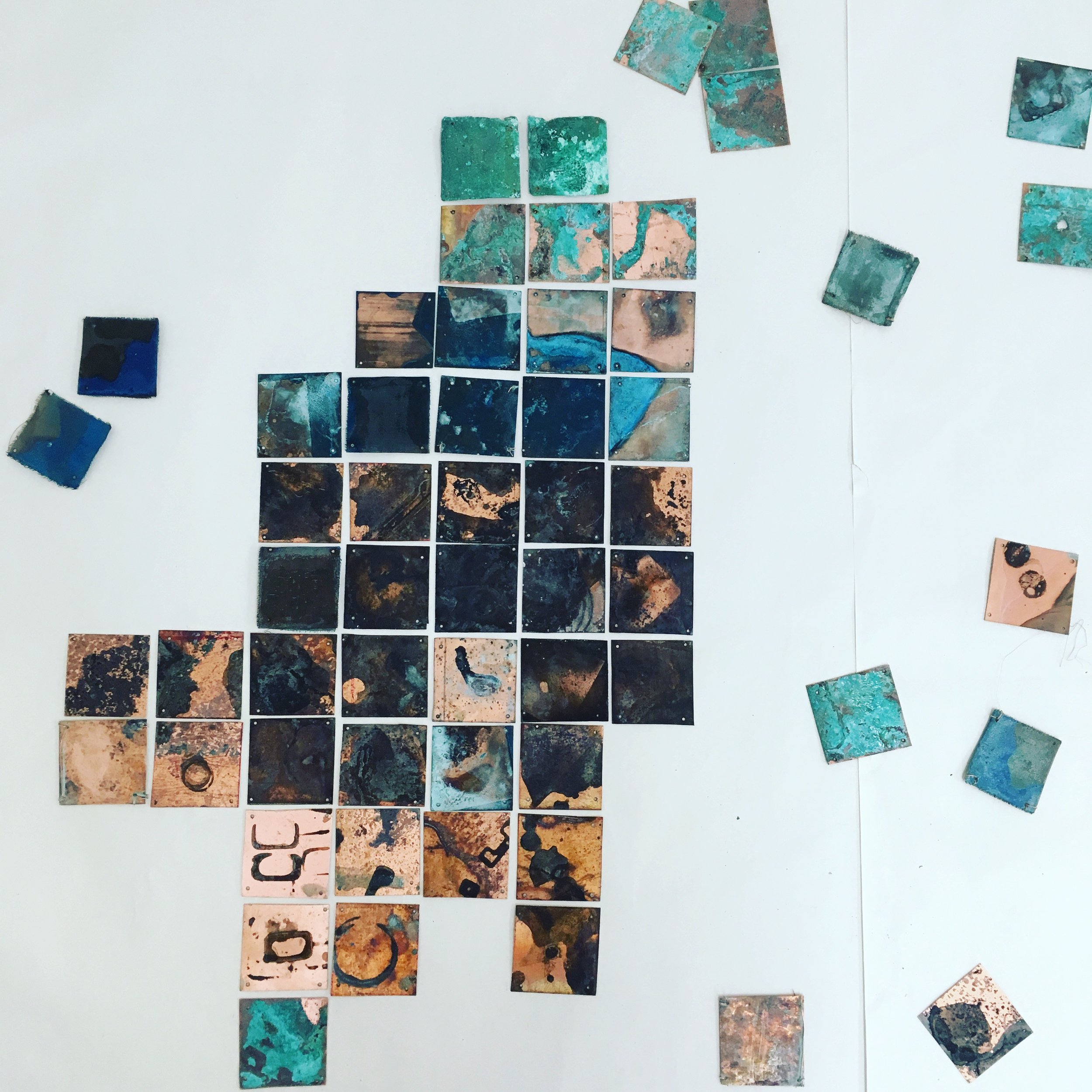
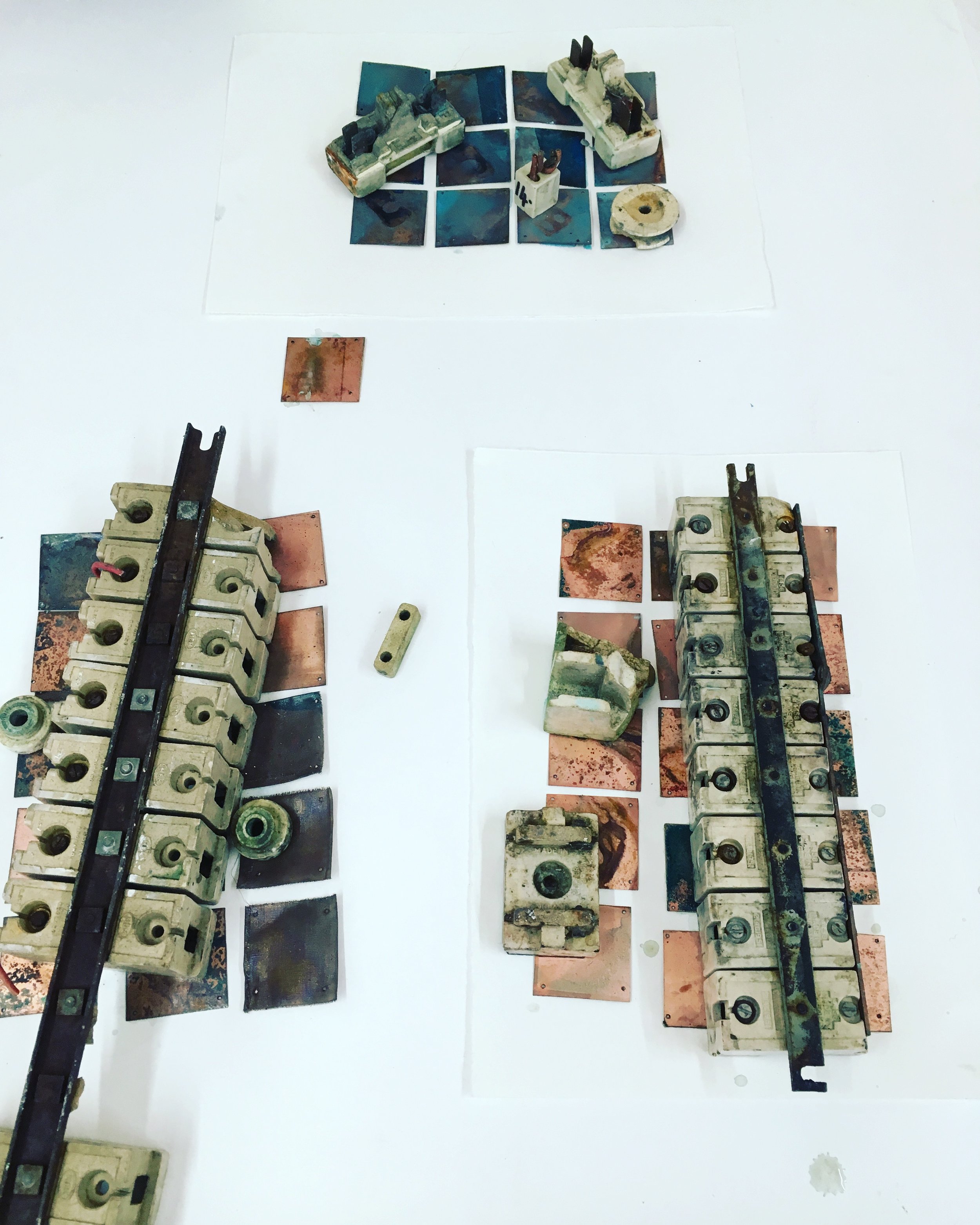
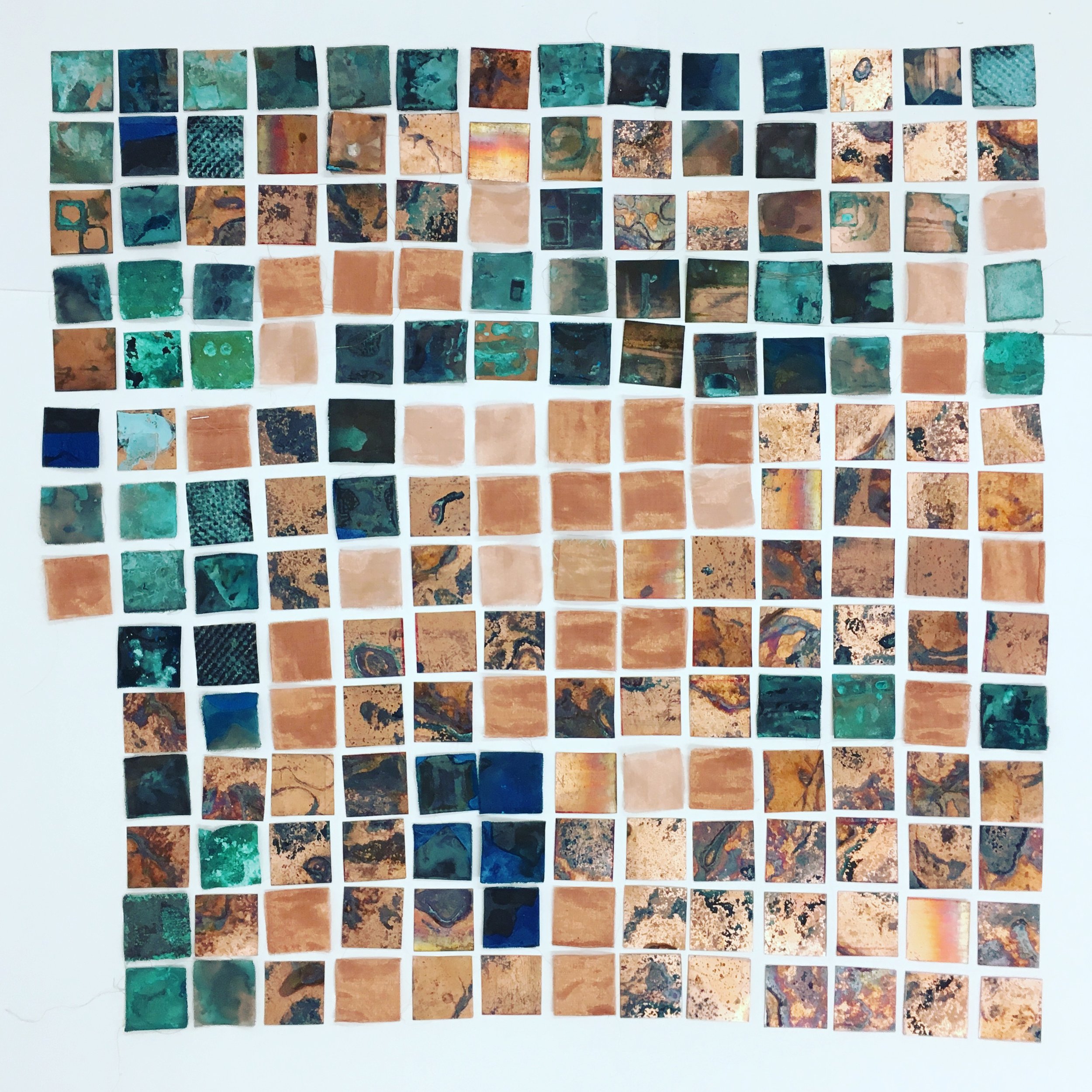
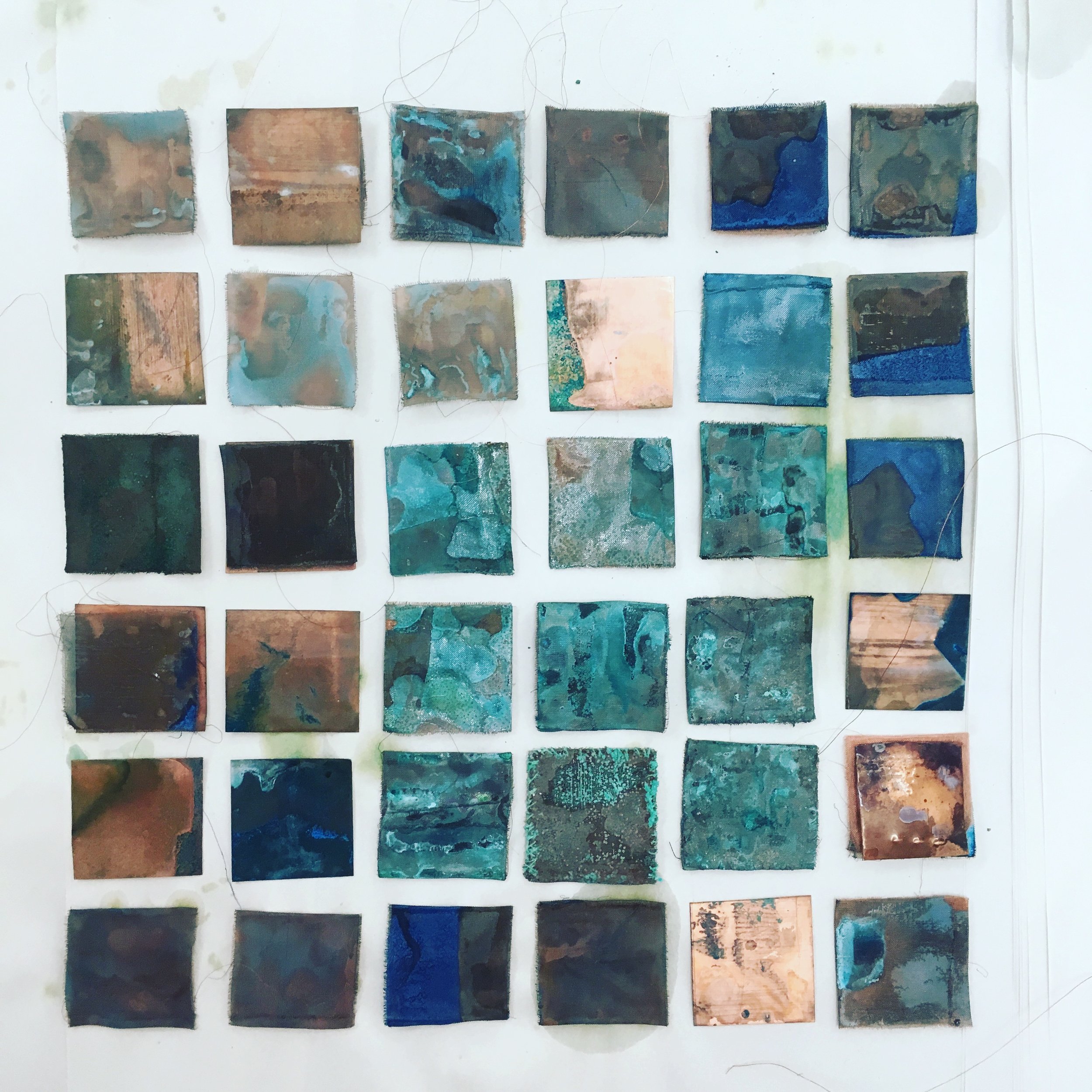
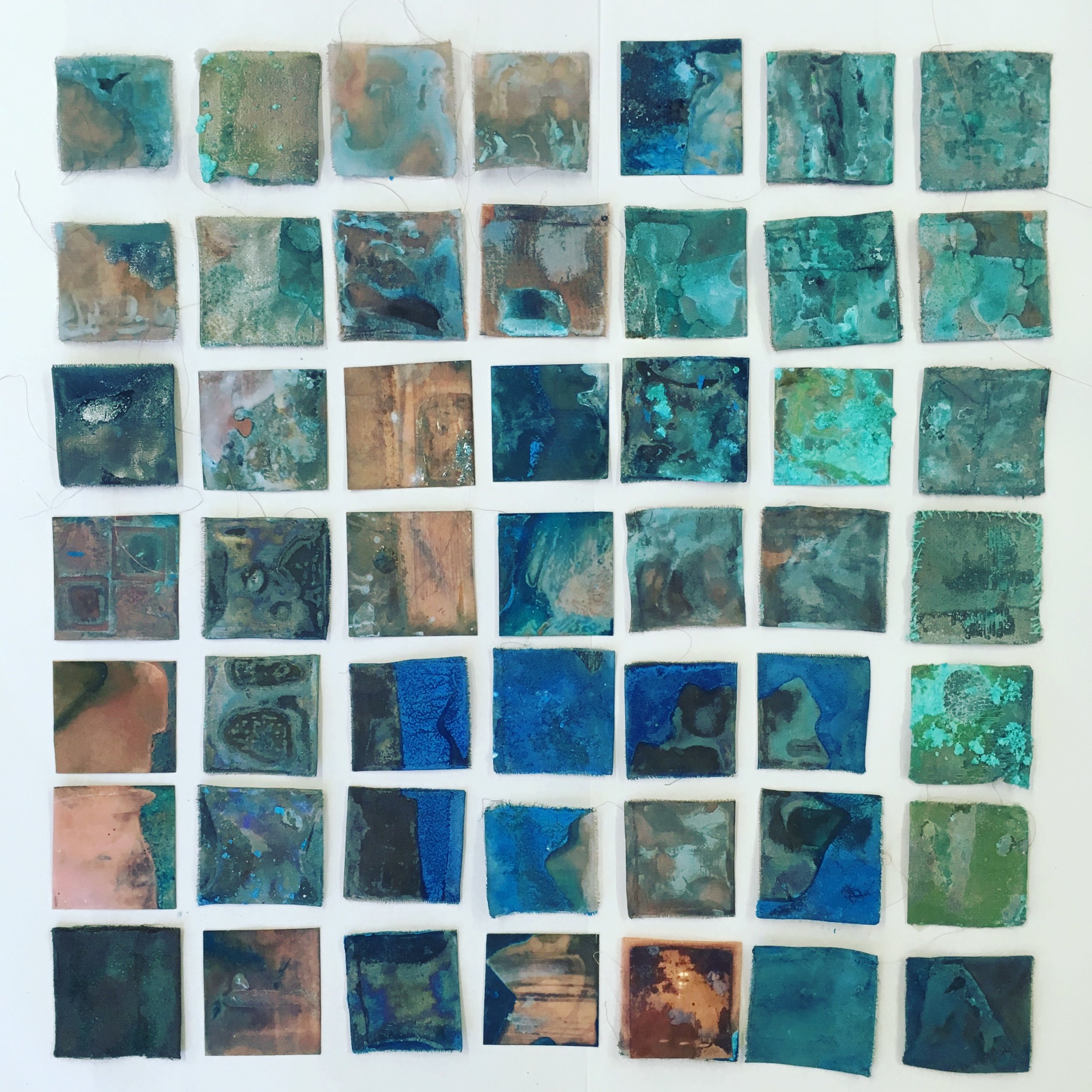
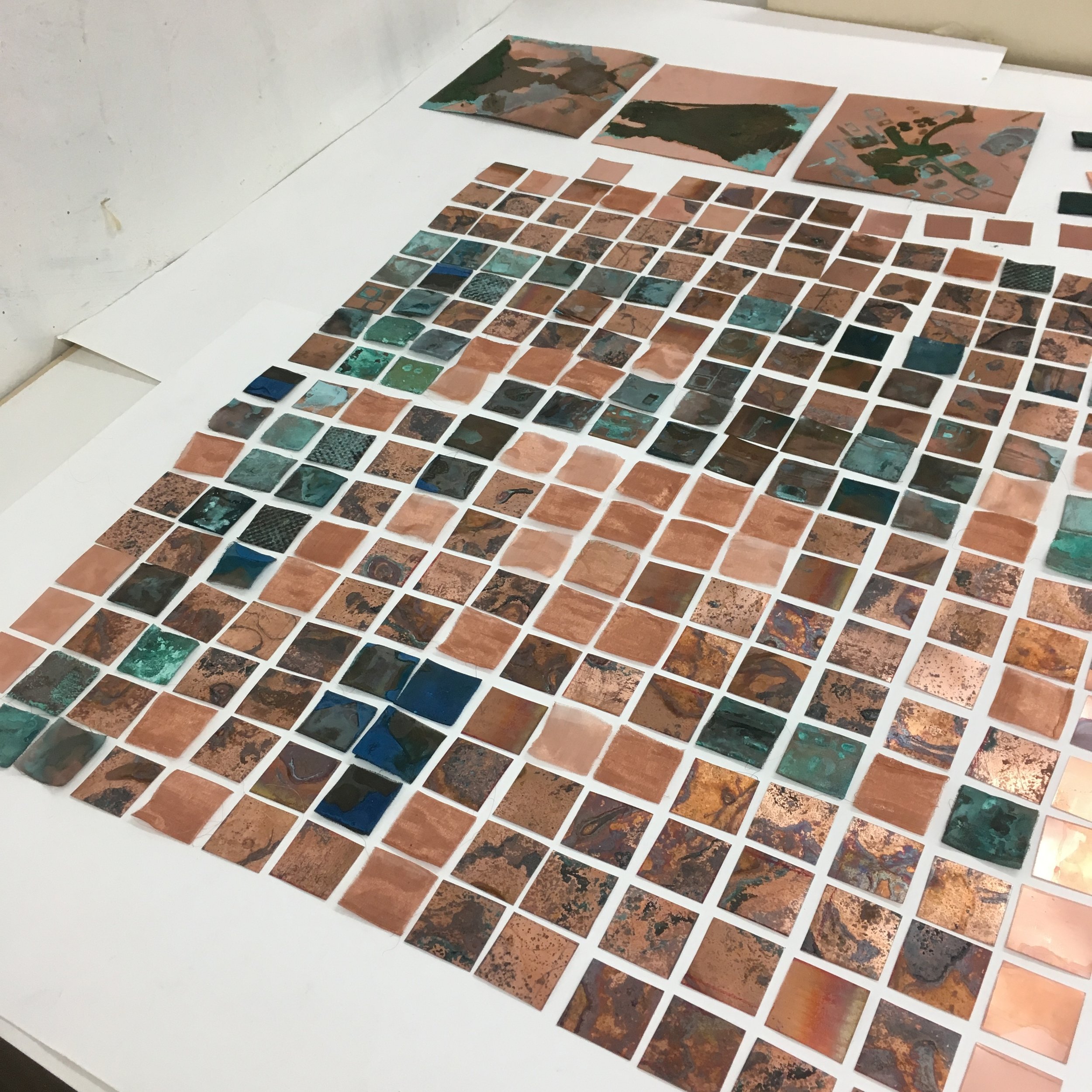
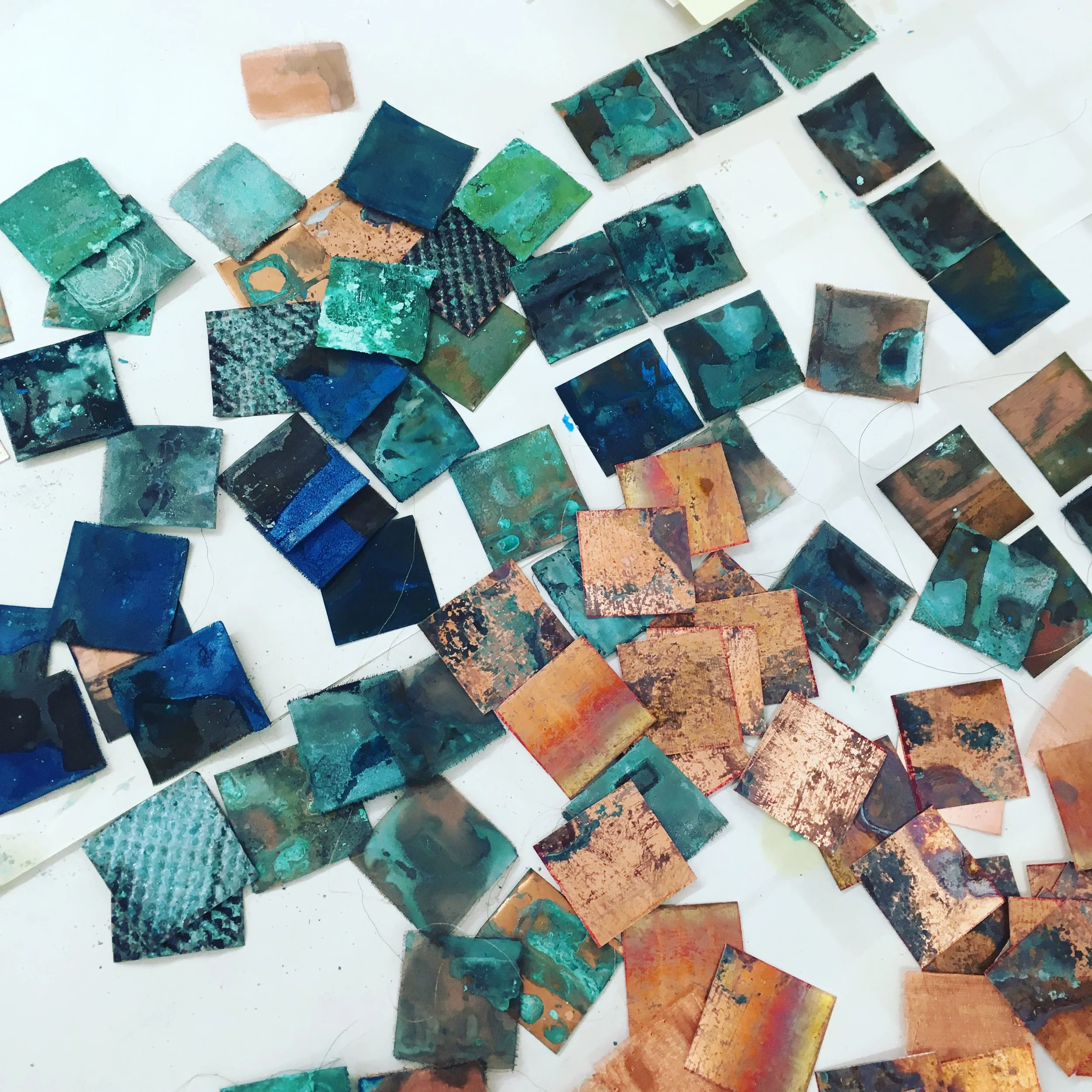
Studio experiments creating a map from tiny copper squares in reference to the ordanance survey grid. The colour has been developed through submerging the copper in various solutions of ammonia, vinegar, salt and liver of sulphur.
Latest & Greatest